
Great warm-up and cool-down routines are the quiet heroes of every home workout. Because they prepare your body before exercise and help it recover afterward, these few extra minutes make training feel smoother, safer, and far more rewarding. However, most people skip them and jump straight into burpees or squats. As a result, the workout feels harder than it should, and stiffness lingers long after the last rep.
In this guide, therefore, you’ll learn how warming up and cooling down actually work, why they matter, and exactly how to do them at home with zero equipment. Furthermore, every step here is beginner-friendly, so you can start today and feel the difference right away.
Quick Answer: What Are Warm-Up and Cool-Down Routines?
A warm-up gradually raises your heart rate, boosts blood flow to working muscles, loosens your joints, and switches on the movement patterns you’re about to use. A cool-down, on the other hand, eases your body back to rest through light movement, gentle stretching, and slow breathing. Together, these warm-up and cool-down routines improve workout quality, support recovery, and reduce that next-day stiffness. Because they take only a few minutes, they’re one of the easiest upgrades you can make to any session.
Why Warm-Up Routines Matter More Than Most People Realise
You’ve finally found time to move. You’re motivated, you press play on your workout video, and then you dive straight into the hard stuff. Sound familiar? Unfortunately, skipping the warm-up is one of the most common workout mistakes, and it quietly holds people back.
When you warm up first, your muscles receive more oxygen, your joints move more freely, and your nervous system wakes up. Consequently, your body performs better and feels more comfortable from the very first rep. Because a cold body simply isn’t ready for sudden effort, a short warm-up bridges that gap. Reputable sources such as the American Heart Association agree that easing in gradually is smarter than starting cold.
Skipping your cool-down causes the opposite problem. Because your heart rate stays high and your muscles stay tight, you may feel dizzy, restless, or unusually sore later. Therefore, a gentle wind-down helps your body settle and recover the way it’s designed to.
Who These Warm-Up and Cool-Down Routines Are For
Honestly, these routines suit almost everyone. Whether you’re brand new to fitness or a seasoned mover, warming up and cooling down will serve you well. This guide is especially helpful for:
- Beginners taking their first steps into home fitness
- Busy professionals and parents who train in short windows
- Older adults who want to move more comfortably
- Students and anyone exercising without equipment
- Experienced athletes who want faster, smoother recovery
So whether you’re doing a five-minute mobility flow or a tough bodyweight workout, these habits will make every session feel better.
Warm-Up vs Cool-Down: Dynamic and Static Stretching Explained
Before we get moving, let’s clear up one big point of confusion. Warm-ups and cool-downs use two different kinds of stretching, and mixing them up is a classic mistake.
Dynamic Stretching for Your Warm-Up
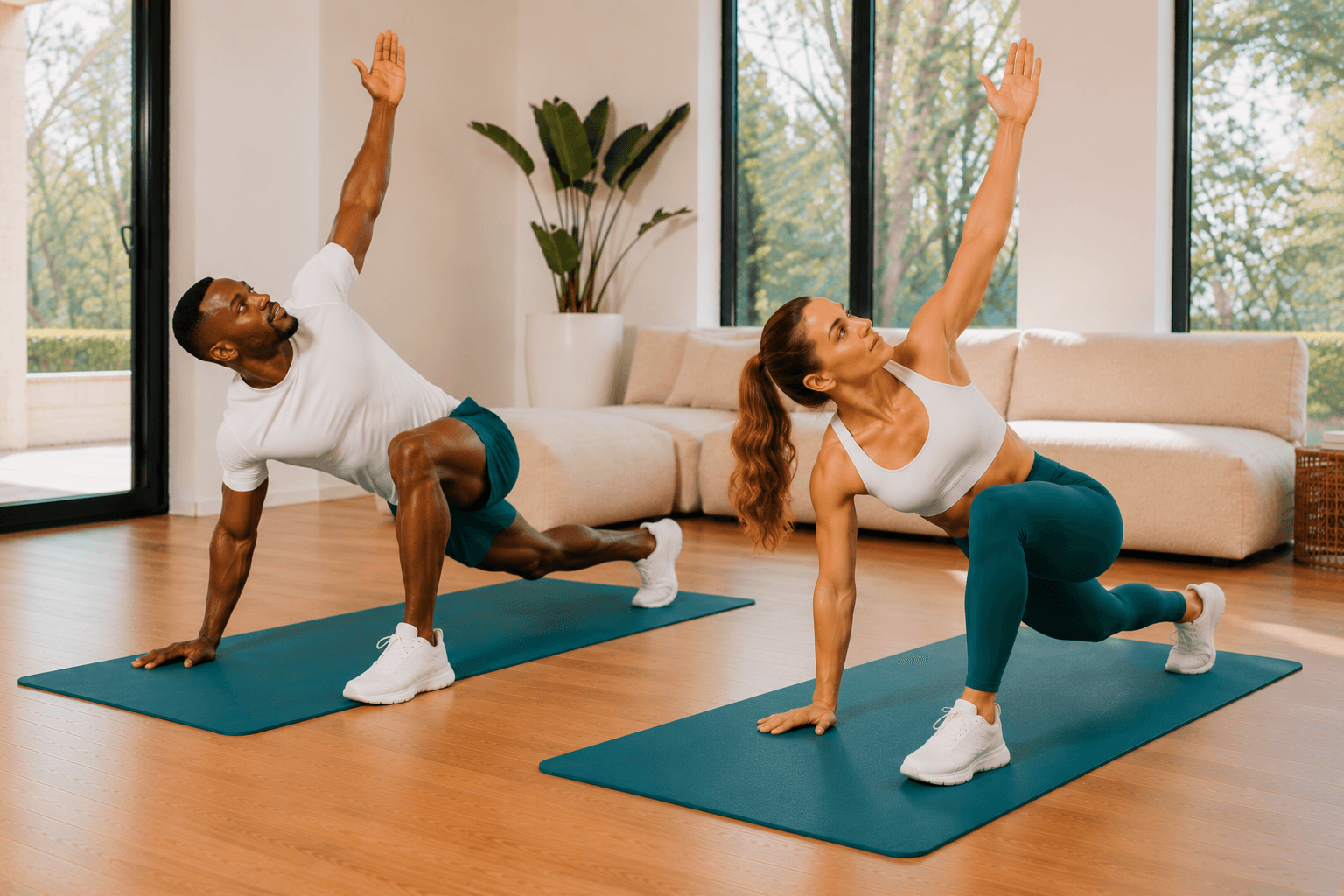
Dynamic stretches use active, controlled movement. Think leg swings, arm circles, and gentle lunges. Because they keep you moving, they raise your temperature and prepare your joints for action. Therefore, dynamic stretching belongs at the start of your warm-up routine, not the end.
Static Stretching for Your Cool-Down
Static stretches, meanwhile, involve holding a position for 20 to 30 seconds. Since your muscles are already warm after training, this is the perfect time to lengthen them gently. As a result, static stretching fits naturally into your cool-down, where it supports flexibility and calm. Research summarised on PubMed supports saving these longer holds for after exercise.
How to Do a Warm-Up Routine at Home (Step by Step)
Now for the fun part. This simple, no-equipment warm-up takes about ten minutes, yet you can shorten it whenever time is tight. Because each move flows into the next, you’ll feel ready to train by the end.
Minutes 1–2: Gentle Cardio to Wake Up
Start by marching on the spot, then progress to gentle jogging or easy jumping jacks. Because this raises your heart rate slowly, it primes your whole body without any strain.
Minutes 3–4: Bodyweight Squats
Next, stand with your feet about shoulder-width apart, lower your hips, and keep your chest lifted. Push through your feet to stand tall again, then repeat slowly. This move gently activates your quads, hamstrings, glutes, and core. If you need support, simply use a chair.
Minute 5: Walking Lunges
Walking lunges prepare your legs for tougher movement. Step forward, lower both knees, then push back up and switch sides. However, if space is limited, alternating stationary lunges work just as well. Keep your torso upright and move with control.
Minutes 6–7: Leg Swings and Hip Circles
Now open up your hips. Swing one leg forward and back, then side to side, holding a wall for balance. Afterward, add slow hip circles in both directions. Because your hips drive so many exercises, this step pays off immediately.
Minutes 8–9: Arm Circles and Torso Rotations
Roll your shoulders, then draw big arm circles forward and backward. Follow with slow torso rotations to loosen your spine. If reaching the floor feels uncomfortable, simply reduce your range and stay standing.
Minute 10: Movement Rehearsal
Finally, rehearse the exact moves you’re about to perform. Planning push-ups? Do a few easy reps. Doing HIIT? Try gentle jumping jacks first. Because this specific practice tells your body what’s coming, you’ll transition into the main workout smoothly.
How Long Should Your Warm-Up Routine Be?
The ideal length depends on what you’re about to do. As a rule, the harder the workout, the longer the warm-up. Use this quick guide:
- Light exercise: about 5 minutes is usually enough
- Moderate workout: aim for 5 to 8 minutes
- High-intensity training: spend 8 to 10 minutes with extra movement rehearsal
- Cold weather: add a few more minutes, because muscles warm up slower when it’s chilly
Not sure how hard you’re training? Our guide on gauging workout intensity without a heart rate monitor makes it easy to judge.
Warm-Up Mistakes to Avoid
Even a good warm-up can backfire when you rush it. Therefore, watch out for these common slip-ups:
- Holding long static stretches first. Because cold muscles resist deep stretching, save those holds for later.
- Going too hard, too soon. A warm-up should energise you, not exhaust you.
- Skipping the muscles you’ll actually use. If you’re training legs, warm up your legs.
- Cutting it short every time. Even three focused minutes beat none at all.
How to Do a Cool-Down Routine at Home
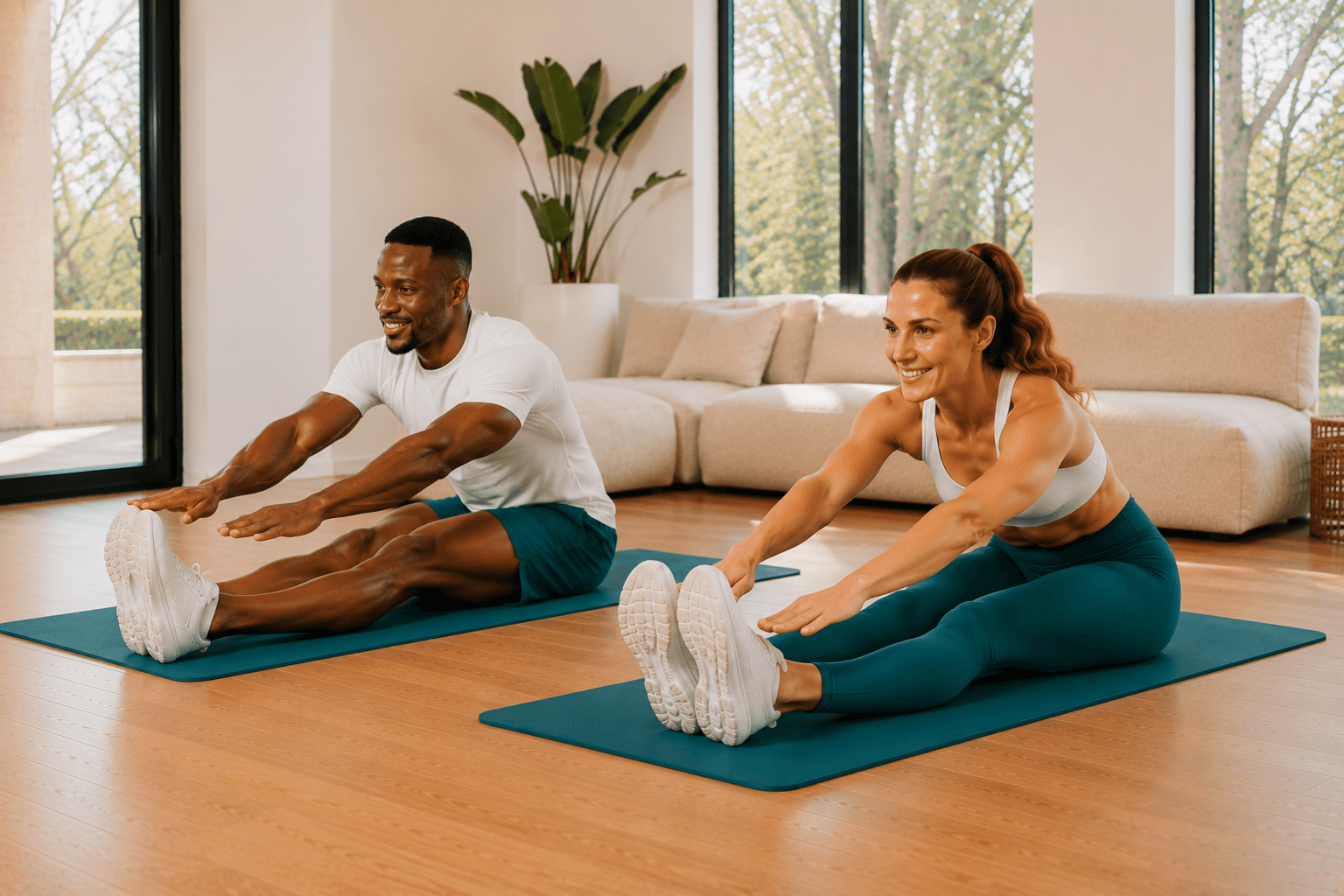
Once your workout ends, resist the urge to stop suddenly. Instead, guide your body down gently. This cool-down routine takes about five to eight minutes, and it works after any home session.
Step 1: Slow Your Pace Gradually
First, keep moving at an easy pace for one to two minutes. Walk around the room or march softly on the spot. Because this lowers your heart rate slowly, it prevents that light-headed feeling.
Step 2: Stretch the Muscles You Trained
Next, move into gentle static stretches and hold each for 20 to 30 seconds. Focus on the areas you worked. A simple, full-body cool-down might include:
- Standing quad stretch for the front of your thighs
- Hamstring stretch with a soft bend in the knees
- Chest and shoulder stretch to open the upper body
- Upper-back stretch by reaching forward and rounding gently
- Child’s pose to release the back, hips, and shoulders
Breathe slowly throughout, and never force a stretch. If something feels sharp, ease off right away.
Step 3: Finish With Deep Breathing
Recovery isn’t only physical; it’s mental too. So spend one final minute on your breath. Inhale through your nose for four seconds, then exhale through your mouth for six. Repeat five to ten times. As a result, you’ll feel calmer and clearly signal to your body that the session is complete.
Recovery After Your Cool-Down: Hydration and Rest
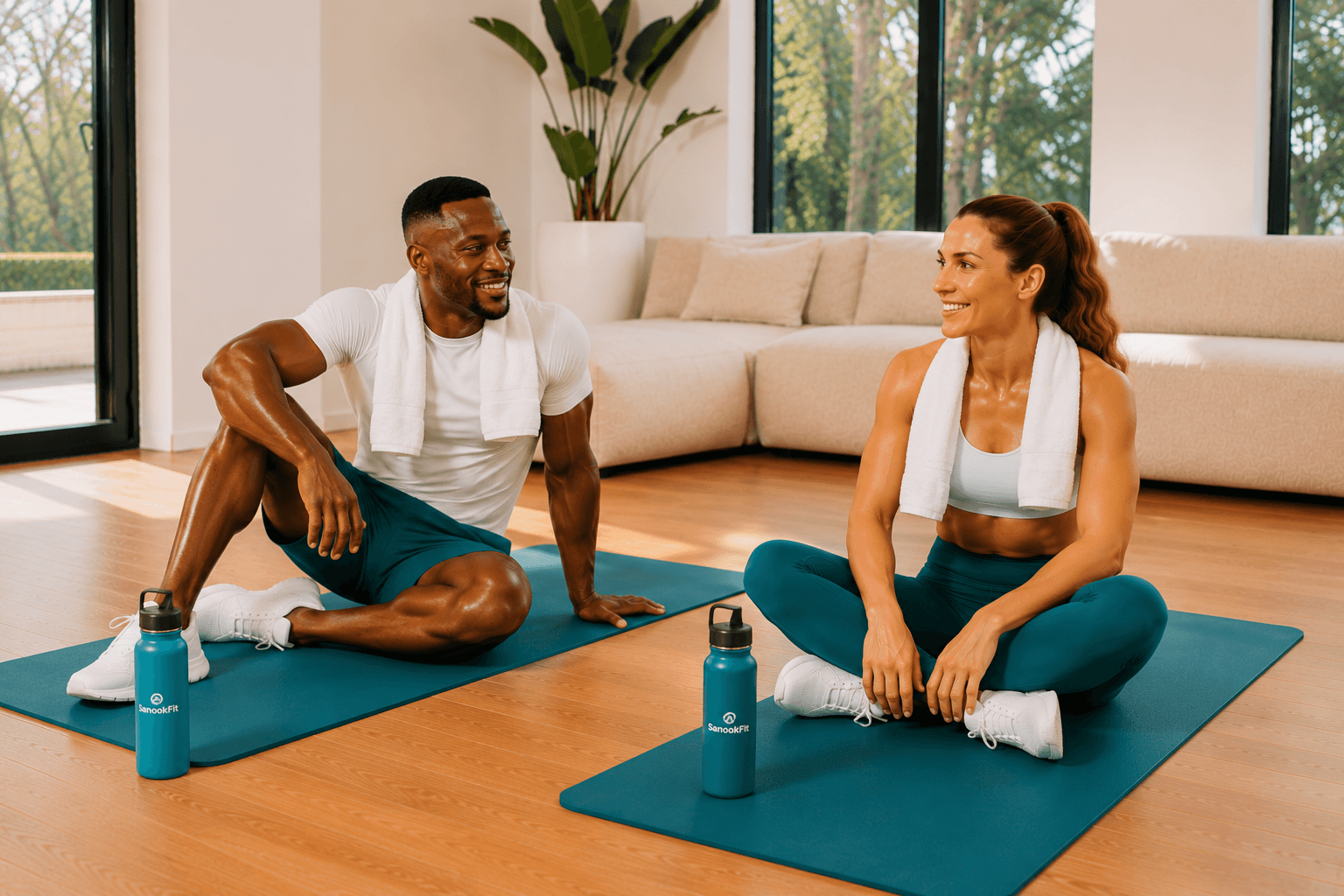
Your cool-down sets the stage, but recovery continues well beyond it. Because exercise increases fluid loss through sweat and breathing, rehydrating comes first. Drink water to match your thirst and effort, then refuel with a balanced meal or snack when it suits your schedule.
After that, prioritise sleep and rest. Muscles rebuild while you recover, not while you train. For a deeper look, explore our guides on why rest days build strength and what to eat before and after a home workout. Together, these habits turn good workouts into lasting progress.
Your Warm-Up and Cool-Down Checklist
Want a quick reference you can screenshot? Here it is. Before every workout, aim to:
- Raise your heart rate gradually
- Mobilise your major joints
- Activate the muscles you’ll use
- Rehearse your workout movements
Then, after every workout, remember to:
- Slow your pace and move gently
- Perform static stretches for the muscles you trained
- Focus on steady, deep breathing
- Rehydrate and refuel
- Prioritise quality sleep and recovery
Because small habits repeated consistently build real results, this checklist is worth keeping close. In fact, consistency is the science behind lasting fitness.
Signs Your Warm-Up and Cool-Down Routines Are Working
How do you know these routines are paying off? Pay attention to how you feel. After a good warm-up, you should feel warmer, more mobile, mentally focused, and ready to move through a full range of motion. However, it should never leave you tired.
After a solid cool-down, meanwhile, you’ll notice slower breathing, a settling heart rate, relaxed muscles, and a calm sense of completion. Because recovery begins the moment your workout ends, these signals confirm you’re doing it right.
Expert Coaching Advice From Sanook Fit
Many people focus almost entirely on the “main” workout, yet the coaches at Sanook Fit see it differently. In our experience, the athletes who stay consistent and injury-free are the ones who respect their warm-up and cool-down routines. Because these bookend habits protect your body, they let you train more often and enjoy it more.
Treat your warm-up and cool-down as part of the workout, not an optional extra. Those few quiet minutes are where consistency and comfort are built.
If you’d like to follow along in real time, we share short warm-up and cool-down flows across our channels. So subscribe on YouTube, follow us on TikTok and Instagram, and join the community on Facebook. Because seeing the moves makes them click faster, these follow-along videos are a great next step.
Frequently Asked Questions
Do I really need a warm-up for a short workout?
Yes, though you can keep it brief. Even three focused minutes prepare your body and reduce stiffness. Therefore, never skip it entirely, even during a quick session.
Should I stretch before or after exercise?
Save long, static stretches for after your workout, when your muscles are warm. Before exercise, choose dynamic, moving stretches instead. This simple swap makes both routines far more effective.
Can warm-up and cool-down routines prevent soreness?
They can certainly help. While no routine erases soreness completely, a proper cool-down and good hydration ease that next-day tightness. As a result, you’ll feel readier for your next session.
How do these routines fit a busy schedule?
Easily. Because they take only a few minutes, they slot into any routine. Short on time in general? Our home workouts for busy parents and lunch-break reset for desk workers show how little time you really need.
Keep Building Smarter Home Workouts
Now that your warm-up and cool-down routines are locked in, you’re ready to train with confidence. So explore more free guides to round out your home fitness journey:
- Bodyweight Exercises: The Ultimate Exercise Library
- Beginner Calisthenics Progression Guide
- The Complete Upper Body Workout Guide
- The Complete Core & Abs Training Guide
- How to Gauge Your Workout Intensity
Finally, remember this: the most valuable minutes of your workout often happen before the first rep and after the last. Start using these warm-up and cool-down routines today, and every session will feel safer, smarter, and more enjoyable.
References
- American Heart Association — Warm Up, Cool Down
- American College of Sports Medicine — Exercise and Physical Activity Guidelines
- PubMed / National Library of Medicine — Research on Stretching and Warm-Up