You do not need a fancy tracker to train hard. In fact, you can gauge your workout intensity with nothing more than your breath, your body, and a little attention. Wearables are handy; however, they are completely optional. So if you want to measure your effort during a HIIT session and pace yourself like a pro, then this guide will show you exactly how, and it does so without a heart rate monitor.
Quick Answer: How to Gauge Your Workout Intensity Fast
First, the short version: you do not need a heart rate monitor to run effective HIIT workouts. Instead, you can gauge your workout intensity using the Talk Test, the Rate of Perceived Exertion (RPE) scale, your breathing, your movement quality, and your recovery between intervals. Because these methods are simple and free, they help you train at the right effort while also lowering your risk of overtraining.
Do You Really Need a Heart Rate Monitor?
Fitness technology has never been more popular. Indeed, smartwatches, fitness bands, and heart rate monitors all promise better data, and they can genuinely help. However, many people wrongly believe they cannot run an effective HIIT workout without one.
Fortunately, that is simply not true. Long before wearables existed, athletes trained brilliantly by paying close attention to their bodies. Therefore, those same skills still matter today, and you can learn them surprisingly quickly.
Once you know how to measure workout intensity by feel, you unlock three lasting benefits:
- First, you stop obsessing over numbers on a screen.
- Second, you learn to trust your breathing, form, and energy.
- Finally, you build the confidence to train anywhere, at any time.
As a result, your body becomes the best coach you will ever have. Moreover, the more you practice reading its signals, the sharper your instincts will become.
What Is HIIT (and Why Intensity Matters)?
HIIT stands for High-Intensity Interval Training. In short, you alternate bursts of hard effort with brief recovery periods. Because the work intervals are demanding, your effort level ultimately decides whether the session works. Therefore, learning to gauge your workout intensity is the single most important HIIT skill. If you are brand new, then our bodyweight training guide for beginners pairs perfectly with this article.
Who This Guide Is For
This guide suits almost anyone who trains at home. In particular, it will help you if you fit one of these groups:
- First, beginners who feel unsure about pacing.
- Second, home exercisers who train without a smartwatch.
- In addition, bodyweight and calisthenics fans.
- Meanwhile, busy professionals who are short on time.
- Finally, anyone who simply wants safer, smarter HIIT workouts.
Best of all, you need no expensive gear. Instead, you simply need the willingness to notice how your body responds.

7 Ways to Measure Your Workout Intensity Without Technology
Honestly, you do not need a smartwatch to know whether you are working hard enough. Because your body constantly sends feedback, the better you read it, the easier pacing becomes. So let us explore seven simple ways to measure workout intensity during HIIT.
1. Use the Talk Test to Judge Exercise Intensity
First, the Talk Test is one of the easiest ways to judge exercise intensity. Because it needs no equipment, coaches have relied on it for years. During a work interval, therefore, notice how easily you can speak:
- First, if you can sing, then your intensity is probably too low.
- Next, if you can hold a full conversation, then you are likely at a moderate effort.
- However, if you can speak only short sentences, then you have hit the ideal HIIT range.
- Finally, if you can manage just one or two words, then you are near your maximum effort.
Because full-effort intervals are hard to sustain, save that top level for short bursts. For most of your workout, however, aim for the short-sentence zone, since that is where you feel challenged yet still in control.
2. Rate Your Effort With the RPE Scale
Second, try the RPE scale. RPE stands for Rate of Perceived Exertion, and it simply rates how hard a workout feels on a scale from 1 to 10. Because it is quick and honest, it remains a favourite tool for coaches everywhere.
| RPE | Effort Level | What It Feels Like |
|---|---|---|
| 1 | Very easy | Gentle walking |
| 2 | Easy | Comfortable movement |
| 3 | Light | Warm-up pace |
| 4 | Moderate | Breathing slightly faster |
| 5 | Moderate-hard | Comfortable but challenging |
| 6 | Challenging | Noticeably working |
| 7 | Hard | Difficult but sustainable |
| 8 | Very hard | Ideal for many HIIT intervals |
| 9 | Near maximum | Very tough to hold |
| 10 | Maximum | All-out effort |
For most HIIT sessions, therefore, aim for RPE 7 to 9 during your work intervals. Then, during recovery, let that effort drop before the next round begins.
3. Listen to Your Breathing
Third, tune in to your breath. Because your breathing changes naturally as exercise intensity rises, it becomes one of the most reliable pacing tools you have. Here, for example, is what each zone tends to feel like:
- First, at an easy pace, your breathing stays comfortable.
- Next, at a moderate pace, your breathing deepens but stays controlled.
- Then, during a HIIT work interval, your breathing speeds up and full sentences get hard, yet you still feel in control.
- Finally, at maximum effort, your breathing turns very heavy, and recovery becomes difficult.
Recovery breathing matters too. Therefore, notice how fast your breath settles during rest. If it stays heavy through every break, then slow down slightly so you can finish strong.
4. Monitor Your Recovery Between Intervals
Fourth, watch your recovery, because it tells you almost as much as the work interval itself. Between rounds, therefore, ask yourself a few quick questions:
- First, can I recover enough to keep good technique?
- Next, am I ready for the round ahead?
- Finally, has my breathing settled at least a little?
If every interval feels worse than the last, then you probably started too fast. As a result, pacing yourself more evenly will help you hold quality from the first round to the last.
5. Watch Your Movement Quality
Fifth, keep an eye on your form, because your body often warns you when you are overreaching. For example, declining movement quality shows up quickly:
- First, smooth squats slowly turn into a forward lean.
- Next, controlled push-ups start to sag at the hips.
- Finally, soft jump-squat landings become heavy and uncontrolled.
Because these shifts signal fatigue, treat them as a cue to ease off. After all, quality beats quantity every single time, so one clean repetition is worth more than three sloppy ones. To keep your form sharp and safe, moreover, our home workout injury-prevention tips are well worth a read.
6. Remember That Sweat Is Not the Goal
Sixth, do not judge a workout by sweat alone. However tempting it is, sweat is not a direct measure of exercise intensity. Instead, how much you sweat depends on several factors:
- First, the room temperature plays a big role.
- Next, humidity affects how quickly you sweat.
- In addition, your clothing traps or releases heat.
- Meanwhile, your individual physiology matters too.
- Finally, your hydration level shapes the outcome.
Because of this, you can finish an excellent session barely damp, while a hot room can drench you during easy movement. Therefore, never confuse sweat with progress.
7. Check How You Feel After the Workout
Finally, notice how you feel once the timer stops, since your workout does not truly end there. Afterward, therefore, ask yourself a few honest questions:
- First, did I complete every interval?
- Next, did I keep good technique throughout?
- Then, could I recover within a reasonable time?
- Finally, do I feel challenged but not completely wiped out?
Ultimately, a well-paced HIIT session should leave you feeling accomplished rather than defeated.
Signs Your Intensity Was Just Right
So how do you know you nailed it? In general, you paced yourself well if these signs ring true:
- First, you finished every interval.
- Next, your technique stayed consistent.
- Also, your breathing recovered during rest periods.
- Moreover, you felt challenged the whole way through.
- Finally, you could still cool down comfortably afterward.
Together, therefore, these are excellent signs that your effort matched your current fitness level.
The Sanook Fit Intensity Scale
At Sanook Fit, we like to keep effort simple. So instead of chasing numbers, think about how the work actually feels:
| How It Feels | What It Means |
|---|---|
| Comfortable | Too easy for HIIT work intervals |
| Challenging | A solid training intensity |
| Very hard | Ideal for short work intervals |
| Out of control | Slow down and regain your technique |
Remember, the goal is not exhaustion. Rather, the goal is smart, sustainable effort that you can repeat again and again.
How to Pace Your HIIT Workout by Feel
Learning to gauge your workout intensity is only half the job. Next, you need a pacing plan that fits your fitness level and grows with you. Because progress compounds, small and steady steps beat reckless all-out efforts. So let us build that system together.
Start Where You Are
First, resist the urge to copy advanced athletes, since that is one of the biggest beginner mistakes. Instead, remember that your goal is not to match someone else’s pace; rather, it is to find your own right effort. Today’s tough interval may become tomorrow’s warm-up, and that shift is exactly what progress looks like.
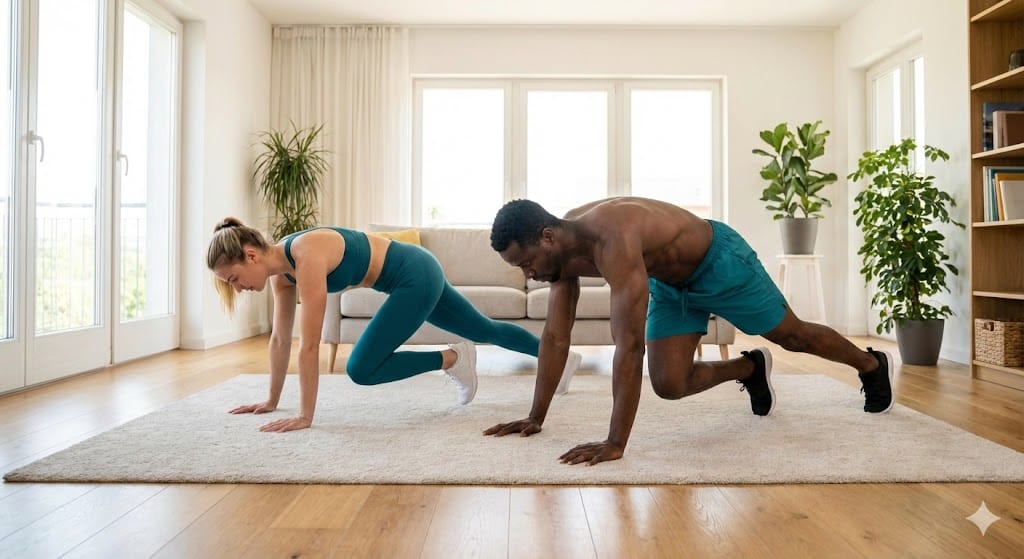
Beginner HIIT Pacing
If you are new to HIIT, then focus on clean movement before speed. Specifically, aim for these targets:
- First, keep work intervals around RPE 6 to 7.
- Next, allow comfortable recovery between rounds.
- Finally, prioritize smooth, controlled technique.
For example, a simple interval might run 30 seconds of work, then 30 seconds of recovery, repeated for 15 to 20 minutes. As a result, you should finish feeling challenged but confident.
Intermediate HIIT Pacing
Once your fitness improves, you can raise the challenge. Therefore, aim a little higher:
- First, push work intervals to RPE 7 to 8.
- Next, trim your recovery periods slightly.
- Finally, choose more demanding bodyweight exercises.
For instance, try 40 seconds of work with 20 seconds of recovery for 20 to 25 minutes. Throughout, you should breathe heavily while still holding good form.
Advanced HIIT Pacing
Experienced exercisers can occasionally push to very high intensities. Even so, structure still matters:
- First, target RPE 8 to 9 during work intervals.
- Next, insist on excellent movement quality.
- Finally, keep your recovery controlled and focused.
For example, use 45 to 50 seconds of work with 10 to 15 seconds of recovery. Because the effort is higher, these sessions demand more recovery afterward. Therefore, use maximum effort strategically rather than every single day. When you are ready to keep advancing, moreover, our bodyweight progression guide shows you how to level up safely.
Match Your Pace to the Exercise
Importantly, not every movement should feel equally hard. Because each exercise demands different effort, matching your pace keeps quality high across the whole session.
High-Impact Moves (Higher Effort)
First, treat explosive moves as your highest-effort work. For example, burpees, jump squats, mountain climbers, and high knees all raise your heart rate fast, so pace them carefully.
Moderate-Intensity Moves
Next, use steadier moves to sustain effort without burning out. Bodyweight squats, reverse lunges, step-ups, and modified push-ups fit this middle zone well.
Recovery Moves (Lower Effort)
Finally, use gentle moves to reset between hard bursts. Marching in place, gentle walking, deep breathing, and mobility drills all help you catch your breath. By adjusting effort to the movement, therefore, you protect your form and keep intensity consistent from the first round to the last.
Build a Balanced Weekly HIIT Schedule
HIIT is powerful; however, more is not always better. Because recovery drives results, a smart weekly plan balances hard days with lighter ones. For example, your week might look like this:
| Day | Focus |
|---|---|
| Monday | HIIT |
| Tuesday | Mobility or walking |
| Wednesday | Strength training |
| Thursday | HIIT |
| Friday | Active recovery |
| Saturday | Full-body bodyweight workout |
| Sunday | Rest |
As you can see, this rhythm blends effort with recovery, and therefore it keeps your energy high week after week. If you want a ready-made session, then try our 20-minute at-home HIIT workout.
Recovery Is Part of HIIT
Make no mistake: high-intensity training places real stress on your muscles and heart. Because recovery is when your body actually adapts, skipping it quietly lowers your results over time. Therefore, protect your progress by prioritizing a few basics:
- First, aim for quality sleep every night.
- Next, stay well hydrated throughout the day.
- Also, fuel up with balanced nutrition.
- In addition, stretch regularly to stay loose.
- Finally, schedule true rest days without guilt.
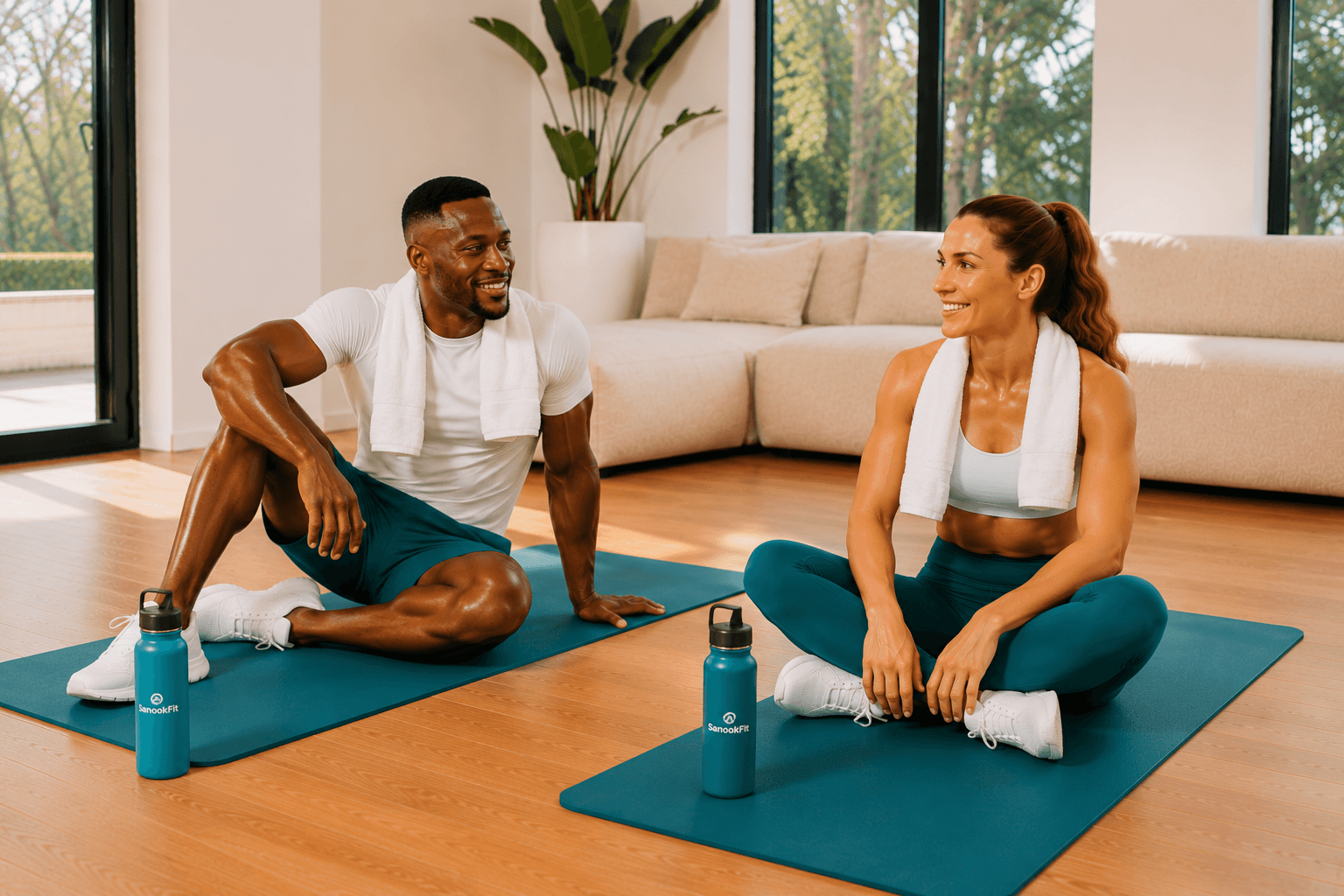
To dig deeper into smart recovery, moreover, our guide on why rest days build strength explains exactly why downtime works.
Common HIIT Pacing Mistakes to Avoid
Starting Too Fast
First, avoid sprinting through the opening interval. By halfway, otherwise, most people are completely gassed. Instead, pace yourself so you can hold strong effort across every round.
Never Recovering Properly
Second, do not skip real recovery, because your quality drops and your injury risk climbs. Therefore, treat rest intervals as active tools rather than wasted time.
Chasing Exhaustion
Third, stop chasing that destroyed feeling, since it is not the goal. Because consistent, repeatable effort builds fitness, aim for challenging rather than crushing.
Ignoring Your Form
Finally, never ignore breaking technique; instead, stop and reset. After all, clean movement is what makes HIIT both safe and effective.
5 Keys to Train Smarter Without a Tracker
As you put this into practice, keep these five simple habits front of mind:
- First, trust your effort, because you can gauge your workout intensity by feel rather than by numbers.
- Second, protect your form, since quality always beats quantity.
- Next, recover well, because rest is where real progress happens.
- Moreover, stay consistent, since one perfect workout will not transform you, yet hundreds will.
- Finally, listen closely, because your breathing, energy, and technique are honest coaches.
Final Thoughts: Your Body Is the Best Monitor
Ultimately, you do not need expensive gear to train hard and smart; instead, you need awareness. Once you learn to read your breathing, your form, and your recovery, you can gauge your workout intensity anywhere, from your living room to a hotel room. Therefore, ditch the pressure of the perfect gadget, tune in to your body, and enjoy every session. Above all, stay consistent, because that is what turns effort into lasting results.
Join the Sanook Fit Community
Finally, if you want more no-equipment workouts, form tips, and pacing guidance, then follow Sanook Fit and train with us every week. For instance, you can watch full sessions on our YouTube channel, catch quick tips on TikTok, join the conversation on Facebook, and grab daily motivation on Instagram.
Keep Reading on Sanook Fit
Now that you can pace your HIIT workouts by feel, keep the momentum going with these guides:
- First, read Surprising Ways to Maximize Your Home Workouts to get better results from every session.
- Next, explore the Best Warm-Up and Cool-Down Routines so you prep before HIIT and recover faster after.
- Also, try Progressive Overload for Bodyweight Training to keep improving safely over time.
- In addition, review Rest Days Explained because recovery is essential.
- Meanwhile, learn How to Track Progress Without a Scale to measure strength, endurance, and confidence.
- Moreover, study The Science Behind Consistent Home Fitness Habits to build routines that stick.
- Finally, discover How to Stay Motivated to Exercise so you can beat workout burnout for good.
References and Further Reading
For readers who want the science behind these methods, moreover, these trusted external sources explain effort, RPE, and interval training in more detail:
- First, the American College of Sports Medicine offers guidance on exercise intensity and the RPE scale.
- Next, the American Heart Association explains measuring effort and the talk test.
- Finally, the Centers for Disease Control and Prevention details how to measure physical activity intensity.