When you ask most people to name the most versatile piece of fitness gear, they picture dumbbells, kettlebells, or resistance bands. However, the real answer is simpler and far cheaper. In fact, your own body is one of the best training tools you’ll ever use, so bodyweight exercises have truly stood the test of time. Moreover, because they need little or no equipment, these no-equipment movements go wherever you go.
For generations, therefore, bodyweight exercises have helped athletes, everyday movers, and busy parents build strength, endurance, mobility, and balance. Furthermore, they adapt to almost any fitness level, so a total beginner and a seasoned athlete can train from the same list. Whether you are in your living room, a hotel room, a park, or the office on a quick break, this approach still keeps you moving.
Because this guide works as your complete bodyweight exercises library, you’ll learn the benefits of bodyweight training, see how each move targets specific muscles, and find variations for every level. In addition, if you want to follow along with real coaching, then subscribe to Sanook Fit on YouTube for free follow-along sessions.
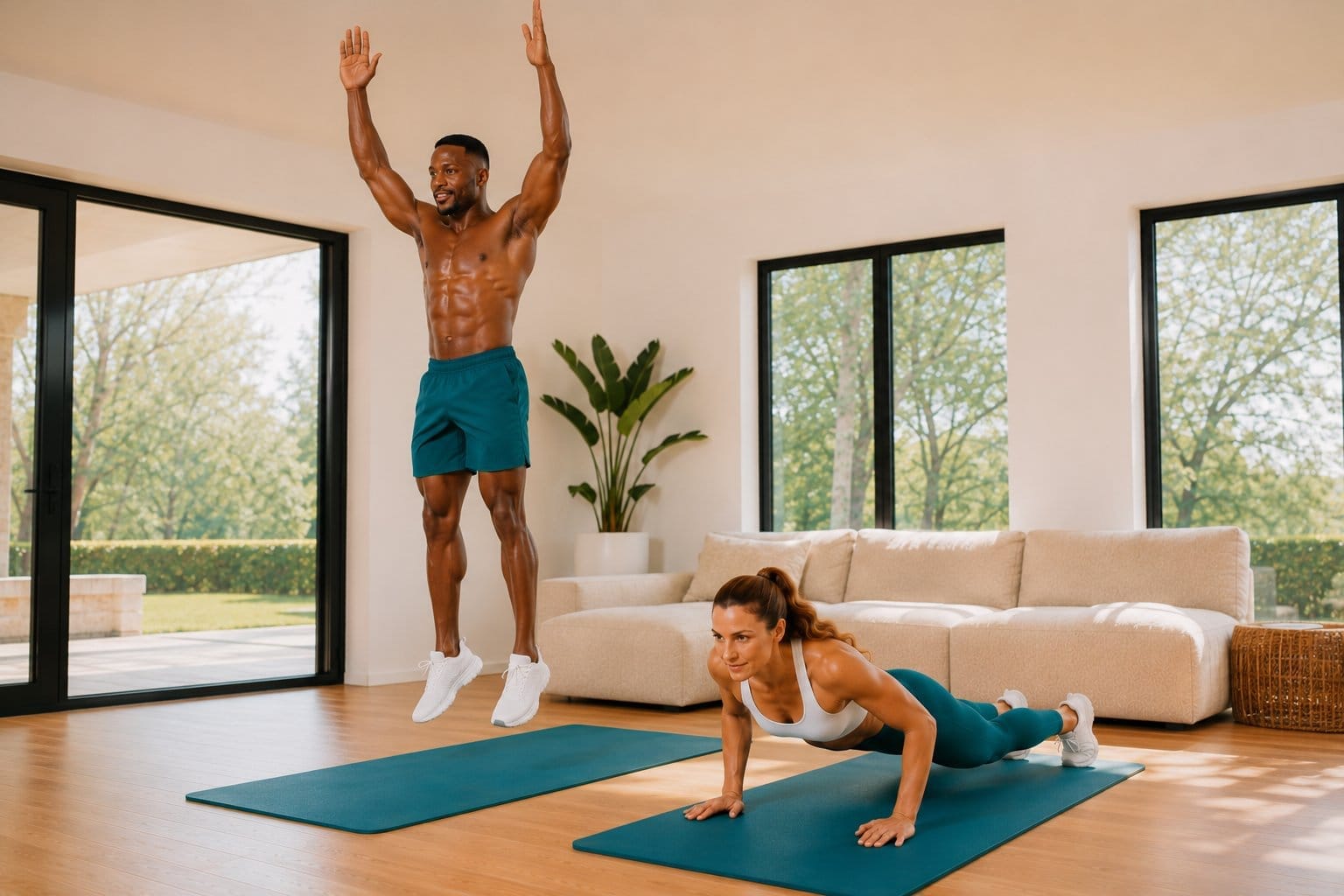
What Are Bodyweight Exercises?
Simply put, bodyweight exercises use your own body as the main source of resistance. Instead of lifting external weights, therefore, you move through different positions to challenge your muscles. Because your muscles only respond to force, they do not care whether that force comes from a dumbbell or from you.
For example, some classic moves include:
- Squats
- Push-ups
- Lunges
- Planks
- Mountain climbers
- Burpees
- Glute bridges
- Bird dogs
While some moves build raw strength, others sharpen cardio fitness, mobility, flexibility, or balance. Moreover, many train several qualities at once, so you get more done in less time.
Why Bodyweight Training Works So Well
Here is the key idea: because your muscles do not recognize the type of resistance, they simply react to how much force they must produce. Therefore, a smart bodyweight workout can deliver serious results without a single machine.
When you train consistently, this approach can help you:
- Build strength and muscular endurance
- Boost cardiovascular fitness
- Improve mobility and flexibility
- Support better posture
- Strengthen your core
- Develop balance and coordination
- Burn calories and manage weight
As the moves get harder, moreover, your body keeps adapting through a process called progressive overload. Because of this, you can keep progressing without buying gear. Instead, adjust your leverage, slow your reps, add time under tension, shorten your rest, or pick a tougher variation. For a deeper dive, therefore, see our guide on building muscle with only bodyweight exercises.
The Real Advantages of Bodyweight Exercises
Because they are simple, bodyweight exercises stay popular year after year. Below, therefore, are the benefits that keep people coming back, week after week.
No Equipment Required
First, you do not need pricey machines or a home gym. Instead, most moves ask for nothing more than a small patch of open floor. As a result, cost is never an excuse to skip a session.
Train Anywhere, Anytime
Next, bodyweight training travels with you. Because your workout does not depend on gear, you can move it almost anywhere:
- At home
- Outdoors or at the park
- In a hotel room
- During business travel
- At the office
- While on vacation
Bodyweight Workouts Suit Every Fitness Level
Another big advantage is scalability. For example, beginners can start gentle with wall push-ups, chair squats, glute bridges, or dead bugs. Meanwhile, advanced movers can level up to pike push-ups, single-leg squats, burpees, jump squats, and handstand progressions. Therefore, there is almost always an easier or harder version waiting. If you are new to training, then our beginner calisthenics progression guide walks you through the first steps.
Functional Strength for Real Life
Finally, many of these movements copy everyday actions. For instance, squats mirror sitting down and standing up, while lunges improve stepping and climbing. Similarly, push-ups strengthen pushing, and planks reinforce the core stability that supports lifting, carrying, and good posture. Because of this carryover, therefore, functional strength makes daily life feel easier.
The Major Categories of Bodyweight Exercises
Because a balanced routine relies on variety, it helps to know the main groups of bodyweight exercises. As a result, you can mix and match with confidence instead of guessing.
Lower-Body Exercises
First, these moves mainly strengthen your quadriceps, hamstrings, glutes, and calves. For example, popular picks include squats, reverse lunges, side lunges, glute bridges, and calf raises.
Upper-Body Exercises
Next, these develop your chest, shoulders, back, and arms. For instance, great examples include push-ups, pike push-ups, triceps dips on a sturdy chair, the Superman, and reverse snow angels.
Core Exercises
Although people focus on abs, your core includes far more. In fact, it works the rectus abdominis, obliques, transverse abdominis, lower back, and hip stabilizers. Therefore, try planks, side planks, dead bugs, bird dogs, flutter kicks, and Russian twists.
Cardio Bodyweight Exercises
Meanwhile, cardio moves raise your heart rate and build endurance. For example, favorites include jumping jacks, high knees, burpees, mountain climbers, skater hops, and plank jacks.
Mobility Exercises
Lastly, mobility work improves joint movement and keeps your patterns healthy. For instance, you can add the world’s greatest stretch, cat-cow, hip circles, arm circles, shoulder rolls, and deep squat holds. As a result, you may feel less stiff and therefore move with better technique.
Why This Bodyweight Exercises Library Matters
Because many people search for a single move, they miss how it fits a full plan. However, this library takes a smarter approach. Rather than treating each exercise in isolation, therefore, you’ll learn which muscles it targets, when to use it, how to do it safely, common mistakes to skip, and easier or harder variations. Over time, as a result, this knowledge helps you build better workouts and progress with real confidence.
The Best Lower-Body and Upper-Body Bodyweight Exercises
Because a well-rounded routine starts with the movement patterns that train your largest muscles, this section leads with them. First, lower-body bodyweight exercises build a base for walking, climbing stairs, and lifting. Meanwhile, upper-body moves improve pushing strength, shoulder stability, and posture. Below, therefore, you’ll find each move’s target muscles, key benefits, common mistakes, and simple ways to scale up or down.
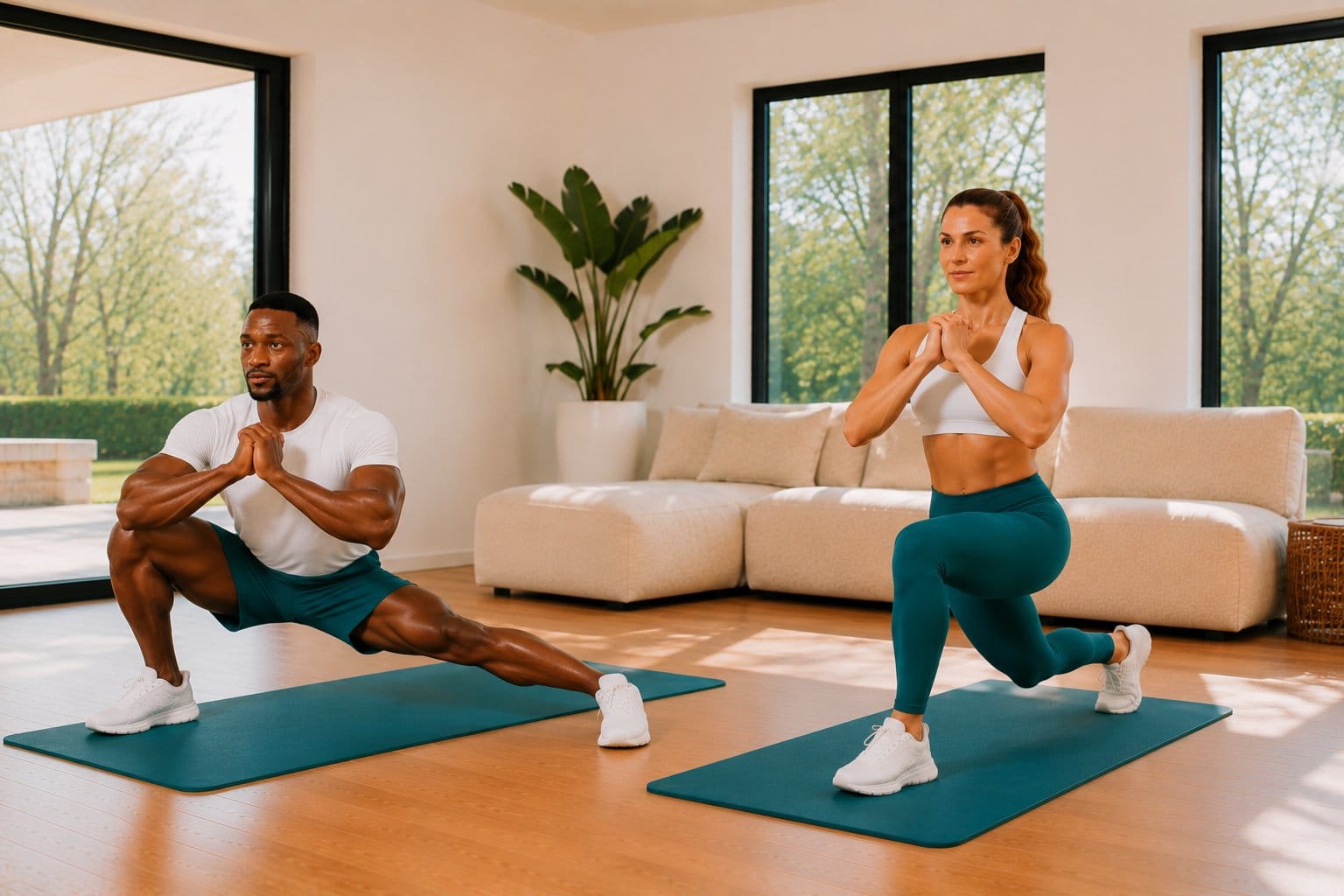
Lower-Body Bodyweight Exercises
1. Squats
First, the squat trains your quads, glutes, hamstrings, and core. Because it works several large muscles at once, it is often called the king of bodyweight moves. As a result, it boosts lower-body strength, mobility, and everyday function.
Here is how to do it well:
- First, stand with your feet about shoulder-width apart.
- Then keep your chest up and brace your core.
- Next, push your hips back as if you are sitting into a chair.
- After that, bend your knees until your thighs reach parallel, or as low as feels comfortable.
- Finally, press through your heels to stand tall again.
As for common mistakes, watch that your knees do not cave in, because rounding the lower back or rising onto the toes also reduces the benefit. If you need it easier, then try a chair squat. However, if you want more, then progress to a jump squat or a single-leg version.
2. Reverse Lunges
Next, reverse lunges train your glutes, quads, hamstrings, and core. Because they work each leg on its own, they improve balance while they fix side-to-side strength gaps.
Here is how to perform them:
- First, stand tall and steady.
- Then step one foot straight back.
- Next, lower both knees until they form roughly 90-degree angles.
- Finally, push through your front heel to return, and then switch sides.
As for common mistakes, avoid leaning too far forward, because letting the front knee drift past the toes or rushing the reps will cost you balance. If you want it easier, then use a wall or chair for support. However, if you want more, then try jumping lunges.
3. Glute Bridges
Because many of us sit for hours, our glutes often switch off. Therefore, glute bridges wake up and strengthen the posterior chain while they support lower-back health. In short, they hit your glutes, hamstrings, and core.
Here is how to do them:
- First, lie on your back with your knees bent and your feet flat.
- Then tighten your core.
- Next, press through your heels and lift your hips.
- After that, rise until your body forms a straight line from shoulders to knees.
- Finally, lower under control.
As for common mistakes, do not overarch the lower back, because pushing through the toes or moving too quickly also reduces results. If you need it easier, then use a partial range of motion. However, if you want more, then try a single-leg glute bridge.
4. Calf Raises
Finally, calf raises target your calves. Because strong calves improve walking, running, jumping, and balance, they also support ankle stability. To perform them, first stand tall, then lift your heels as high as possible, next pause briefly, and finally lower slowly. If you need it easier, then hold a wall for support. However, if you want more, then try a single-leg calf raise.
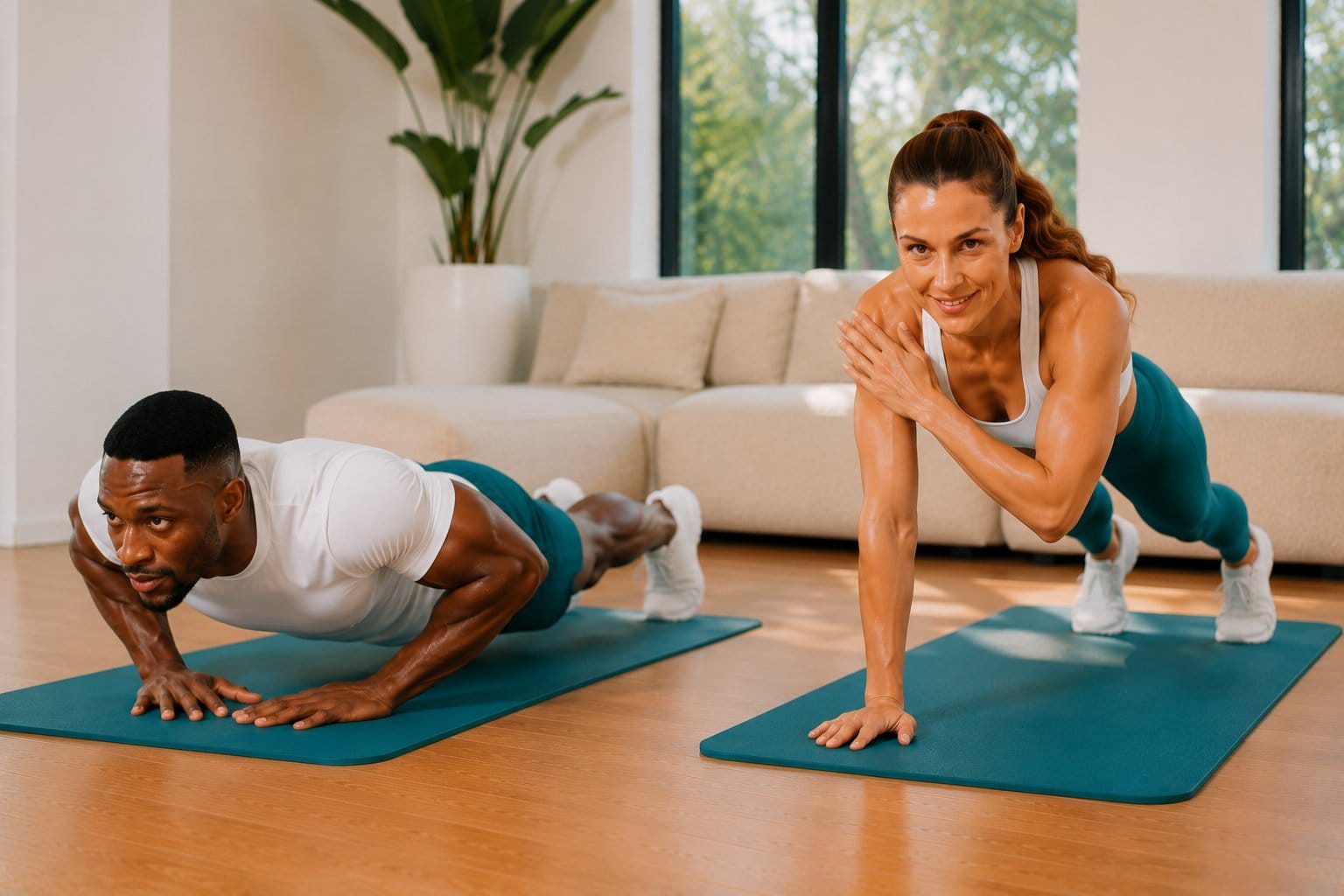
Upper-Body Bodyweight Exercises
5. Push-Ups
Because push-ups hit your chest, shoulders, triceps, and core at once, they rank among the most effective upper-body bodyweight exercises. Moreover, they demand real core stability, so they train your midsection too.
Here is how to do them:
- First, start in a high plank with your hands slightly wider than your shoulders.
- Then keep your body in a straight line.
- Next, lower until your chest nearly touches the floor.
- Finally, push back up with control.
As for common mistakes, avoid sagging hips, because flaring elbows, dropping the head forward, or doing partial reps also limit progress. If you need it easier, then try a wall, incline, or knee push-up. However, if you want more, then move to a decline, diamond, or archer push-up.
6. Pike Push-Ups
Next, pike push-ups shift more load to your shoulders, upper chest, and triceps. As a result, they help prepare you for handstand push-up progressions. To perform one, first start in an inverted “V” with your hips high, then bend your elbows, next lower the top of your head toward the floor, and finally press back up. If you need it easier, then elevate your hands on a chair. However, if you want more, then try a feet-elevated pike push-up.
7. Triceps Dips (Using a Sturdy Chair)
Because dips isolate the back of your upper arm, they build your triceps while they also improve pressing strength. Moreover, they lightly train your shoulders and chest. To perform them, first sit on the edge of a sturdy chair, then place your hands beside your hips, next slide forward, and finally lower until your elbows reach about 90 degrees before you press back up. If you need it easier, then keep your knees bent. However, if you want more, then straighten or elevate your legs.
8. Superman
Finally, the Superman strengthens your lower back, glutes, upper back, and rear shoulders. Because many exercises target the front of the body, this one balances things out and therefore supports better posture. To perform it, first lie face down, then extend your arms forward, next lift your arms, chest, and legs slightly, and finally lower with control after a brief pause. If you need it easier, then lift only the arms or only the legs. However, if you want more, then hold the top position or alternate arm and leg raises.
Train Through Full Movement Patterns
Instead of chasing single muscles, focus on movement patterns. Because your body works as a system, this approach builds balanced, real-world strength. Therefore, use the quick table below to plan a complete session.
| Movement Pattern | Example Exercise | Main Benefit |
|---|---|---|
| Squat | Squat | Leg strength and mobility |
| Lunge | Reverse lunge | Balance and single-leg strength |
| Push | Push-up | Upper-body strength |
| Vertical push | Pike push-up | Shoulder development |
| Hip extension | Glute bridge | Posterior chain strength |
| Pull* | Superman | Upper-back activation and posture |
*Because true pulling moves usually need equipment such as a pull-up bar or suspension trainer, the Superman is a solid bodyweight alternative. Moreover, it strengthens the muscles behind good posture. As a result, training these patterns creates a stronger, more balanced body for both workouts and daily life.
Core, Cardio, and Mobility Bodyweight Exercises
Because a complete routine does more than build muscle, it also sharpens core stability, cardio endurance, balance, and mobility. Together, therefore, these qualities help you move well during workouts and make everyday tasks feel lighter.
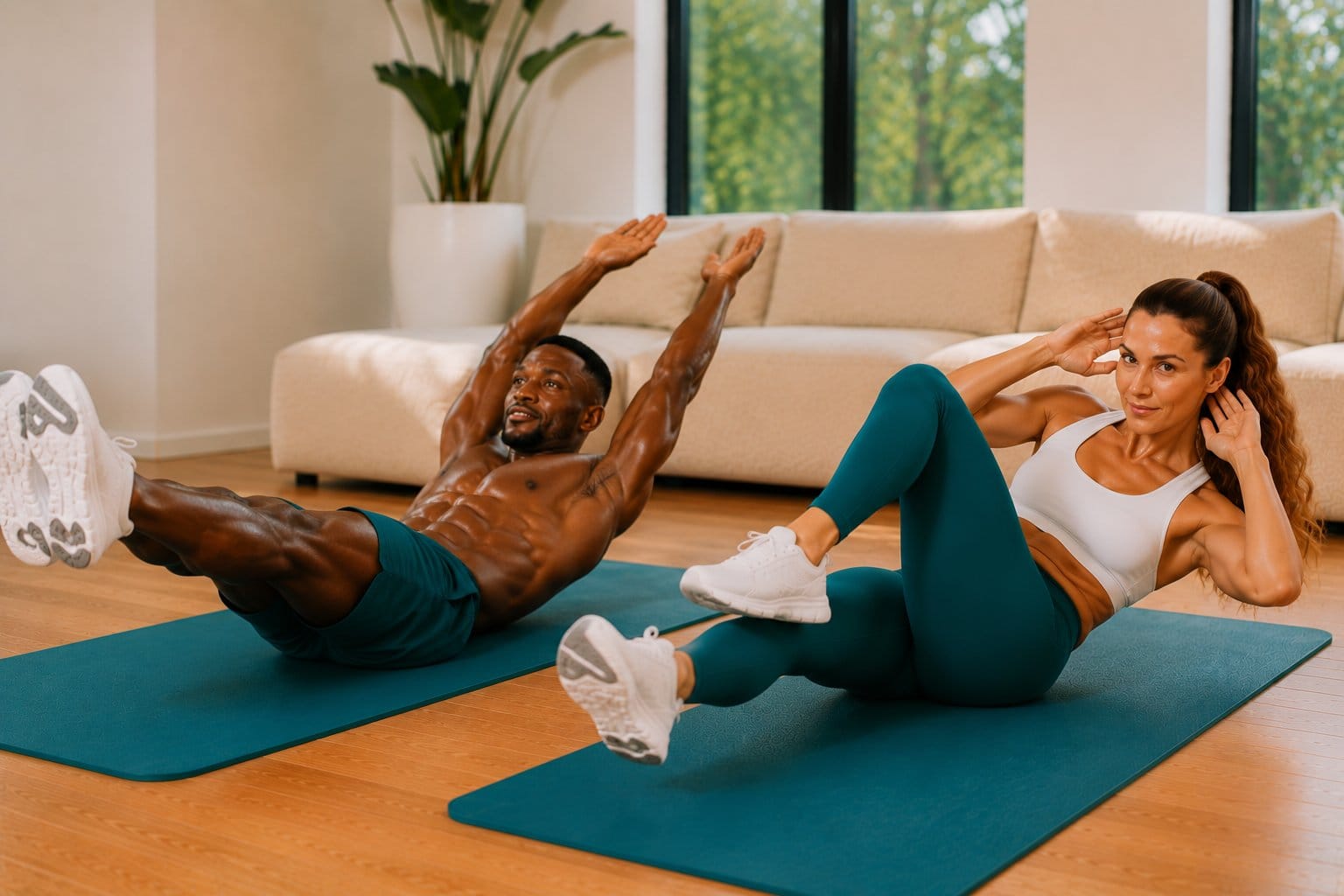
Core Bodyweight Exercises
Although people think of a six-pack, your core is much more than that. In truth, it wraps around your abdomen, lower back, pelvis, hips, and sides. Because a strong core stabilizes your spine and transfers force, it protects you and therefore powers nearly every move. For more on training and revealing your midsection, read our guide to the science of visible abs.
1. Plank
First, the plank trains your transverse abdominis, rectus abdominis, shoulders, lower back, and glutes. Because it builds stability rather than repetitive spinal movement, it teaches your body to hold a strong, neutral position. To do it, first rest on your forearms, then extend your legs, next hold a straight line from head to heels, and finally brace your core while you breathe. As for common mistakes, avoid sagging or piking hips, because holding your breath or looking too far forward also reduces the benefit. If you need it easier, then drop to a knee plank. However, if you want more, then add shoulder taps or an extended plank.
2. Dead Bug
Next, the dead bug trains your deep core muscles, hip stabilizers, and lower abs. Because your limbs move while your core stays still, dead bugs suit beginners and advanced movers alike. To do one, first lie on your back, then reach your arms toward the ceiling, next lift your knees to 90 degrees, and finally lower one arm and the opposite leg before you switch. As for common mistakes, do not arch the lower back, because rushing also reduces control. If you need it easier, then move only your arms or only your legs. However, if you want more, then slow down with longer pauses.
3. Bird Dog
Then the bird dog trains your core, lower back, glutes, and shoulders. Because it demands control, it improves balance, coordination, and spinal stability. To perform it, first start on your hands and knees, then extend one arm forward and the opposite leg back, and finally pause before you switch. As for common mistakes, avoid twisting the hips, because looking up or moving too fast also hurts your form. If you need it easier, then lift only the arm or the leg. However, if you want more, then add a brief hold.
4. Flutter Kicks
After that, flutter kicks train your lower abs and hip flexors. Because they create steady tension, they also build endurance. As for common mistakes, avoid arching the back, because kicking too high or using momentum reduces the effect. If you need it easier, then bend your knees slightly. However, if you want more, then slow down and keep your legs closer to the floor.
5. Russian Twists
Finally, Russian twists train your obliques and rectus abdominis. Because they build rotational strength, they support many athletic and everyday movements. As for common mistakes, avoid rounding the back, because moving only your arms or rushing reduces the challenge. If you need it easier, then keep both feet down. However, if you want more, then lift your feet while you keep a neutral spine.
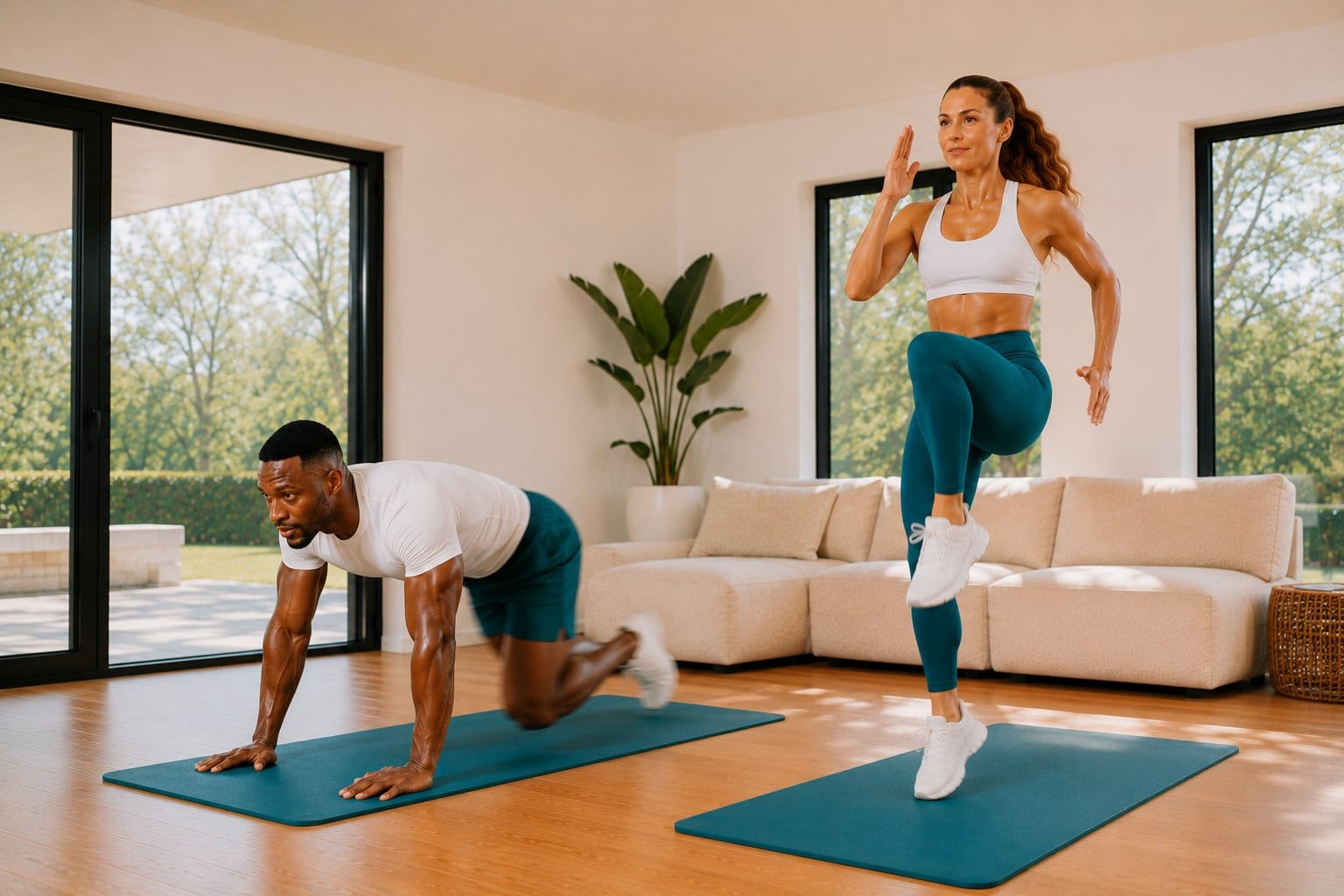
Cardio Bodyweight Exercises
Because cardio moves challenge your heart and lungs, they also burn extra calories. Better still, many bodyweight cardio drills strengthen muscle too, so they stay efficient for short workouts.
6. Jumping Jacks
First, jumping jacks train your full body, calves, and shoulders. Because they raise your heart rate fast, they make a great warm-up, and they also sharpen coordination. If you need it easier, then try step jacks. However, if you want more, then switch to power jacks.
7. High Knees
Next, high knees train your hip flexors, core, calves, and heart. Because they build endurance quickly, they also improve running mechanics. As for common mistakes, avoid leaning back, because landing heavily or using short arm swings reduces the benefit. If you need it easier, then march in place. However, if you want more, then speed up while you stay controlled.
8. Mountain Climbers
Then mountain climbers train your core, shoulders, chest, hip flexors, and legs. Because they blend strength and cardio, they rank among the most efficient moves you can do. As for common mistakes, avoid bouncing the hips, because collapsing the shoulders also breaks your form. If you need it easier, then slow them down. However, if you want more, then try cross-body climbers.
9. Burpees
After that, burpees train your chest, legs, core, shoulders, and heart. Because they challenge nearly every major muscle, they also spike your heart rate. As for common mistakes, avoid poor landings, because a rounded back or sacrificing form for speed raises your injury risk. If you need it easier, then use a walk-out burpee without the jump. However, if you want more, then add a push-up or a tuck jump.
10. Plank Jacks
Finally, plank jacks train your core, shoulders, and hips. Because they mix plank stability with a cardio boost, they strengthen the core under movement. If you need it easier, then step one foot out at a time. However, if you want more, then raise the tempo while you keep a stable torso.
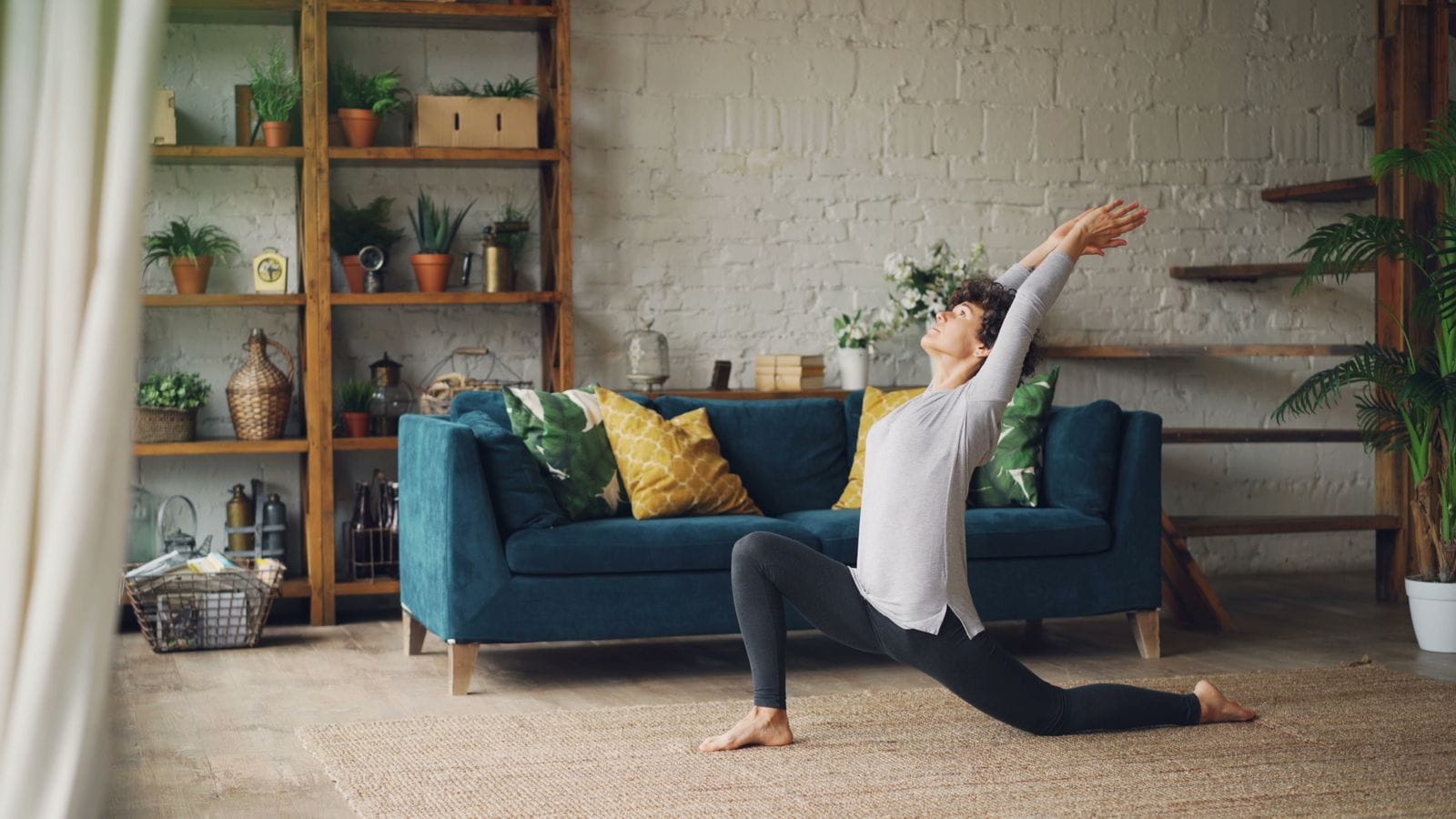
Mobility Bodyweight Exercises
Because mobility drills keep your joints healthy, they also improve movement quality. Therefore, they shine before workouts, after training, and on recovery days. Furthermore, you can pair them with our best warm-up and cool-down routines for even better sessions.
11. Cat-Cow
First, cat-cow targets your spine, neck, and shoulders. Because it flows gently, it improves spinal mobility, reduces stiffness, and encourages calm, controlled breathing.
12. World’s Greatest Stretch
Next, this move targets your hips, hamstrings, thoracic spine, and hip flexors. Because it opens several joints at once, it increases flexibility and rotational mobility, and therefore it doubles as an excellent warm-up.
13. Hip Circles
Then hip circles target your hip joints and glutes. Because they loosen tight hips, they prepare your lower body for squats and lunges.
14. Arm Circles
After that, arm circles target your shoulders and upper back. Because they warm up the shoulder joints, they set you up for any upper-body work.
15. Deep Squat Hold
Finally, the deep squat hold targets your ankles, hips, and lower back. Because it opens the bottom position, it improves squat depth, boosts lower-body mobility, and therefore encourages better posture.
Full-Body Bodyweight Exercises by Goal
If you are not sure where to start, then use this quick-reference table when you plan your next session. As a result, you can match the right moves to your goal in seconds.
| Your Goal | Recommended Bodyweight Exercises |
|---|---|
| Build strength | Squats, push-ups, reverse lunges, pike push-ups, glute bridges |
| Burn calories | Burpees, mountain climbers, high knees, jumping jacks, plank jacks |
| Strengthen your core | Plank, bird dog, dead bug, flutter kicks, Russian twists |
| Improve balance | Bird dog, reverse lunges, single-leg glute bridge |
| Increase mobility | Cat-cow, world’s greatest stretch, hip circles, deep squat hold |
| Beginner-friendly | Chair squats, wall push-ups, step jacks, glute bridges, dead bug |
| Advanced challenge | Jump squats, archer push-ups, burpees with push-up, cross-body mountain climbers |
How to Build Smarter Bodyweight Workouts
Although this library is large, you do not need to perform every move in one session. Instead, choose exercises that complement one another. For example, pair a lower-body move with an upper-body one, add a core drill for stability, include cardio to raise your heart rate, and finish with mobility work. Consequently, this balance builds strength, endurance, and long-term movement quality while it keeps things fun.
How to Build Your Own Workout
Because structure removes guesswork, a balanced session usually includes four parts. As a result, you’ll stay consistent and see results faster:
- First, warm up with light cardio and mobility.
- Then train strength using upper- and lower-body moves.
- Next, add core work for stability and posture.
- Finally, cool down with stretching and mobility.
Sample 20-Minute Full-Body Routine
| Time | Activity |
|---|---|
| 3 minutes | Jumping jacks, arm circles, hip circles |
| 12 minutes | Squats, push-ups, reverse lunges, mountain climbers (40 seconds work, 20 seconds rest) |
| 3 minutes | Plank and bird dog |
| 2 minutes | Cat-cow and deep squat hold |
Because this simple format trains your entire body, it also stays easy to follow. If you prefer to be guided, then follow along on our YouTube channel or grab quick sessions on TikTok.
Sample Weekly Bodyweight Training Plan
Although consistency matters, you do not need the same workout every day. In fact, rotating your focus gives muscles time to recover while it keeps your routine fresh.
| Day | Workout Focus |
|---|---|
| Monday | Full-body strength |
| Tuesday | Cardio HIIT and core |
| Wednesday | Mobility and active recovery |
| Thursday | Lower body and core |
| Friday | Upper body and cardio |
| Saturday | Full-body HIIT |
| Sunday | Stretching, walking, or rest |
Even if you only have 10 to 20 minutes a day, therefore, this schedule can build strength, improve endurance, and keep you consistent. If you are short on time and juggling kids, then our home workouts for busy moms prove that quick sessions still count.
How to Progress Bodyweight Exercises Without Equipment
Although some people believe progress eventually stalls, that is one of the biggest myths about bodyweight training. In reality, therefore, you can keep challenging your muscles without adding a single weight. For example, try one of these progression methods:
- First, increase your reps.
- Then extend the work interval.
- Next, reduce your rest time.
- After that, slow the lowering phase of each rep.
- Also, add another round to your circuit.
- Then progress to a harder variation.
- Furthermore, improve your range of motion.
- Finally, focus on smoother, more controlled technique.
Because progressive overload is not limited to heavier weights, small tweaks keep driving results. Since recovery matters just as much, learn why in our guide to rest days and recovery.
Safety Tips for Every Bodyweight Workout
Because good technique always beats extra reps, keep these guidelines in mind whenever you train:
- First, warm up before challenging movements.
- Then move through a comfortable range of motion.
- Also, breathe steadily throughout each exercise.
- However, stop if you feel sharp or sudden pain.
- Meanwhile, stay hydrated, especially during longer sessions.
- Furthermore, allow time to recover between intense workouts.
- Finally, choose variations that match your current ability.
In short, consistency built on quality movement matters far more than pushing past your limits. As a bonus, therefore, it also helps you track real progress, which we cover in how to track fitness progress without a scale.
Frequently Asked Questions About Bodyweight Exercises
Can bodyweight exercises build muscle?
Yes, they can. Because muscles respond to tension, bodyweight training builds muscle when the moves are hard enough and done consistently. Moreover, harder variations, more volume, and a controlled tempo all raise the demand on your muscles.
Are bodyweight workouts suitable for beginners?
Absolutely, they are. For example, many bodyweight exercises have gentle versions, such as wall push-ups, chair squats, and knee planks. As your strength grows, therefore, you can graduate to tougher variations at your own pace.
Can I lose weight with bodyweight exercises?
Yes, you can. Because they raise your daily calorie burn and help preserve lean muscle, bodyweight workouts support weight loss. Furthermore, when you combine them with balanced nutrition and healthy habits, they play a real role in sustainable results.
How often should I do bodyweight workouts?
In general, most healthy adults do well with three to six sessions per week. However, the right number depends on intensity, recovery, and your personal goals.
Do I need any equipment?
Usually, you do not. Although a few moves, like triceps dips, use a sturdy chair, most need nothing at all. Similarly, a comfy mat can make floor work nicer, yet it stays optional rather than essential.
Why Sanook Fit Focuses on Bodyweight Exercises
Because we believe fitness should be within reach for everyone, Sanook Fit builds workouts around bodyweight exercises you can do almost anywhere. As a result, every routine is designed to be:
- No equipment required
- Easy to follow
- Perfect for home, travel, or the outdoors
- Scalable for beginners and advanced movers
- Time-efficient for busy schedules
- Focused on real-world fitness
Whether you want a quick morning session, a full-body HIIT blast, or a targeted core workout, therefore, our growing library gives you the building blocks. In addition, you can follow along and stay motivated on YouTube, Instagram, TikTok, and Facebook.
Keep Learning, Keep Moving
Because every move you master expands what your body can do, progress builds on itself. Still, you do not need to learn them all in one week. Instead, start with the basics, practice good technique, and add new exercises as your confidence grows.
Remember, the best exercise is not the fanciest one. Rather, it is the one you will actually repeat with solid form. Over time, therefore, those steady efforts lead to stronger muscles, better mobility, greater confidence, and a healthier life. Wherever you are on your journey, your own body remains the most powerful training tool you already own, so use it well.
References
- World Health Organization. (2020). WHO Guidelines on Physical Activity and Sedentary Behaviour.
- American College of Sports Medicine. (2021). ACSM’s Guidelines for Exercise Testing and Prescription (11th ed.).
- National Strength and Conditioning Association. (2021). Essentials of Strength Training and Conditioning (4th ed.).
- Centers for Disease Control and Prevention. Physical Activity Basics.
- National Academy of Sports Medicine. (2022). NASM Essentials of Personal Fitness Training (7th ed.).
- Mayo Clinic. Exercise: 7 Benefits of Regular Physical Activity.