To begin with, most people start core and abs training chasing one thing: a visible six-pack. However, real core training gives you so much more than that. Your core powers nearly every move you make, so a strong midsection helps you stand tall, lift safely, and move with confidence. Because of this, smart abs workouts build strength you can actually use, not just muscles you can see.
Furthermore, your core works constantly. It stabilises your spine when you walk, climb stairs, carry groceries, or chase your kids around the yard. Whether you are holding a Plank or doing bodyweight exercises, your core is on the job. Therefore, training it well pays off every single day.
In this complete guide to core and abs training, you will learn how your core really works, why endless crunches fall short, and which simple, equipment-free exercises build genuine strength. As a result, you will finish with a clear plan you can start today, right at home.
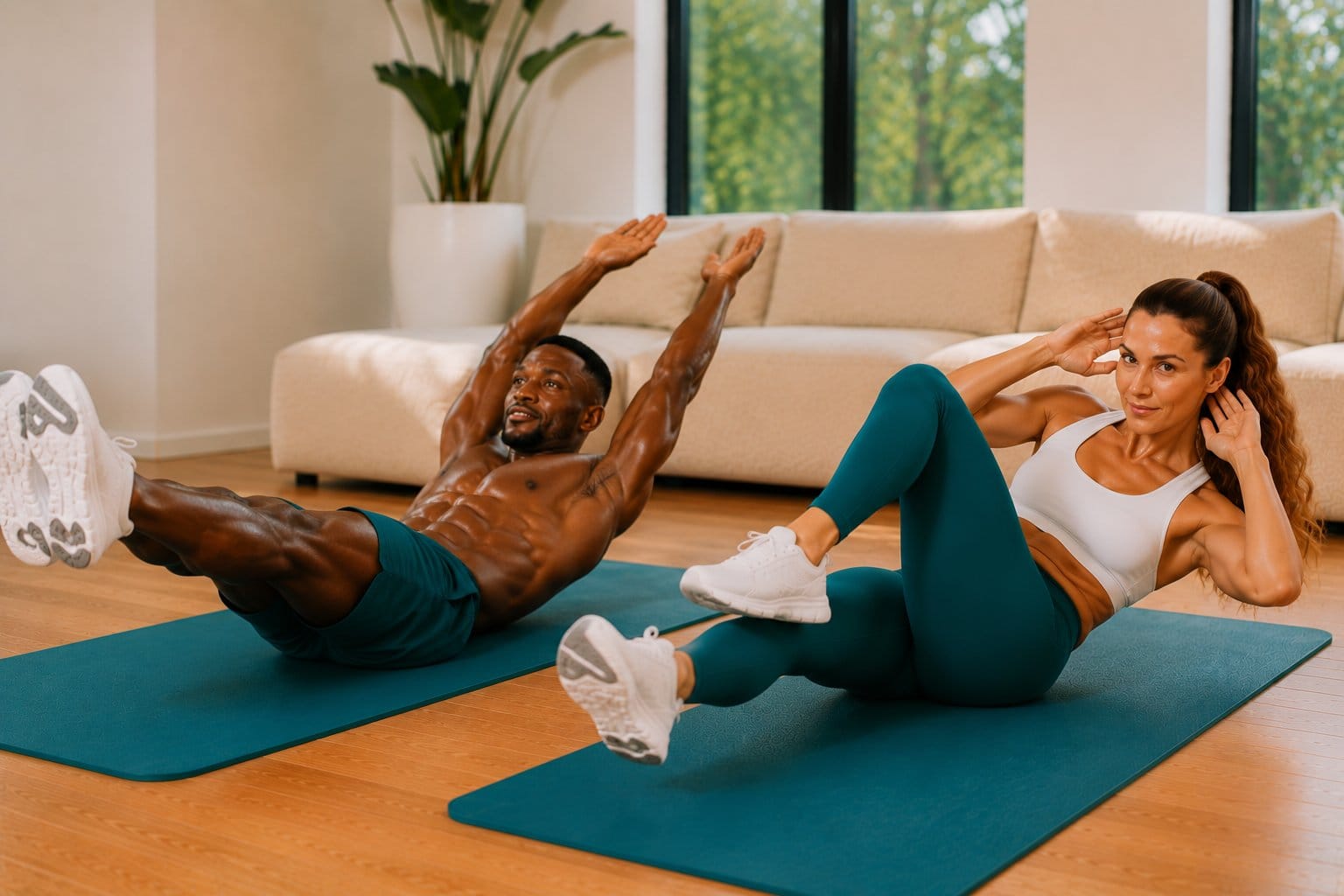
Core and Abs Training Starts Here: What Is Your Core?
For starters, many people assume the core is just the abs on the front of the belly. In reality, your core is a whole team of muscles that wraps around your torso. Together, they keep you steady and help you move well.
Because these muscles work as a unit, effective core and abs training targets all of them, not only the ones you can see. Your core includes:
- Rectus abdominis (the “six-pack” muscle)
- Transverse abdominis (deep stabilising muscles)
- Internal and external obliques
- Erector spinae (lower back)
- Multifidus
- Diaphragm
- Pelvic floor muscles
- Glutes and hip muscles
Think of your core as the foundation of a house. Naturally, a strong foundation supports everything built on top of it. Therefore, when your core is stable, the rest of your body moves more safely and efficiently.
Why Core and Abs Training Matters More Than Visible Abs
Notably, a strong core improves far more than your workouts. In fact, it shapes how you feel and move all day long. As a result, consistent core training can help you:
- Improve your posture
- Keep better balance
- Increase overall stability
- Lift objects more safely
- Reduce strain on your lower back
- Boost athletic performance
- Transfer power smoothly during movement
- Support healthy, active ageing
Moreover, almost every bodyweight move relies on your core to some degree. Even exercises that seem to target your arms or legs need your midsection to hold you steady. Because of that, core strength quietly improves everything else you do.
Core Strength vs. Visible Abs
One of the biggest fitness myths is that strong abs always look defined. However, that simply is not true. Someone can have excellent core strength without a clear six-pack, and someone with visible abs is not automatically stronger or more stable.
Instead, how visible your abs appear depends mostly on:
- Genetics
- Overall body-fat percentage
- Nutrition
- Hydration
- Muscle development
In other words, core and abs training strengthens the muscles, while nutrition and body composition decide how much you can see. If you want the full science behind that, read our guide on building and revealing visible abs at home.
The Four Jobs Your Core Does
Importantly, your core does much more than bend you forward during crunches. In truth, it handles several distinct jobs, and good core and abs training trains each one.
1. Stabilisation
First, your core keeps your spine steady while you move. Exercises like the Plank challenge this skill directly, because they teach your body to hold a strong, neutral line.
2. Anti-Rotation
Next, your core stops your torso from twisting when it should stay still. Bird Dogs and Plank Shoulder Taps are great examples, since both force you to resist unwanted movement.
3. Rotation
Some movements, however, need controlled twisting. Russian Twists build this pattern, which helps you turn, reach, and change direction with control.
4. Hip and Spine Control
Finally, your core coordinates your hips, pelvis, and spine. Dead Bugs and Glute Bridges sharpen this teamwork, so your lower back stays protected during everyday tasks.
Because a complete program trains all four jobs, you end up with a balanced, capable core rather than one that only looks good in the mirror.
Why Endless Crunches Are Not Smart Core and Abs Training
To be fair, crunches are not useless. Still, doing hundreds of them every day is not the fastest route to a stronger core. Instead, most modern programs favour moves that build stability while working several muscles at once.
For that reason, exercises such as Planks, Dead Bugs, Bird Dogs, Mountain Climbers, Hollow Body Holds, and Glute Bridges often deliver bigger results. They teach your body to resist unwanted movement rather than simply create it. Therefore, smart core and abs training should mix dynamic moves with stabilising ones.
The Benefits of Bodyweight Core and Abs Training
Bodyweight moves suit core and abs training especially well, because they push your abs to work with your hips, shoulders, and lower back as one system. Better still, you need almost nothing to start. Key advantages include:
- No equipment required
- Beginner-friendly and easy to scale
- Perfect for training at home
- Functional, real-world movement patterns
- Very little space needed
- Simple to progress with new variations
Whether you have five minutes or thirty, bodyweight core exercises fit almost any schedule. As a result, consistency becomes far easier to maintain.
Common Core and Abs Training Myths
Before we get to the exercises, let us clear up a few stubborn myths. Because these ideas trip up so many people, busting them will save you time and effort.
Myth 1: Crunches Burn Belly Fat
Unfortunately, you cannot spot-reduce fat from one area through exercise alone. Instead, fat loss happens across your whole body when you hold a calorie deficit over time.
Myth 2: More Reps Always Mean Better Results
Hundreds of crunches are not better than a smart routine of Planks, Dead Bugs, and Mountain Climbers. On the contrary, quality movement usually beats endless repetition for long-term gains.
Myth 3: Core and Abs Training Is Only for Athletes
Everyone benefits from a stronger core. Office workers, parents, students, older adults, and total beginners all lean on core stability during daily life. Therefore, this kind of training is truly for everybody.
The Best Bodyweight Core and Abs Exercises
Meanwhile, a great core workout does much more than make your abs burn. The best moves teach your core to stabilise your spine, control motion, resist twisting, and cooperate with the rest of your body. Because that is exactly how your core behaves in real life, these exercises carry over to everyday tasks and sport.
Below, you will find some of the most effective bodyweight core exercises, along with the muscles they work, how to perform them, common mistakes, and ways to progress. Best of all, none of them need equipment.
1. Forearm Plank
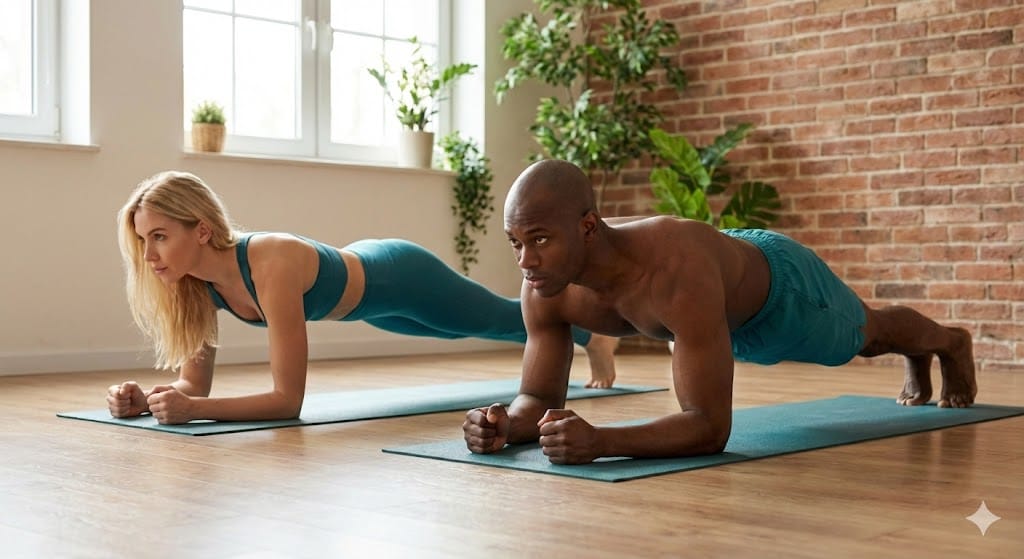
Main muscles: transverse abdominis, rectus abdominis, obliques, shoulders, and glutes. Because the Plank trains your body to hold a strong, neutral position instead of bending your spine, it is one of the best stability builders around.
How to do it:
- Place your forearms on the floor with elbows under your shoulders.
- Extend your legs straight behind you.
- Keep your body in one line from head to heels.
- Brace your core and keep breathing steadily.
Common mistakes: letting the hips sag, hiking them too high, holding your breath, or looking too far forward. Make it easier with a Knee Plank, or harder with an Extended Plank or Plank Shoulder Taps.
2. Side Plank
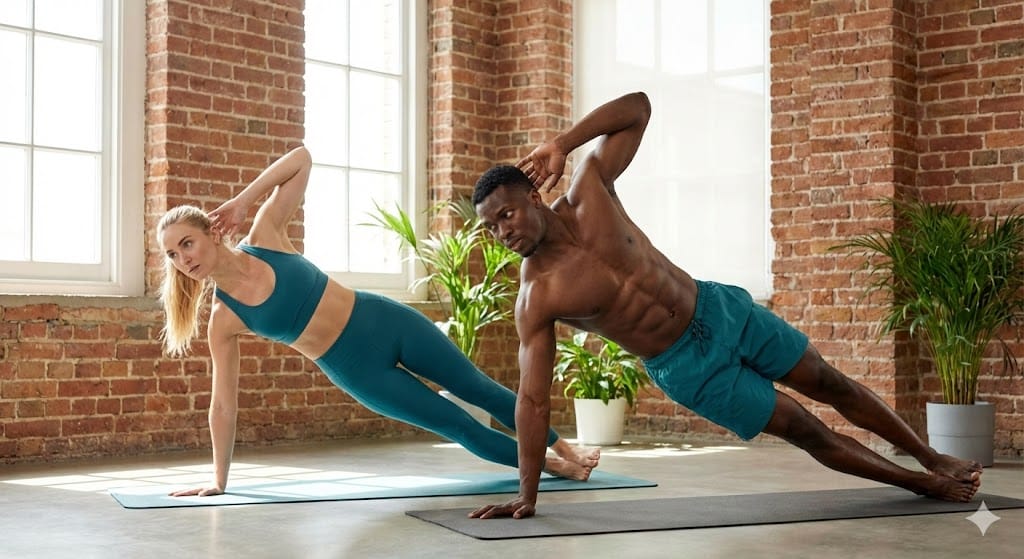
Main muscles: internal and external obliques, glute medius, and shoulder stabilisers. Many workouts skip the sides of the body, yet Side Planks build those stabilisers while sharpening balance and spinal support.
How to do it:
- Lie on one side and place your forearm under your shoulder.
- Lift your hips until your body forms a straight line.
- Hold and breathe steadily, then switch sides.
Common mistakes: dropping the hips, rotating the torso, or holding your breath. Make it easier with a bent-knee version, or harder by adding a leg raise.
3. Dead Bug
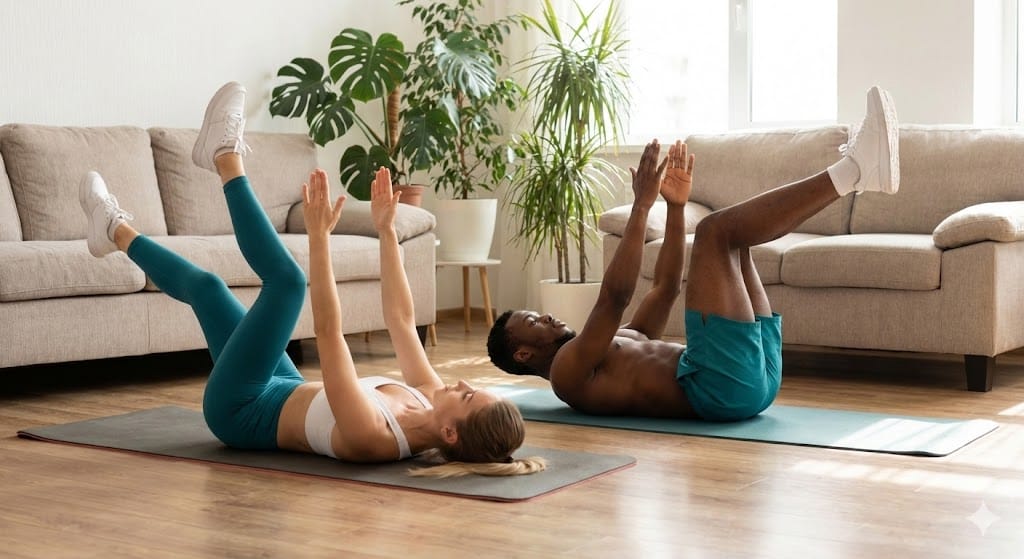
Main muscles: deep core, transverse abdominis, and hip stabilisers. Because your arms and legs move while your spine stays still, the Dead Bug is fantastic for coordination and control.
How to do it:
- Lie on your back with arms above your shoulders and knees bent to 90 degrees.
- Slowly extend one arm and the opposite leg.
- Return with control, then alternate sides.
Common mistakes: arching the lower back, moving too fast, or losing tension. Make it easier by moving only the arms or only the legs, or harder by pausing for two to three seconds each rep.
4. Bird Dog
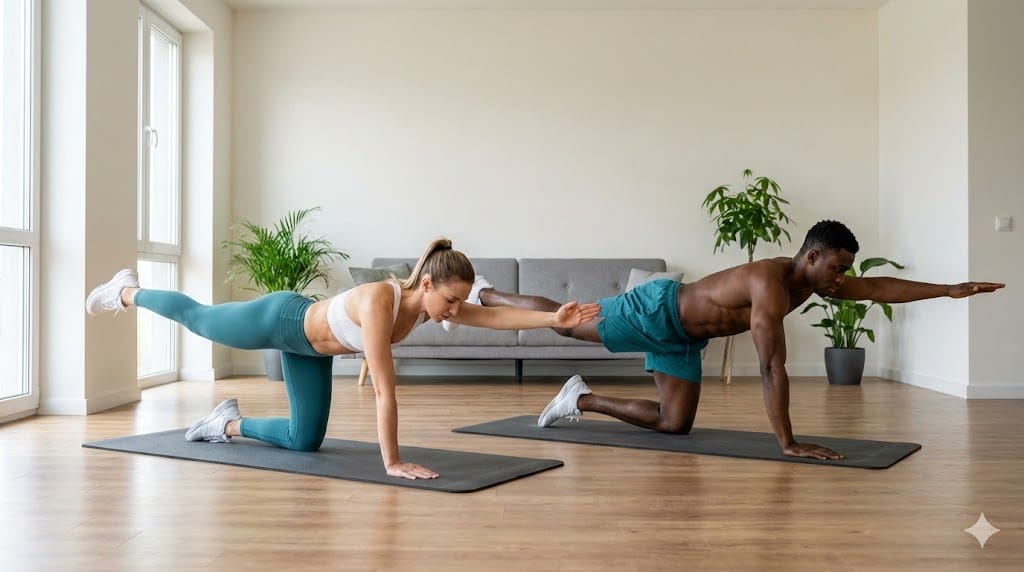
Main muscles: core, lower back, glutes, and shoulders. The Bird Dog improves spinal stability, posture, and balance, so it strengthens the muscles that keep you moving well.
How to do it:
- Start on your hands and knees.
- Extend one arm forward and the opposite leg back.
- Hold briefly, return with control, then alternate sides.
Common mistakes: twisting the hips, looking up, or rushing. Make it easier by extending only the arm or leg, or harder by holding each rep for five seconds.
5. Mountain Climbers
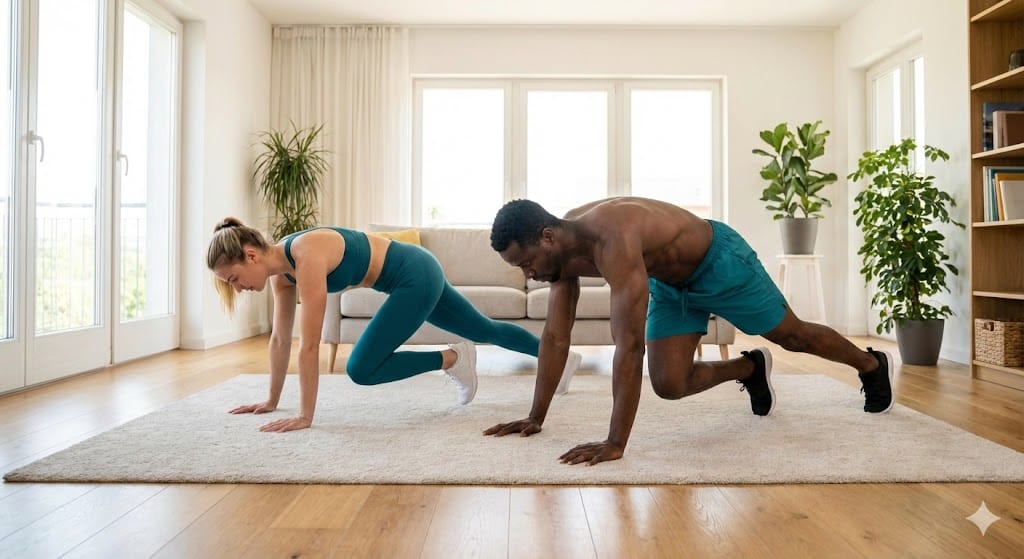
Main muscles: rectus abdominis, obliques, shoulders, hip flexors, and chest. Because they mix core work with cardio, Mountain Climbers are one of the most efficient bodyweight moves you can do. They also fit perfectly into an at-home HIIT workout.
How to do it:
- Start in a high plank position.
- Drive one knee toward your chest.
- Switch legs smoothly while keeping your hips stable.
Common mistakes: bouncing the hips, letting the shoulders collapse, or trading form for speed. Make it easier with slow climbers, or harder with cross-body climbers.
6. Hollow Body Hold
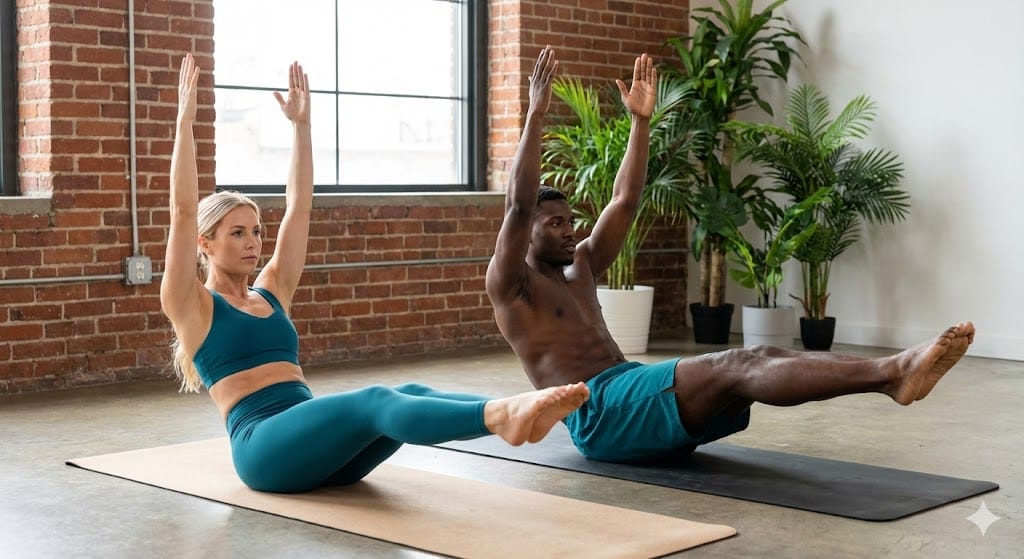
Main muscles: rectus abdominis, transverse abdominis, and hip flexors. Gymnasts love the Hollow Body Hold because it builds full-body tension and teaches superb core control.
How to do it:
- Lie on your back and press your lower back gently into the floor.
- Lift your shoulders slightly and reach your arms overhead.
- Raise your legs while keeping your lower back on the floor.
Common mistakes: arching the lower back, raising the legs too high, or holding your breath. Make it easier by bending your knees, or harder by lowering your legs closer to the floor.
7. Flutter Kicks
Main muscles: lower abdominals and hip flexors. Flutter Kicks keep constant tension in the lower belly while building muscular endurance. Because they never fully rest the muscles, they challenge your core in a unique way.
Common mistakes: arching the lower back, swinging the legs too high, or relying on momentum. Make it easier by bending your knees slightly, or harder by slowing down and keeping your legs lower.
8. Russian Twists
Main muscles: internal and external obliques and rectus abdominis. Russian Twists build rotational strength, so they help you turn, reach, and change direction with control.
How to do it:
- Sit with your knees bent and lean back slightly, keeping your spine long.
- Rotate your torso from side to side with control.
- Move deliberately instead of using momentum.
Common mistakes: rounding the back, twisting only the arms, or rushing. Make it easier by keeping both feet down, or harder by lifting your feet while holding good posture.
9. Glute Bridge
Main muscles: glutes, hamstrings, and core. Although people often call it a lower-body move, the Glute Bridge matters for core and abs training because it improves pelvic stability and strengthens the muscles that support your lower back. For more, try our no-equipment leg and glute workout.
Make it easier with a partial range of motion, or harder with a single-leg version.
Build a Complete Core and Abs Training Workout
Instead of grinding through five crunch variations, choose moves that challenge different core jobs. That way, you train the whole system rather than one small slice of it. Here is a simple example that covers every base:
| Exercise | Core Function |
|---|---|
| Forearm Plank | Stability |
| Side Plank | Lateral stability |
| Dead Bug | Coordination |
| Bird Dog | Anti-rotation |
| Mountain Climbers | Dynamic stability |
| Hollow Body Hold | Full-body tension |
| Russian Twists | Controlled rotation |
| Glute Bridge | Pelvic stability |
Because this mix trains several movement patterns, it builds a stronger, more balanced core than any single exercise could. Prefer to stay on your feet? Our standing abs workout is a great no-floor option.
How Often Should You Do Core and Abs Training?
Here is the good news: you do not need an hour of ab work. In fact, short, focused sessions work better for most people. Because your core also fires during many full-body moves, it often gets extra training even on non-core days.
| Experience Level | Weekly Core Sessions |
|---|---|
| Beginner | 2 sessions |
| Intermediate | 2 to 4 sessions |
| Advanced | 3 to 5 sessions |
Remember that Push-Ups, Squats, Lunges, and Burpees all challenge your core too. Consequently, your midsection likely gets more work than you realise, so aim for consistent quality over sheer volume.
How to Build Effective Core and Abs Training Workouts
Knowing the best exercises is only half the battle. To build real strength, you also need to combine them into balanced sessions that hit different core jobs. A routine of nothing but crunches trains only a sliver of your midsection, whereas a varied plan develops stability, control, endurance, and strength together. In short, the goal is not hundreds of reps; it is making every rep count.
The Four Core and Abs Training Movement Categories
A complete core and abs training plan should draw from several movement categories. Because each category protects and powers your body differently, covering all four keeps your training well-rounded.
1. Anti-Extension. These moves teach your core to resist over-arching your lower back. Examples include the Forearm Plank, Hollow Body Hold, and Plank Walkouts. As a result, your posture improves and your spine stays protected during lifting and running.
2. Anti-Rotation. These keep your torso steady while your limbs move. Try Bird Dogs, Plank Shoulder Taps, and slow Mountain Climbers. Therefore, your balance and coordination improve for walking, stairs, and sport.
3. Rotation. Controlled twisting strengthens the muscles you use to turn. Russian Twists, standing torso rotations, and cross-body climbers all fit here. Still, always favour control over speed.
4. Hip and Pelvic Stability. These sharpen teamwork between your hips, pelvis, and lower back. Dead Bugs, Glute Bridges, and single-leg bridges are ideal, since strong hips support better posture and easier walking.
Sample Core and Abs Training Workouts for Every Level
So, ready to train? These three core and abs training routines scale with you. Because they use only your body weight, you can do them at home, outdoors, or while travelling. New to exercise? Pair them with our complete beginner bodyweight guide.
Beginner Core Workout
If you are new to training, focus on clean technique first. Use 30 seconds of work and 30 seconds of rest, then complete two rounds.
| Exercise | Focus |
|---|---|
| Forearm Plank | Stability |
| Dead Bug | Coordination |
| Bird Dog | Anti-rotation |
| Glute Bridge | Pelvic stability |
| Cat-Cow | Mobility |
As a result, you build core strength while grooving better movement patterns.
Intermediate Core Workout
Once you own the basics, raise the challenge. Cut the rest to 20 seconds, keep 40 seconds of work, and complete three rounds.
| Exercise | Focus |
|---|---|
| Forearm Plank | Stability |
| Side Plank | Obliques |
| Mountain Climbers | Dynamic core |
| Russian Twists | Rotation |
| Hollow Body Hold | Full-body tension |
Throughout, aim for controlled movement rather than speed.
Advanced Core Challenge
Experienced lifters can crank up intensity without any gear. Use 45 seconds of work, 15 seconds of rest, and complete three rounds.
| Exercise | Focus |
|---|---|
| Plank Shoulder Taps | Anti-rotation |
| Hollow Body Hold | Full-body stability |
| Cross-Body Mountain Climbers | Dynamic control |
| Side Plank with Leg Raise | Lateral stability |
| Flutter Kicks | Lower-ab endurance |
| Single-Leg Glute Bridge | Pelvic stability |
Even as fatigue builds, hold your form. Because sloppy reps raise injury risk, quality always wins.
How to Progress Your Core Training
Over time, your muscles adapt. Therefore, if you repeat the same session for months, progress eventually stalls. Instead of just adding reps, try one of these smarter strategies.
Increase time under tension. Hold Planks longer or slow the lowering phase of each rep. Because your muscles work harder for longer, they grow stronger.
Reduce rest periods. Shorter breaks raise the overall challenge, so your endurance climbs.
Improve exercise quality. Focus on better posture, smoother motion, controlled breathing, and full range of motion. Often, excellent technique beats simply doing more.
Advance the exercise. Progress gradually, for example: Knee Plank to Forearm Plank to Plank Shoulder Taps, or Glute Bridge to Single-Leg Glute Bridge. However, master each step before moving on.
Common Core and Abs Training Mistakes to Avoid
Fortunately, steering clear of these slip-ups helps you get more from every session.
Doing too many crunches. Crunches mainly train the rectus abdominis. Therefore, add stability, anti-rotation, and hip work for balance.
Holding your breath. Many people brace by freezing their breath. Instead, breathe steadily while keeping your abs engaged.
Rushing your reps. Fast reps often cut muscle engagement, so move deliberately from start to finish.
Ignoring the lower back and glutes. A strong core is more than front abs. Because of that, include Bird Dogs, Supermans, and Glute Bridges to support your spine and pelvis.
Training abs every day. More is not always better. Your muscles need recovery, so two to four focused sessions a week are plenty for most people, especially alongside full-body workouts.
Core and Abs Training for Everyday Life
Similarly, a stronger core does not just upgrade your workouts. In fact, it makes everyday tasks noticeably easier. Because your midsection stabilises nearly every move, you may soon notice wins when:
- Carrying shopping bags
- Lifting children
- Climbing stairs
- Sitting with better posture
- Walking longer distances
- Playing recreational sports
- Tackling household chores
Honestly, these practical benefits often matter far more than chasing visible abs alone.
Six-Packs, Nutrition, and Long-Term Core Strength
Ultimately, building a strong core is one of the best investments you can make in your health. A sturdy midsection improves posture, sharpens balance, supports your spine, and boosts nearly every kind of exercise. Visible abs can be a personal goal, of course, but they should not be the only scoreboard. Ultimately, real core strength is about what your body can do, not just how it looks.
Nutrition and Visible Abs
People love to say, “abs are made in the kitchen.” While that is a simplification, nutrition truly shapes abdominal definition. Core and abs training strengthens the muscles, yet your eating habits decide how much body fat covers them. So instead of chasing crash diets, build sustainable habits such as:
- Eating a variety of nutrient-rich foods
- Including enough protein to support recovery
- Staying hydrated throughout the day
- Limiting highly processed foods without banning treats you love
- Matching your calorie intake to your goals
Keep in mind that everyone stores fat differently. Because genetics, age, sex, hormones, and lifestyle all play a role, visible abs are never the only sign of health or a strong core.
Signs Your Core Is Getting Stronger
Interestingly, progress does not always show up in the mirror. Instead, watch for these everyday wins:
- Holding a Plank for longer
- Better posture while sitting and standing
- Improved balance
- More stability during Push-Ups and Squats
- Less fatigue during daily activities
- Easier lifting and carrying
- Greater control during sport and play
Encouragingly, these changes often appear well before any visible difference does.
Make Core and Abs Training Part of Your Week
Rather than saving abs for a single “core day,” weave them through your week. That way, you train often while still allowing recovery. For example:
- Monday: full-body workout with Planks
- Wednesday: core session with Bird Dogs and Dead Bugs
- Friday: HIIT session featuring Mountain Climbers and Plank Jacks
Because this rhythm spreads the work out, your core keeps improving without burning out.
Why Sanook Fit Focuses on Functional Core Training
Here at Sanook Fit, we believe your core should help you move better, not just look different. That is why our workouts lean on functional bodyweight moves that build strength, stability, balance, and endurance together. As a result, every routine is:
- Equipment-free
- Suitable for beginners and seasoned exercisers alike
- Easy to do at home, outdoors, or while travelling
- Focused on real-world movement
- Time-efficient for busy lives
So whether you follow a dedicated core session or a full-body HIIT blast, you strengthen your midsection through purposeful movement rather than endless reps.
Follow Sanook Fit for Free Workouts
Additionally, want guided routines you can follow along with? Join the Sanook Fit community and train with us across every platform:
- Sanook Fit on YouTube – full follow-along workouts
- Sanook Fit on TikTok – quick tips and short routines
- Sanook Fit on Facebook – community and updates
- Sanook Fit on Instagram – daily motivation and demos
Frequently Asked Questions
How often should I train my core?
For most people, two to four dedicated core workouts a week are plenty. Because your core also fires during Push-Ups, Squats, Lunges, Burpees, and Mountain Climbers, you rarely need long ab sessions every day.
Can I train abs every day?
You can do light core activation or mobility work daily if it feels good. However, intense sessions need recovery afterward, just like any other muscle group. That recovery is exactly when your muscles adapt and grow stronger.
What is the best exercise for abs?
Honestly, there is no single “best” move, because different exercises train different jobs. Instead, match the exercise to your goal:
| Goal | Recommended Exercises |
|---|---|
| Stability | Forearm Plank, Hollow Body Hold |
| Anti-rotation | Bird Dog, Plank Shoulder Taps |
| Rotation | Russian Twists |
| Dynamic core | Mountain Climbers |
| Hip and pelvic stability | Glute Bridge, Dead Bug |
Therefore, a balanced program that blends several patterns beats relying on one move alone.
Can core exercises reduce belly fat?
No, and this is one of the most common fitness myths. You cannot choose where your body loses fat. Core exercises strengthen the muscles underneath, yet reducing body fat depends mostly on nutrition and overall activity. For visible abs, combine strength training, cardio, balanced eating, and good sleep.
Do I need equipment to build a strong core?
Not at all. Many of the most effective moves need only your body weight. Planks, Bird Dogs, Dead Bugs, Hollow Body Holds, Mountain Climbers, and Side Planks deliver an excellent workout with zero gear.
Final Thoughts on Core and Abs Training
In the end, a stronger core supports nearly everything you do. It helps you move with confidence, hold better posture, lift safely, and stay active for life. So do not measure success by your abs alone. Instead, judge it by how your body feels, how well it moves, and how consistently you show up.
So start with the basics, master your technique, progress gradually, and stay consistent. Over time, those small efforts add up to a stronger core, a healthier body, and more confidence in everything you do. After all, real strength begins at your center.
References
- World Health Organization (2020). WHO Guidelines on Physical Activity and Sedentary Behaviour.
- American College of Sports Medicine. ACSM’s Guidelines for Exercise Testing and Prescription (11th ed.), 2021.
- National Strength and Conditioning Association. Essentials of Strength Training and Conditioning (4th ed.), 2021.
- National Academy of Sports Medicine. NASM Essentials of Personal Fitness Training (7th ed.), 2022.
- Centers for Disease Control and Prevention. Physical Activity Basics.
- Mayo Clinic. Exercise: 7 Benefits of Regular Physical Activity.