Want to build real strength without a gym? Then this full-body calisthenics workout is exactly what you need. Because it uses only your body weight, you can train every major muscle group in one session, right at home. So forget expensive machines and crowded gyms. Instead, all it takes is a little space, a few smart movements, and the will to show up.
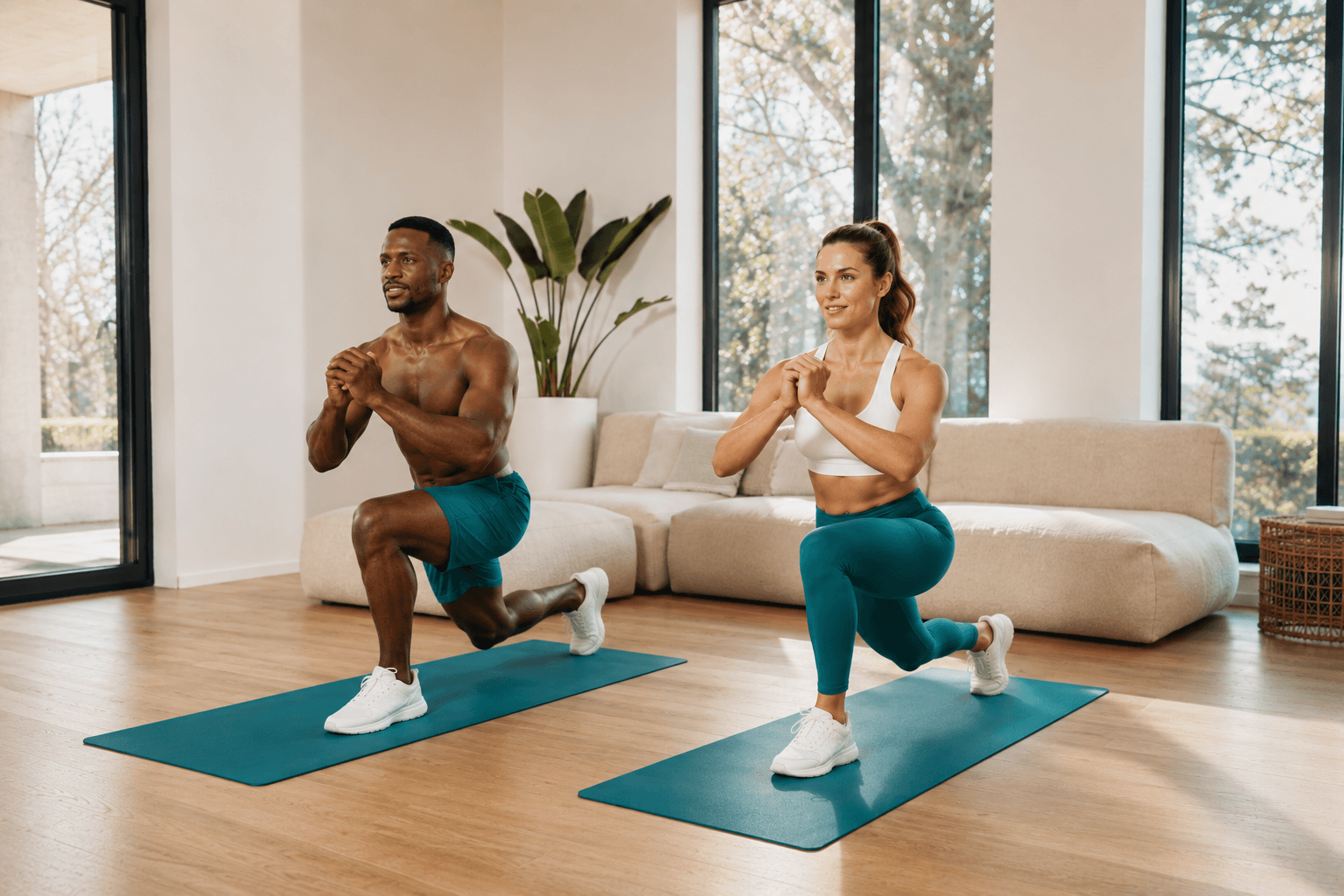
Quick Answer: What Is a Full-Body Calisthenics Workout?
A full-body calisthenics workout uses bodyweight exercises to train several major muscle groups in a single session. By combining moves such as squats, push-ups, lunges, glute bridges, planks, and mountain climbers, you build strength, boost endurance, improve mobility, and burn calories. Best of all, you can do it without a gym or any pricey gear.
Why a Full-Body Calisthenics Workout Is So Effective
Many people assume you need a gym membership, heavy weights, expensive machines, or fancy gadgets to get fit. However, the truth is far simpler: your own body can deliver an incredibly effective workout. Because calisthenics uses your body weight as resistance, it develops strength, coordination, stability, and endurance through natural movement patterns.
That’s why it has stayed popular for generations, from soldiers and athletes to everyday people training in their living rooms. Furthermore, bodyweight training scales to any level, so it works whether you’re just starting out or chasing an advanced challenge. If you’re brand new, our bodyweight training for beginners guide is a perfect first step.
The Key Benefits of Training With Your Body Weight
So what makes this style of training worth your time? In short, it delivers a lot for very little cost.
- Builds full-body strength because every session hits your legs, core, and upper body.
- Improves mobility and balance, since natural movements train your joints through their full range.
- Saves time and money, as you skip the commute, the queues, and the membership fees.
- Adapts to any level, because each move has an easier and a harder version.
- Supports fat loss, since bigger movements raise your heart rate and burn calories.
Who Is This Full-Body Calisthenics Workout For?
Honestly, the short answer is almost everyone. Because every exercise can be adjusted, this routine suits beginners, busy parents, and seasoned athletes alike. Therefore, no previous calisthenics experience is required. You simply pick the version of each move that matches your current ability, and then progress at your own pace.
What Equipment Do You Need? (Spoiler: None)
One of the biggest strengths of this full-body calisthenics workout is its simplicity. In fact, you need almost nothing to begin.
- Comfortable clothing
- Supportive trainers, if you prefer them
- A non-slip mat or soft surface
- Enough space to move safely
- Water to stay hydrated
And that’s it. Because there are no machines, no barbells, and no expensive memberships, Just you and your body.
How Often Should You Do This Workout?
For most people, performing a full-body calisthenics workout two to four times a week strikes a smart balance between training and recovery. However, your ideal frequency depends on your fitness level, goals, schedule, and how well you recover. Because rest is where your body adapts and grows stronger, don’t skip it. To understand why, read our guide on why rest days build strength.
The Sanook Fit Philosophy: Keep It Simple
Fitness doesn’t have to be complicated. In other words, you don’t need dozens of exercises, fancy equipment, or hours of training. Instead, you need a handful of effective movements performed with good technique and repeated consistently. That’s exactly what this workout delivers: simple, balanced, and effective.
Sanook Fit Coach’s Tip 💡 Don’t try to nail every rep perfectly on day one. Instead, aim to make each rep slightly better than the last. Because good movement quality builds confidence, and confidence makes consistency far easier.
The Ultimate Full-Body Calisthenics Workout
Finally, it’s time to put everything into practice. This full-body calisthenics workout combines seven core bodyweight moves that together train every major muscle group. Moreover, the exercises are ordered so one muscle group rests while another works, which helps you keep good form from start to finish. First, though, spend five minutes warming up; our warm-up and cool-down guide shows you how.
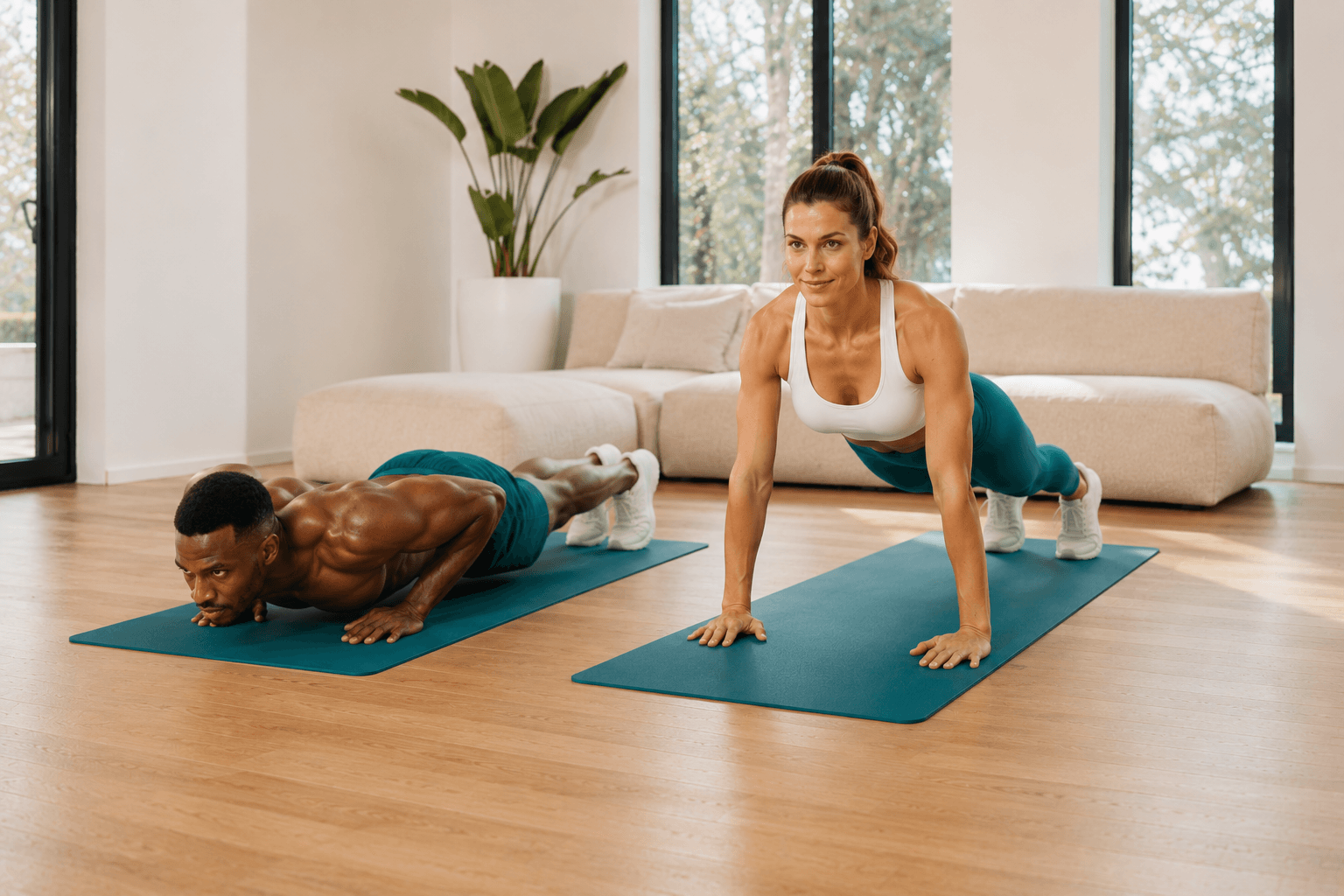
Your Full-Body Calisthenics Workout at a Glance
Before we break down each move, here’s the full lineup. Together, these exercises build lower-body strength, upper-body strength, core stability, balance, coordination, and endurance.
- Bodyweight Squat
- Push-Up
- Reverse Lunge
- Glute Bridge
- Superman
- Plank
- Mountain Climbers
- Optional Burpee Finisher
Remember, quality reps always beat sloppy reps. Therefore, move with control instead of rushing.
Exercise 1: Bodyweight Squat
Muscles worked: quadriceps, glutes, hamstrings, and core. First up, the squat is included because it builds powerful, functional lower-body strength you use every day.
How to Do It
- Stand with your feet about shoulder-width apart.
- Brace your core and keep your chest tall.
- Push your hips back and bend your knees.
- Lower until your thighs are roughly parallel to the floor.
- Then drive through your heels to stand back up.
Coaching cues: keep your knees tracking over your toes, and control the descent. Common mistakes: letting the knees cave in, rounding the back, or rushing. Beginner version: squat to a chair. Advanced version: jump squats or paused squats.
Exercise 2: Push-Up
Muscles worked: chest, shoulders, triceps, and core. Next, push-ups develop upper-body strength while teaching your core to stay stable as you move. For even more chest and arm work, explore our complete upper body workout guide.
How to Do It
- Start in a high plank with hands slightly wider than your shoulders.
- Keep your body in one straight line from head to heels.
- Bend your elbows and lower your chest toward the floor.
- Then press back up to the start.
Coaching cues: brace your core, keep your neck neutral, and control both phases. Common mistakes: sagging hips, a dropping head, or flaring elbows. Beginner version: incline or knee push-ups. Advanced version: decline, diamond, or archer push-ups. If a full push-up feels out of reach, our beginner calisthenics progression guide maps the path to your first rep.
Exercise 3: Reverse Lunge
Muscles worked: glutes, quadriceps, hamstrings, and core. Meanwhile, reverse lunges build single-leg strength while improving balance and control. Because they train one side at a time, they also help even out strength differences. For more leg-focused ideas, see our no-equipment leg workout.
How to Do It
- Stand tall with your feet hip-width apart.
- Step one foot back and lower until both knees bend to about 90 degrees.
- Keep your front knee over your ankle.
- Then push through your front heel to return to standing.
Coaching cues: keep your torso upright and your core braced. Common mistakes: leaning too far forward or letting the front knee collapse inward. Beginner version: hold a wall for balance. Advanced version: walking or jumping lunges.
Exercise 4: Glute Bridge
Muscles worked: glutes, hamstrings, and core. Similarly, glute bridges strengthen the muscles behind hip extension, which supports better posture and easier everyday movement.
How to Do It
- Lie on your back with knees bent and feet flat.
- Brace your core and drive through your heels.
- Lift your hips until your body forms a straight line from shoulders to knees.
- Then lower slowly with control.
Coaching cues: squeeze your glutes at the top and avoid arching your lower back. Common mistakes: pushing through the toes or rushing reps. Beginner version: lift only as high as feels comfortable. Advanced version: single-leg glute bridge or bridge march.
Exercise 5: Superman
Muscles worked: lower back, glutes, upper back, and shoulders. Because many routines focus on the front of the body, the Superman balances things out by strengthening the muscles along your back. As a result, your posture and movement feel more stable.
How to Do It
- Lie face down with your arms extended in front of you.
- Brace your core gently.
- Then lift your arms, chest, and legs off the floor at the same time.
- Then hold briefly, and lower with control.
Coaching cues: keep your neck relaxed and lift with your back, not your momentum. Common mistakes: jerking up or straining the neck. Beginner version: lift only the arms or only the legs. Advanced version: swimming Superman.
Exercise 6: Plank
Muscles worked: deep core, shoulders, and glutes. Likewise, the plank teaches your whole body to stay tight and stable, which carries over to nearly every other exercise. To build serious midsection strength, pair it with our complete core and abs training guide.
How to Do It
- Rest on your forearms and toes.
- Keep your body in one straight line from head to heels.
- Brace your core and squeeze your glutes.
- Then hold the position while breathing steadily.
Coaching cues: keep your hips level and shoulders over your elbows. Common mistakes: sagging hips or a raised backside. Beginner version: plank from your knees. Advanced version: plank shoulder taps.
Exercise 7: Mountain Climbers
Muscles worked: core, shoulders, and legs, plus your heart and lungs. Finally, mountain climbers add a cardio kick while still training strength, so they’re a great way to raise the intensity of your full-body calisthenics workout.
How to Do It
- Start in a high plank with your hands under your shoulders.
- Brace your core and keep your hips low.
- Then drive one knee toward your chest, and switch quickly.
- Keep alternating at a steady, controlled pace.
Coaching cues: keep your shoulders over your hands and move under control. Common mistakes: bouncing hips or shortening the movement. Beginner version: slow mountain climbers. Advanced version: cross-body or fast mountain climbers.
Optional Finisher: Burpees
Want to push a little harder? Then finish with burpees, which challenge nearly every major muscle group and spike your heart rate. However, they’re optional. So if you’re new to exercise or focused on movement quality, feel free to skip them. To do one, squat down, plant your hands, step or jump back to a plank, return, and stand tall. Beginner version: step your feet back and forward instead of jumping.
Putting Your Full-Body Calisthenics Workout Together
So now let’s turn these moves into a complete session. Below are two versions: one for beginners and one for advanced exercisers. Simply choose the one that fits you today, and adjust as you get stronger.
Beginner Full-Body Workout (20–25 Minutes)
Complete 3 rounds, and rest as needed between exercises.
| Exercise | Reps |
|---|---|
| Bodyweight Squat | 15 |
| Push-Up (any version) | 12 |
| Reverse Lunge | 12 each leg |
| Glute Bridge | 15 |
| Superman Hold | 20 seconds |
| Forearm Plank | 40–60 seconds |
| Mountain Climbers | 30 total |
Advanced Full-Body Workout (40–45 Minutes)
Complete 4 rounds, and rest 20 to 30 seconds between exercises. Above all, keep your technique sharp; if your form slips, slow down before you speed up.
| Exercise | Reps |
|---|---|
| Jump Squat | 15 |
| Decline or Archer Push-Up | 12 |
| Walking Lunge | 15 each leg |
| Single-Leg Glute Bridge | 12 each side |
| Swimming Superman | 20 reps |
| Plank Shoulder Taps | 40 total |
| Cross-Body Mountain Climbers | 40 total |
| Burpees | 10 |
Ready to keep progressing? Then our bodyweight progression guide and advanced bodyweight training article show you how to keep the challenge climbing.
Circuit Training or Straight Sets?
Furthermore, you can run this workout in two ways, so pick the style that suits your goal. With circuit style, you complete every exercise once, then repeat the whole round. Because you keep moving, this format boosts your heart rate and endurance. With straight sets, you finish all rounds of one exercise before moving on. As a result, this approach favours strength and control. Either way, the movements stay the same.
Calisthenics Myths vs. Facts
| Myth | Fact |
|---|---|
| You need a gym to build strength. | Bodyweight exercises build real strength when you train them consistently. |
| Calisthenics only trains the upper body. | A balanced routine works your legs, core, hips, back, and upper body. |
| More exercises always mean better results. | A few well-chosen moves, done well, beat a long, sloppy list. |
| You must train to failure every time. | Stopping with good form intact protects your technique and recovery. |
Full-Body Calisthenics Workout FAQ
How many times per week should I do this workout?
For most people, two to four sessions a week balance training and recovery well. However, your ideal schedule depends on your experience, goals, and free time. Because consistency over many weeks matters far more than training daily, aim to show up regularly rather than perfectly.
Do I really need any equipment?
No. This full-body calisthenics workout was built for home training using only your body weight. A comfortable mat helps, but no gym gear is required.
Can I lose weight with calisthenics?
Yes, calisthenics can support weight management because it raises your activity and energy burn. However, body composition also depends on nutrition, sleep, and overall consistency. For a plan built around that goal, see our best bodyweight workout for weight loss, and fuel up smartly with our home workout nutrition guide.
What if I can’t do a full push-up yet?
That’s completely normal, so start with wall, incline, or knee push-ups. Then, as your strength grows, work gradually toward a standard push-up. Our exercise modifications guide shows smart swaps for every move.
Can older adults do this workout safely?
Many of these exercises adapt well for older adults. Therefore, choose comfortable modifications, work within a pain-free range, and check with a healthcare professional first if you have any medical concerns. For extra safety, review our tips to prevent home workout injuries.

Final Thoughts: Your Body Is All the Gym You Need
In short, a smart full-body calisthenics workout can build strength, endurance, and confidence without a single machine. Over weeks and months, those small, steady improvements really add up. So train with purpose, move with control, and progress at your own pace. Because in the end, the best programme is simply the one you keep coming back to.
Continue Your Sanook Fit Journey
Want to build on this full-body calisthenics workout? Then keep the momentum going with these related guides:
- Bodyweight Training for Beginners — a complete roadmap for getting started at home.
- The Complete Upper Body Workout Guide — target your arms, chest, shoulders, and back.
- The Complete Core & Abs Training Guide — build real, functional core strength.
- Best Warm-Up and Cool-Down Routines — prepare and recover the right way.
- Can You Build Muscle With Only Bodyweight? — the science, explained simply.
- Level Up Your Bodyweight Gains — keep progressing as you get stronger.
Train With the Sanook Fit Community
Want follow-along workouts and daily motivation? Then join us and make training fun: subscribe on YouTube, follow along on TikTok, connect on Facebook, and grab quick tips on Instagram.
Recommended References
Support your training with evidence-based guidance from leading health and exercise organisations:
- World Health Organization (WHO) – Physical Activity Guidelines
- American College of Sports Medicine (ACSM) – Exercise Resources
- National Strength and Conditioning Association (NSCA) – Education and Research Articles
- Centers for Disease Control and Prevention (CDC) – Physical Activity Basics
- National Institutes of Health (PubMed) – Exercise and Strength Research