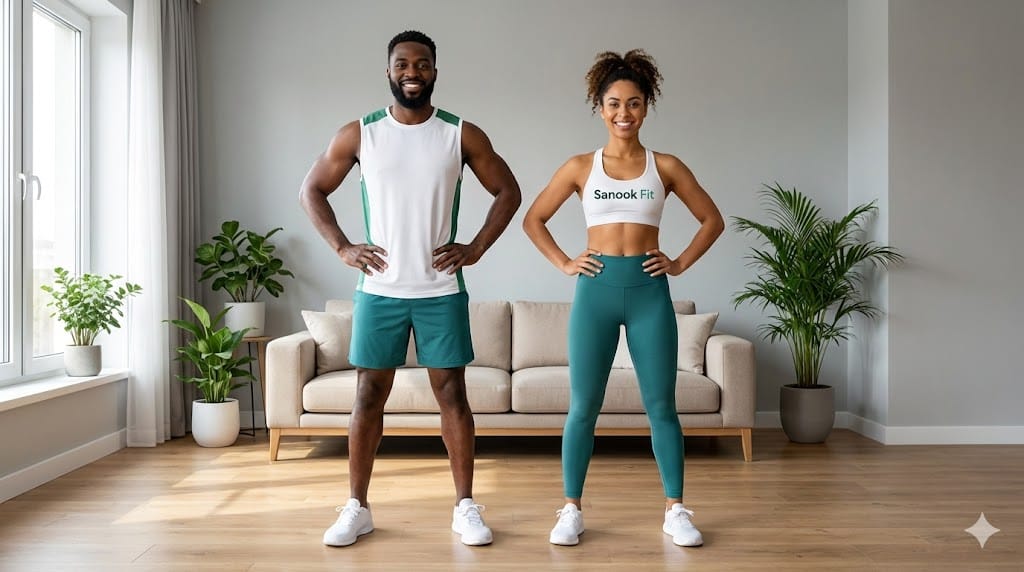
Think push-ups and squats are just for beginners? Think again. Some of the strongest, most controlled athletes on the planet — gymnasts, calisthenics competitors, martial artists — build their power with little more than the floor beneath them. Advanced bodyweight training is where things get genuinely exciting: harder leverage, single-limb work, and skills that take months of patient practice to unlock.
This Sanook Fit guide is for anyone who has outgrown the basics and wants to keep getting stronger without a single dumbbell. We will cover how to know you are ready, what actually makes a movement “advanced,” the key progressions worth chasing, and how to keep improving once the easy gains have dried up.
Quick Answer
Advanced bodyweight training uses progressively harder exercises to build strength, muscle, balance, and body control without gym equipment. By working towards progressions such as archer push-ups, pistol squats, and handstand holds, you can keep gaining strength long after standard push-ups and squats start to feel easy.
Are You Ready to Train Advanced?
Before chasing harder skills, it helps to have a solid base. A good rule of thumb is being able to perform all of the following with clean technique:
- 20 controlled bodyweight squats
- 15 quality push-ups
- A 60-second plank
- 10 reverse lunges per leg
- A 30-second wall sit
Just as importantly, you should feel confident keeping good form throughout a whole session. Advanced movements reward control rather than speed, so honest technique matters far more than rushing ahead. If you are still building toward these numbers, our fun full-body workouts at home are a great place to keep developing.
What Actually Makes an Exercise “Advanced”?
An advanced exercise is rarely just “the same move, but more reps.” Instead, it raises the challenge by changing one or more of these variables.
Greater Leverage
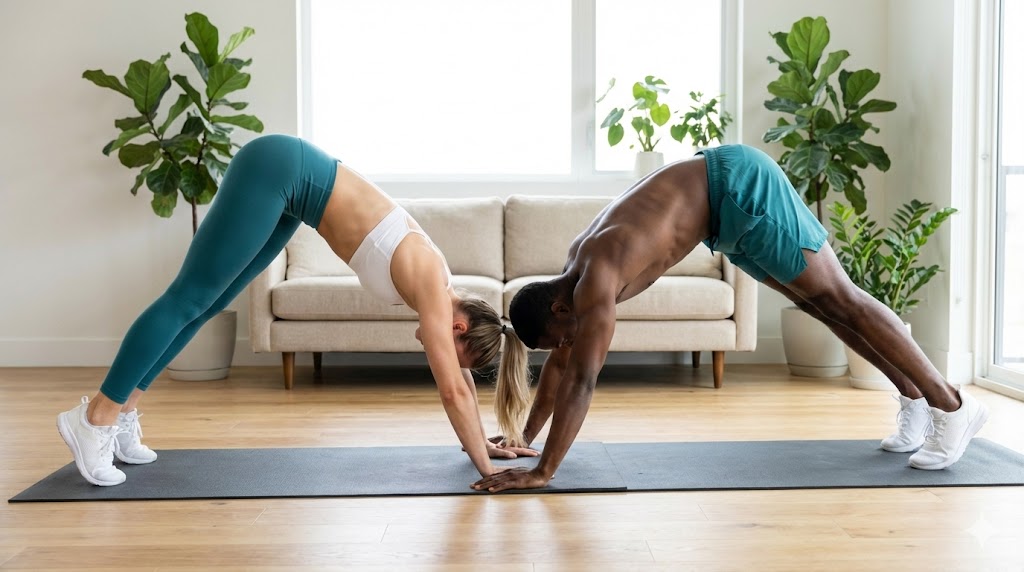
By lengthening the lever your muscles work against, moves like archer push-ups, dive bombers, and planche progressions dramatically increase the force you need to generate — no extra weight required.
Single-Limb Training
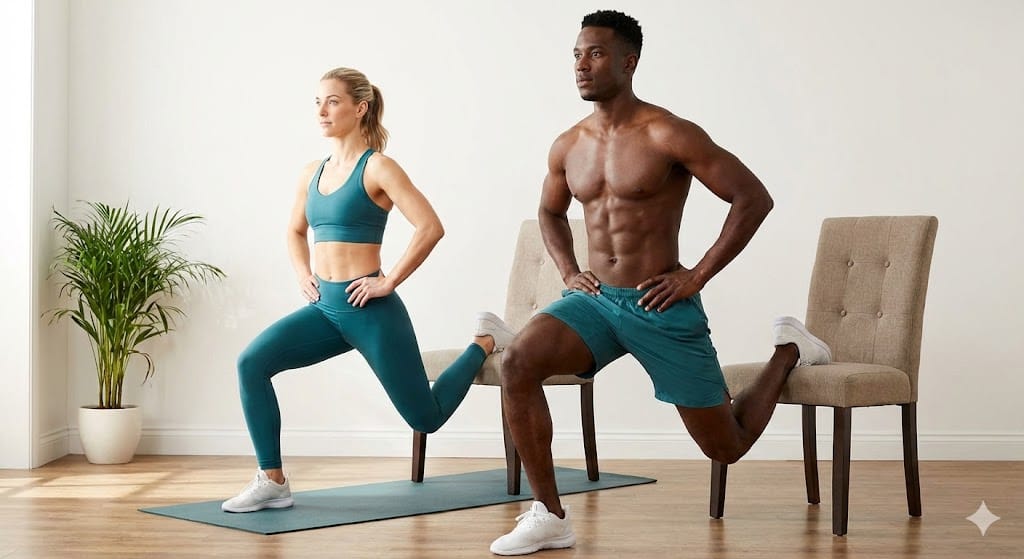
Working one arm or one leg at a time is one of the simplest ways to make bodyweight training harder. Pistol squats, single-leg glute bridges, Bulgarian split squats, and assisted one-arm push-up progressions all force a single limb to carry the load.
Reduced Stability
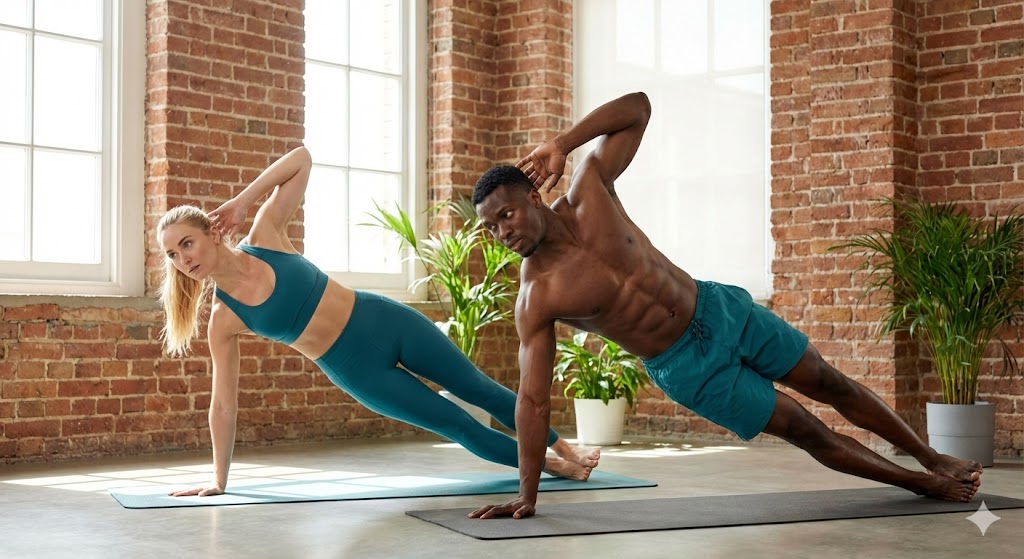
Performing a movement on fewer points of contact demands far more balance and coordination. Handstand holds, single-leg hinges, and side-plank variations all challenge your stability as much as your strength. For more core-focused progressions, see our best bodyweight workouts for abs.
Progressive Overload at an Advanced Level
Once you can no longer simply add reps, progress becomes more subtle — and arguably more interesting. Here are four reliable ways to keep moving forward.
Slow the Tempo
Lower yourself over a full five-count, pause at the bottom, then press back up under control. Time under tension is a powerful driver of strength and muscle.
Increase the Range of Motion
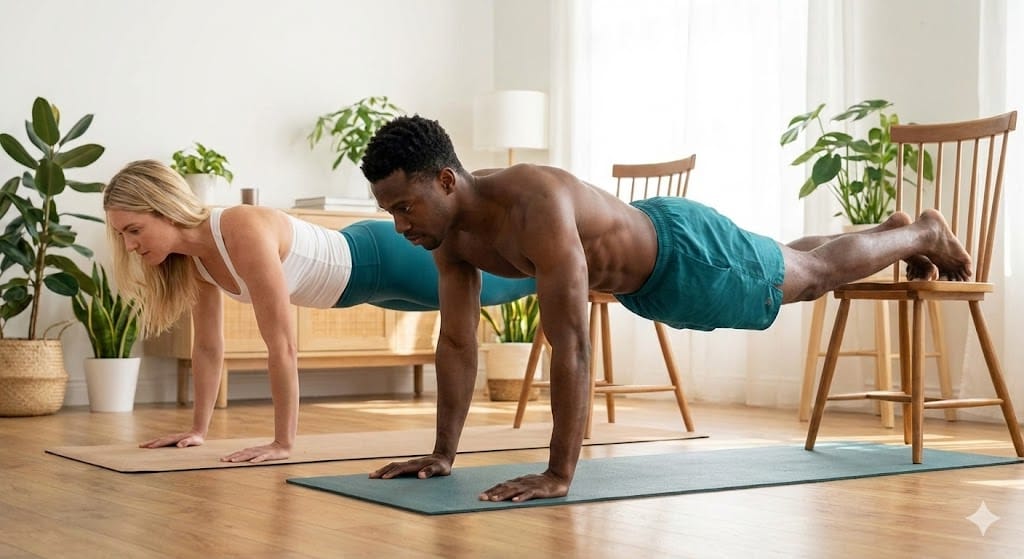
Progressing from a standard push-up to a deficit or decline push-up lets you travel further, recruiting more muscle through a longer range.
Extend Your Isometric Holds
Build wall handstand or hollow-body holds gradually — 20 seconds, then 30, then 45, then a full minute. Steady, measurable progress keeps motivation high.
Reduce the Assistance
Wean yourself off support over time. A supported pistol squat becomes a fingertip-assisted one, then eventually an unassisted rep. Research on progressive overload and resistance training backs up this gradual approach.
Sanook Fit Coach’s Tip
At advanced levels, progress is rarely dramatic week to week. Small gains in control, balance, and technique are exactly what lead to the biggest breakthroughs over the long run — so be patient with yourself and trust the process.
Common Advanced Training Mistakes
A few habits quietly hold back even dedicated trainees. Keep an eye out for these:
- Skipping warm-ups. Your joints and connective tissue need preparation before demanding skill work.
- Practising hard skills while fatigued. Save technical, balance-heavy moves for early in the session when you are fresh.
- Neglecting recovery. Advanced training is demanding, and rest is when the adaptation actually happens.
- Chasing flashy skills too soon. Solid fundamentals always come before the impressive party tricks.
A Sample Advanced Session
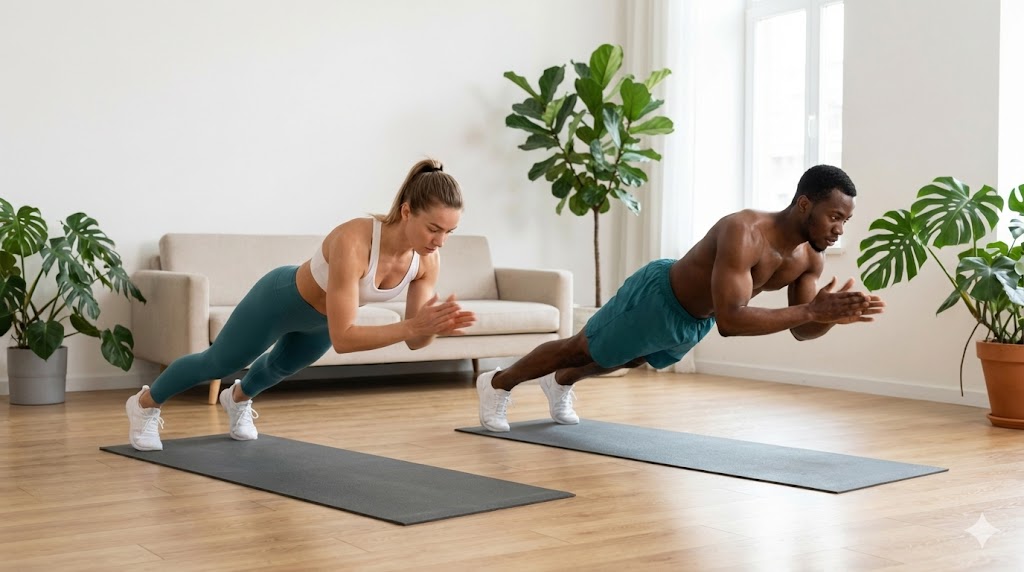
Warm up thoroughly, then work through skill and strength blocks while you are fresh:
- Skill practice: wall handstand holds or pistol squat progressions (5–8 minutes)
- Archer or decline push-ups — 4 sets of 6 to 10 reps
- Bulgarian split squats — 4 sets of 8 per leg
- Side plank with reach — 3 sets of 30 seconds per side
- Explosive finisher: clap push-ups or jump squats — 3 sets of 5 to 8 reps
Rest fully between hard sets. Quality always beats quantity at this level.
Frequently Asked Questions
Can I really build serious strength without weights?
Absolutely. By using harder variations, longer time under tension, and consistent practice, many calisthenics athletes build impressive, powerful physiques with no traditional equipment at all. Our guide on building muscle without lifting weights explains the science in detail.
Is bodyweight training better than lifting weights?
Neither is universally better. Bodyweight work excels at relative strength, balance, coordination, and body control, while weights allow precise, easy-to-add external resistance. Plenty of athletes happily combine both. We compare the two in home workouts versus the gym.
Why have my workouts stopped getting harder?
You have likely hit a plateau. Rather than piling on endless reps, switch to harder variations, slow your tempo, or extend your holds. For more myth-busting, read what actually builds muscle and burns fat.
Train With Us
We post technique breakdowns, progression tutorials, and plenty of fun fitness motivation across our channels. Follow along and train with the community:
- YouTube: @SanookFit
- TikTok: @sanookfit
- Facebook: Sanook Fit
- Instagram: @sanookfit
Pick one progression, practise it consistently, and check back in a month. You may surprise yourself with just how strong bodyweight training alone can make you.