Quick answer: Yes — the best bodyweight workouts for abs really can build a stronger, more defined core using nothing but your own body. Movements like planks, hollow body holds, mountain climbers, reverse crunches and dead bugs train every layer of your core without a single piece of equipment. Pair consistent core work with full-body training, sensible nutrition and proper recovery, and you’ll see the best results. If you want the workout straight away, jump to our at-home core & abs workouts.
Why Most Ab Workouts Fail
Search “ab workout” online and you’ll find thousands of routines promising six-pack abs in seven days. Almost all of them fixate on one thing: endless crunches. If you’ve ever spent ten minutes grinding through sit-ups only to feel it more in your neck than your stomach, you’re not alone — and it isn’t your fault.
The truth is that your abdominal muscles are built for far more than bending your spine. Your core is your body’s natural support system. Every time you carry groceries, climb stairs, lift a child, push a trolley or simply stand tall, your core is doing the work.
That’s why training it properly improves so much more than appearance. A strong core can help you:
- Improve your posture
- Reduce lower-back discomfort
- Increase balance and stability
- Generate more power during exercise
- Make everyday movements feel easier
- Perform better in sport and play
Visible abs are simply one possible result of a strong core combined with a healthy body-fat percentage. The real goal is a body that moves well and stays strong for years to come.
What You’ll Learn in This Guide
- How your core actually works
- Why crunches alone aren’t enough
- The best bodyweight exercises for abs
- A complete Sanook Fit core workout
- Common mistakes that quietly slow your progress
- How nutrition affects whether your abs ever show
What Is Your Core, Really?
Many people assume the core is just the “six-pack.” In reality, it’s a whole team of muscles working together to stabilise your spine, transfer force and protect your body as you move. Think of it as the foundation of a house: without a solid foundation, everything built on top becomes less stable. Your body works exactly the same way.
Meet the Four Major Core Muscles
1. Rectus Abdominis
This is the muscle most people picture when they think of a six-pack. Its main job is bending the spine forward. Train it with reverse crunches, leg raises and hollow body holds.
2. Transverse Abdominis
Often called your body’s natural weightlifting belt, this deep muscle wraps around your waist and braces your spine before movement begins. Strong transverse abdominals help you protect your lower back, improve posture, create a flatter-looking stomach and stay stable under load. Train it with planks, dead bugs, bird dogs and bear holds.
3. Internal and External Obliques
These muscles run along the sides of your torso and control rotation, side-bending and stability. They fire up whenever you throw, swing, change direction or carry heavy shopping bags. Train them with side planks, bicycle crunches, Russian twists and cross-body mountain climbers.
4. Erector Spinae
Although technically part of your back, these muscles complete your core. Ignore them and you create muscular imbalance. Train them with bird dogs, superman holds, glute bridges and prone cobras.
Sanook Fit tip 💡 Stop thinking about “training abs.” Start thinking about training your core to brace, stabilise and move — the look takes care of itself.
The 8 Best Bodyweight Workouts for Abs
You don’t need fancy machines to build a powerful core — just these eight movements, performed with control and consistency. Each one is scalable, so beginners and seasoned athletes can train side by side. For guided, follow-along versions, head to our core & abs workout library.
1. Hollow Body Hold
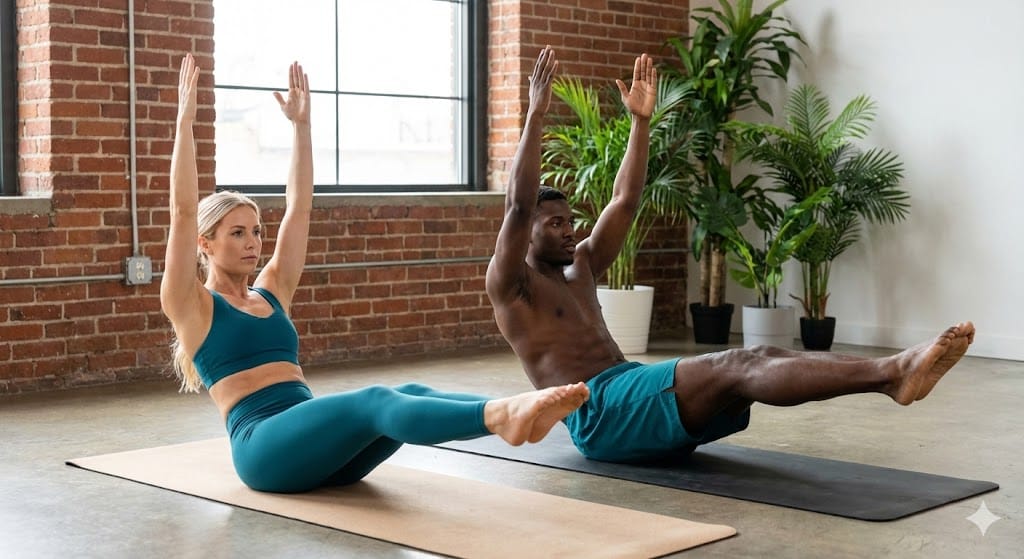
Difficulty: ⭐⭐⭐☆☆ | Targets: rectus abdominis, transverse abdominis, hip flexors
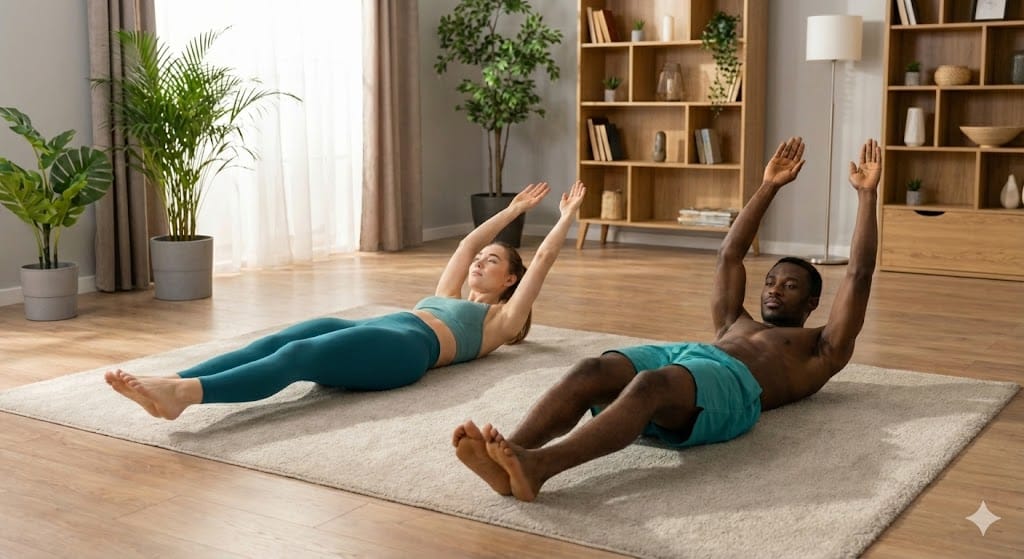
If one exercise captures true core strength, it’s the hollow body hold. Elite gymnasts rely on it because it teaches your entire core to work as a single, connected unit.
How to do it: Lie on your back, press your lower back firmly into the floor, lift your shoulders slightly, raise your legs a few inches and reach your arms overhead. Hold while breathing normally. Beginners can keep the knees bent; advanced athletes lower the legs closer to the floor while keeping the lower back glued down.
Avoid: arching your lower back, holding your breath, or looking at your feet instead of the ceiling.
Coaching cue: imagine squashing a grape under your lower back. If the grape could roll away, reset your position.
2. Forearm Plank
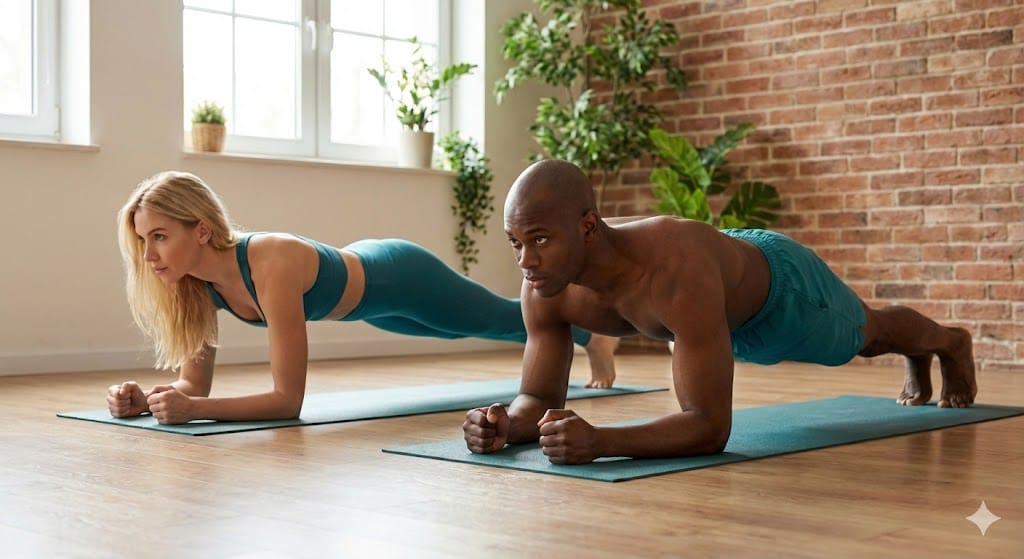
Difficulty: ⭐⭐☆☆☆ | Targets: deep core and total-body stability
The plank looks simple, which is exactly why it’s underrated. Done well, it’s one of the best exercises for whole-body stability.
How to do it: Set your elbows directly below your shoulders, form a straight line from head to heels, squeeze your glutes and abs, and breathe in a relaxed rhythm. Don’t let your hips sag. Rather than chasing longer holds, increase tension by squeezing your glutes, quads and fists — a focused 30-second plank usually beats a sloppy two-minute one.
3. Dead Bug
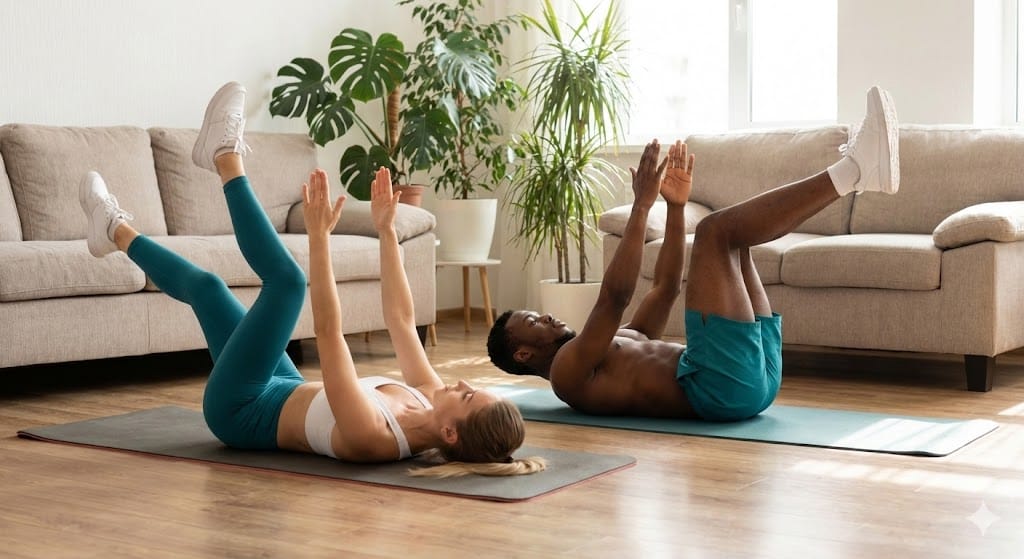
Difficulty: ⭐⭐☆☆☆ | Targets: deep core and coordination
This is one of the safest and most effective exercises for beginners, and it’s gentle on the lower back. Lie on your back with arms reaching toward the ceiling and knees bent at 90 degrees. Slowly lower one arm overhead and the opposite leg toward the floor, keeping your lower back pressed down, then return and switch sides. Move slowly and stay controlled — speed is not the point here.
4. Reverse Crunch
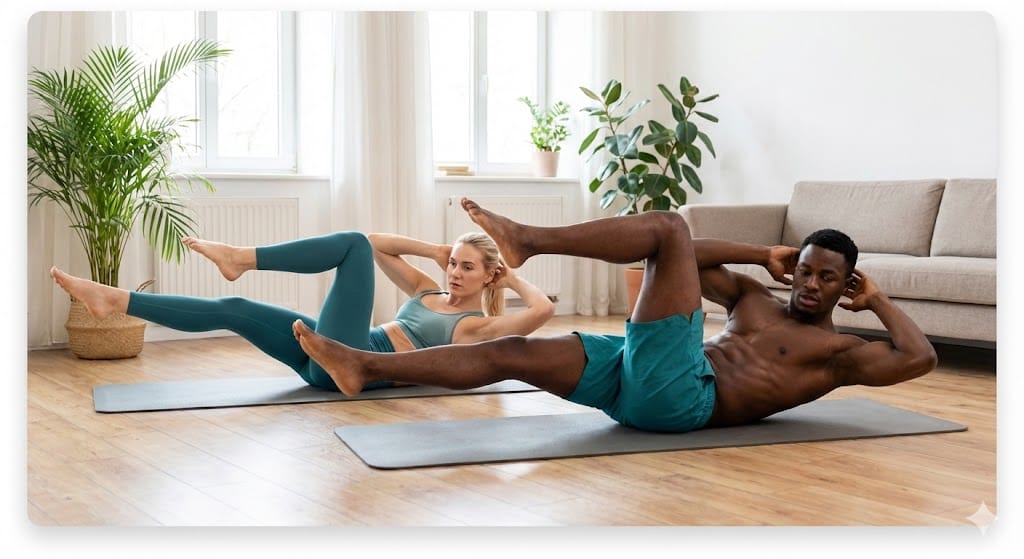
Difficulty: ⭐⭐⭐☆☆ | Targets: lower rectus abdominis
Where traditional sit-ups often strain the neck, the reverse crunch shifts the work to your lower abs. Lie on your back, lift your knees toward your chest by curling your hips off the floor, then lower with control. Focus on using your abs to move your hips — not momentum — and keep the movement smooth rather than rushed.
Smarter swaps for better results:
| Better choice | Instead of |
|---|---|
| Reverse crunch | Fast, jerky sit-ups |
| Hollow body hold | Hundreds of crunches |
| Dead bug | Uncontrolled leg flailing |
| Plank | Poor-form sit-ups |
5. Side Plank
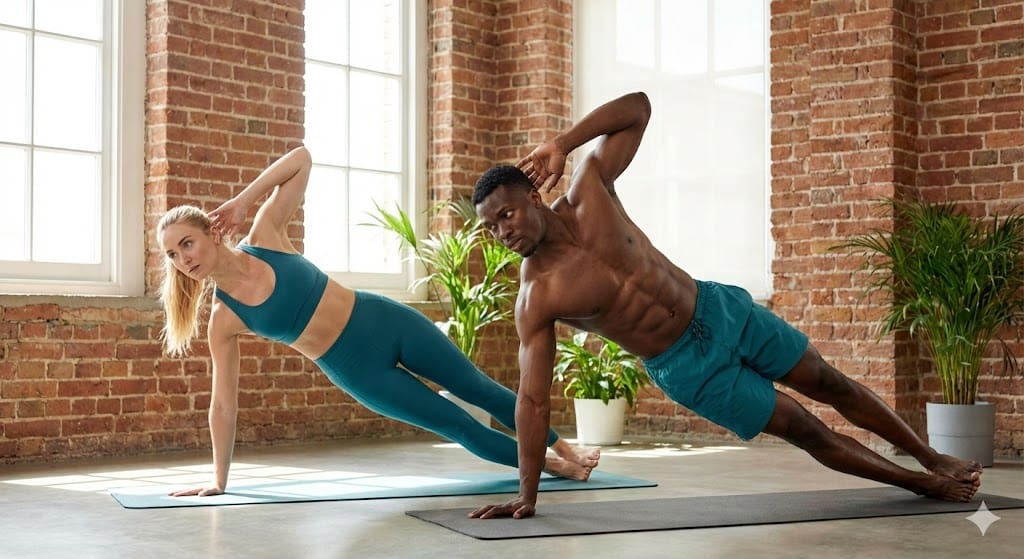
Difficulty: ⭐⭐⭐☆☆ | Targets: internal and external obliques
Strong obliques improve rotation, side-bending and overall trunk stability. Stack your feet (or stagger them for balance), prop yourself on one forearm with your elbow under your shoulder, and lift your hips so your body forms a straight line. Keep your hips high and steady, then switch sides.
6. Mountain Climbers
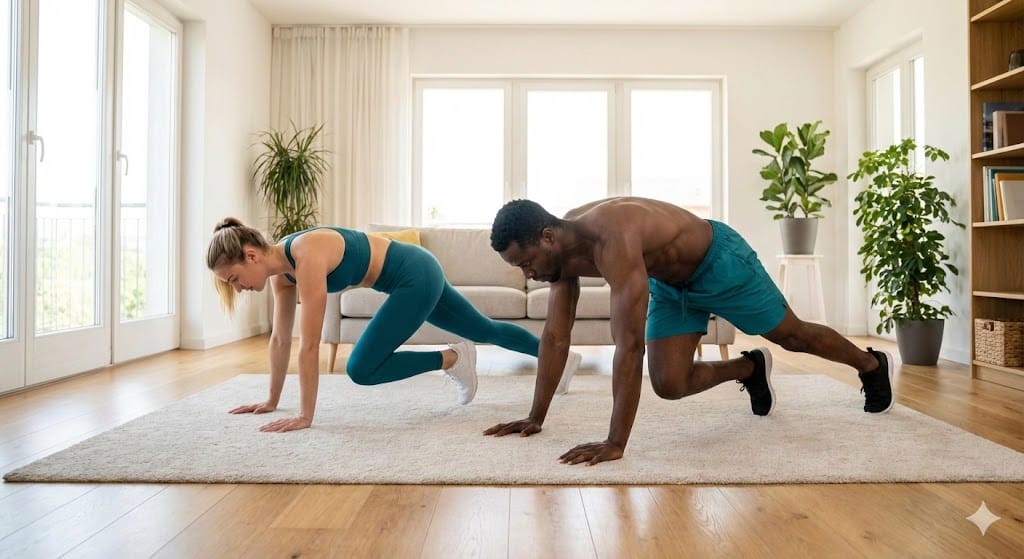
Difficulty: ⭐⭐⭐☆☆ | Targets: core, shoulders and cardio
Mountain climbers combine core training, shoulder stability and cardiovascular fitness in a single movement. Start in a strong high-plank position, then drive one knee toward your chest at a time. Build a solid plank first; only add speed once you can keep excellent form. For a tougher variation, drive each knee toward the opposite elbow.
7. Bird Dog
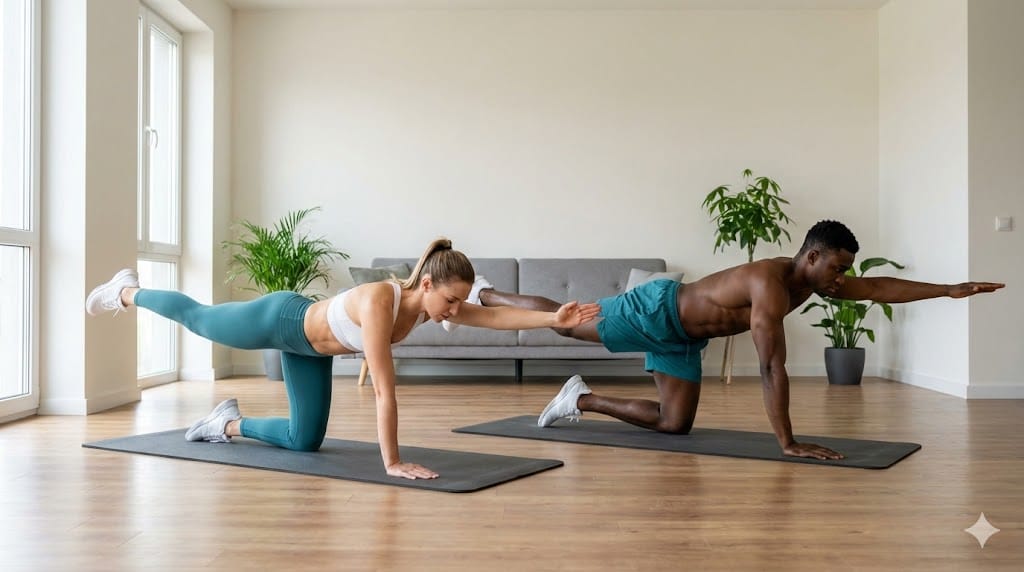
Difficulty: ⭐⭐☆☆☆ | Targets: deep core, glutes and lower back
Bird dogs are fantastic for coordination, balance and back-friendly core strength. On all fours, extend your opposite arm and leg until they form a straight line with your torso, pause, then return and switch. Minimise any rocking through your hips — the goal is a still, braced torso.
8. Bear Hold
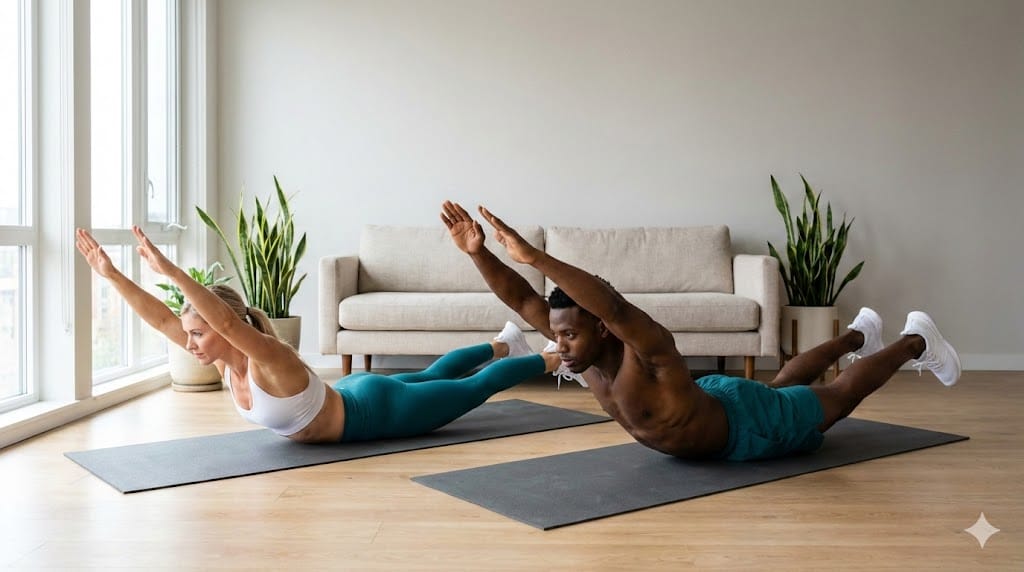
Difficulty: ⭐⭐⭐☆☆ | Targets: total core under tension
From an all-fours position, tuck your toes and lift your knees just an inch or two off the floor. Almost immediately you’ll notice your shoulders, abs and breathing working overtime. Keep your back flat and your knees hovering — short holds are plenty to start.
Your Complete Sanook Fit Core Workouts
These are the best bodyweight workouts for abs at every level — three follow-along circuits, one for each stage of your journey. New to training? Start with the beginner routine and our beginner workout collection before levelling up.
Beginner Core Workout
Just starting out? Begin here and repeat the circuit twice.
| Exercise | Time / Reps |
|---|---|
| Incline plank | 20 seconds |
| Dead bug | 8 each side |
| Bird dog | 8 each side |
| Glute bridge | 15 reps |
| Marching plank | 20 taps |
This routine builds the foundation you’ll need for the tougher exercises later.
Intermediate Core Workout
Once the beginner circuit feels comfortable, move up to this progression and complete three rounds.
| Exercise | Time / Reps |
|---|---|
| Forearm plank | 40 seconds |
| Hollow hold | 30 seconds |
| Reverse crunch | 15 reps |
| Side plank | 30 seconds each side |
| Mountain climbers | 40 seconds |
Advanced Core Workout
Ready for a serious challenge? Try this circuit once you’ve mastered the basics.
| Exercise | Time |
|---|---|
| Hollow rock | 40 seconds |
| L-sit hold | 20 seconds |
| Bear hold | 40 seconds |
| Cross-body mountain climbers | 40 seconds |
| V-ups | 20 reps |
| RKC plank | 30 seconds |
Progressive Overload for Your Core
Your core adapts just like every other muscle group, so it needs a reason to keep getting stronger. Here are seven ways to keep progressing without ever touching a dumbbell:
- Hold positions longer — build a 20-second plank up to 30, 40 and eventually 60 seconds.
- Slow down — controlled reps create more tension and better results than rushed ones.
- Reduce rest — trim rest from 60 seconds in week one to 45, then 30 as you progress.
- Upgrade the exercise — move from dead bug to plank to hollow hold to bear hold to L-sit.
- Increase volume — add an extra round or a few more reps over time.
- Improve stability — try single-leg glute bridges, single-arm planks or paused bird dogs.
- Refine technique — cleaner form recruits more muscle from the same movement.
The Truth About Visible Abs
Here’s the part most “7-day six-pack” articles skip: you can have a genuinely strong core and still not see a defined six-pack. Visible abs come down to body-fat percentage, and that’s shaped far more by your overall training and nutrition than by any single ab exercise. The most effective strategy combines core training, full-body workouts, balanced eating and consistent recovery — there are no shortcuts, but the results are worth it.
Why Full-Body Workouts Matter
Compound movements burn more energy and engage your core as a stabiliser, which supports a leaner, stronger physique. Round out your week with exercises like push-ups, Bulgarian split squats, lunges, mountain climbers, burpees and squats. Our full-body workouts, upper-body sessions and lower-body routines make it easy to train your whole body at home.
Nutrition Tips for a Stronger, More Visible Core
You can’t out-train poor eating habits. Your nutrition should support your workouts, not work against them.
- Prioritise protein — aim for roughly 1.6–2.2 g per kilogram of body weight daily from foods like chicken, fish, eggs, Greek yoghurt, cottage cheese, tofu, lentils and beans.
- Eat plenty of fibre — vegetables, fruit, whole grains and legumes keep you satisfied and support overall health.
- Drink enough water — hydration supports recovery, digestion and performance, so keep a bottle nearby.
- Skip the crash diets — extreme restriction usually leads to low energy, weaker workouts, muscle loss and rebound weight gain. Aim for gradual, sustainable progress instead.
For more guidance on training that supports a leaner core, explore our weight-loss workouts.
Coach’s corner 💡 Don’t train your abs because you dislike your stomach. Train them because your core is involved in almost everything you do — and a stronger core makes everyday life easier.
Recovery: The Step Most People Skip
Your core gets stronger between sessions, not just during them. Give it time to recover with quality sleep, lighter movement and mobility work on rest days, and keep the whole process enjoyable so you’ll actually stick with it. A short, gentle core session a few times a week beats an exhausting daily grind you can’t sustain.
Frequently Asked Questions
Can you get a six-pack with bodyweight exercises?
Yes — but bodyweight training is only part of the equation. Hollow body holds, reverse crunches, planks and mountain climbers all build your abdominal muscles, yet visible abs also depend on your overall body-fat percentage. Combine regular training with balanced eating, enough protein and consistent activity to give yourself the best chance of seeing definition.
How often should I train my abs?
For most people, beginners do well with two sessions per week, intermediates with three, and advanced trainees with three to four focused sessions. Remember that many full-body exercises already train your core, so there’s no need to isolate your abs every single day.
Are planks better than crunches?
Neither is universally “better” — they serve different purposes. Planks develop core stability and strengthen the deep abdominal muscles, while crunches mainly target the rectus abdominis. A balanced routine includes both stability holds and controlled dynamic movements.
Can I train abs every day?
You can, but you probably shouldn’t. Like every muscle group, your core benefits from recovery, and training it intensely every day can actually slow your progress. Quality sessions with adequate rest tend to beat daily high-volume work.
Which bodyweight exercise burns the most calories?
Movements that recruit multiple muscle groups and raise your heart rate burn the most — think burpees, mountain climbers, bear crawls, high knees and full-body HIIT circuits. These also challenge your core while improving cardiovascular fitness.
Do bodyweight ab exercises help with lower-back pain?
They can, when performed correctly. Bird dogs, dead bugs, glute bridges and planks strengthen the muscles that support your spine. If you have existing back pain or a medical condition, check with a qualified health professional before starting a new routine.
Continue Your Sanook Fit Journey
If this guide helped, here’s where to head next — each article builds on the last to create a complete, equipment-free home fitness program:
- At-Home Core & Abs Workouts — follow-along sessions for every level.
- Bodyweight Training for Beginners — start your journey with confidence.
- The Ultimate Full-Body Workout — train everything in one session.
- No-Equipment Upper-Body Workout — build your chest, shoulders and arms.
- No-Equipment Lower-Body Workout — stronger legs and glutes at home.
- Sanook Fit Video Workouts — press play and train along.
Join the Free 30-Day Sanook Fit Challenge
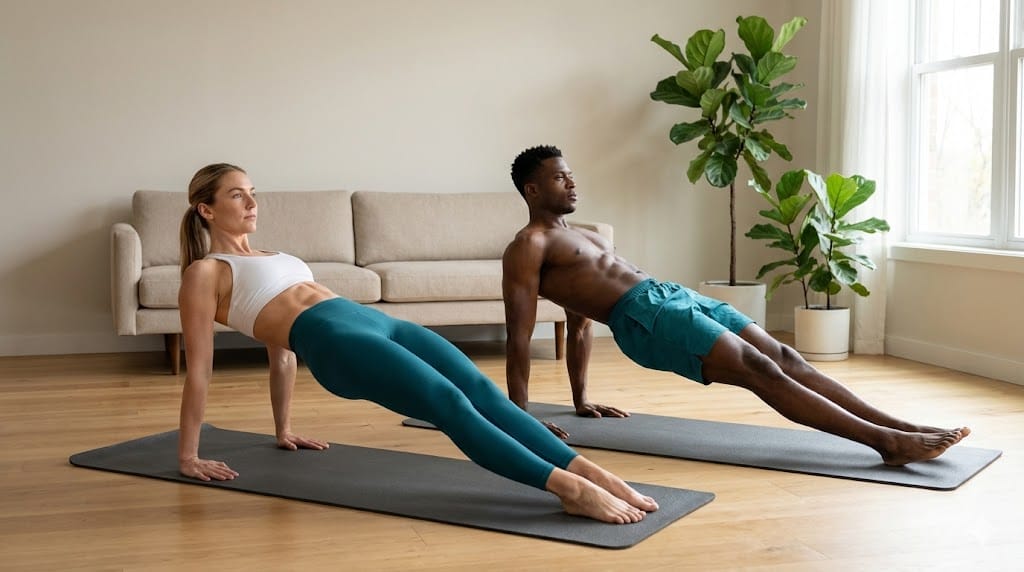
Looking for structure and motivation? The 30-Day Sanook Fit Challenge gives you a clear plan to follow. Every session is under 15 minutes, requires no equipment, is easy to follow and is built for home. Roll out your mat, press play, and take the first step toward a stronger core today.
Train with us daily on YouTube, Instagram, TikTok and Facebook for new workouts, tips and motivation.
Final Thoughts
A strong core isn’t about chasing a perfect stomach — it’s about building strength, confidence and resilience that carries into every part of life. The best time to start was yesterday; the next best time is today. Roll out your mat, press play on a Sanook Fit workout, and take that first step.
References & Further Reading
- American College of Sports Medicine (ACSM)
- Harvard T.H. Chan School of Public Health – The Nutrition Source
- National Institutes of Health (PubMed)
- American Council on Exercise (ACE)
This article is for general information and education only and isn’t a substitute for personalised medical advice. If you have an injury or health condition, please consult a qualified professional before beginning any new exercise program.