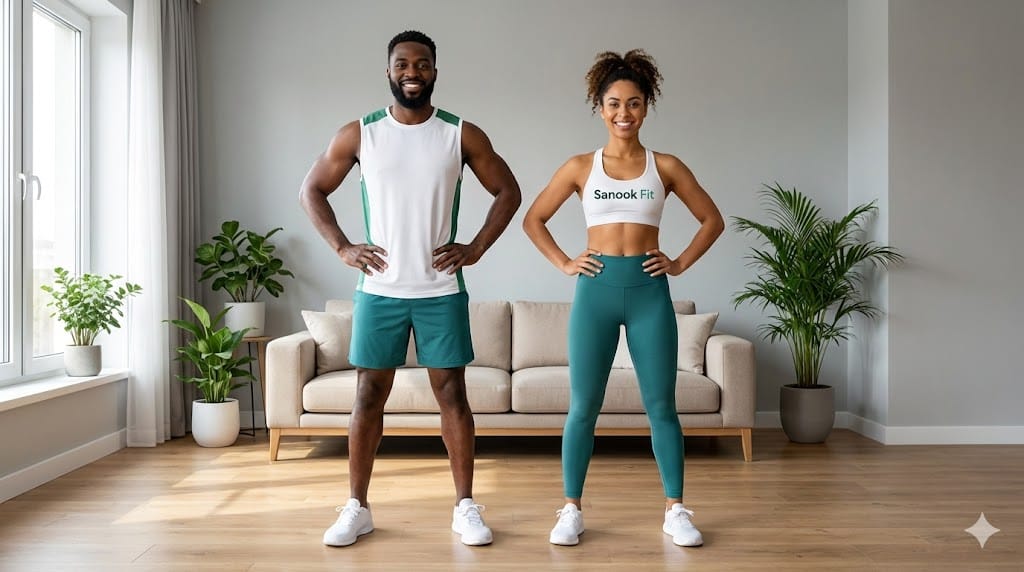
If the idea of squeezing in a gym trip fills you with dread, here is some good news: you can train your whole body in your living room, in under half an hour, without owning a single piece of kit. Full-body workouts at home use the one tool you already carry everywhere — your own body weight — to build strength, burn energy, and leave you feeling genuinely good.
At Sanook Fit, we have a slightly different take on exercise. “Sanook” is a Thai word that means fun, joy, and enjoying the moment. So instead of treating movement like a punishment, we build workouts you actually look forward to. This guide walks you through the why, the how, and a complete routine you can start today — no equipment, no excuses, no pressure to be perfect.
Quick Answer
A full-body bodyweight workout trains your upper body, lower body, and core in the same session using only your own body weight. It builds strength, improves heart and lung fitness, and sharpens balance and mobility — all without a gym. For most people, 15 to 30 minutes, three or four times a week, is enough to see real results.
Why Fitness Should Actually Be Fun
Let us be honest. For a lot of people, exercise feels like one more chore on an already crowded to-do list. Maybe you have paid for a gym membership you barely touched, bought equipment that now gathers dust, or promised yourself you will start “next Monday.” If any of that sounds familiar, you are in good company.
Here is the thing, though: the biggest barrier to staying fit usually is not ability. It is enjoyment. When a workout feels like a slog, you skip it. When it feels good, you come back. That simple truth sits at the heart of everything we do, and it is why we believe a workout should leave you stronger, happier, and more confident than when you started.
Every Sanook Fit session is built on three ideas: keep it simple, keep it effective, and keep it enjoyable. You do not need expensive machines or hours of spare time. You just need your body, a little space, and the willingness to begin.
Why Full-Body Workouts Are So Effective
One reason full-body training stays so popular is plain efficiency. Rather than spending a whole session on a single muscle group, each workout touches everything at once:
- Legs
- Chest
- Back
- Shoulders
- Arms
- Core
Because you train your entire body in one go, you do not need to find time for five separate gym visits each week. A balanced, full-body routine fits neatly into 20 to 30 minutes — which is exactly why it suits busy lives so well. If you are curious about how this stacks up against lifting weights, our guide on whether you can build muscle without lifting weights digs into the science.
The Sanook Fit Exercise Library
A great workout does not need dozens of complicated moves. Most effective routines are built from a handful of foundational patterns that train several muscle groups at the same time. The exercises below are easy to learn, friendly for beginners, scalable for stronger athletes, and completely equipment free.
1. Bodyweight Squat
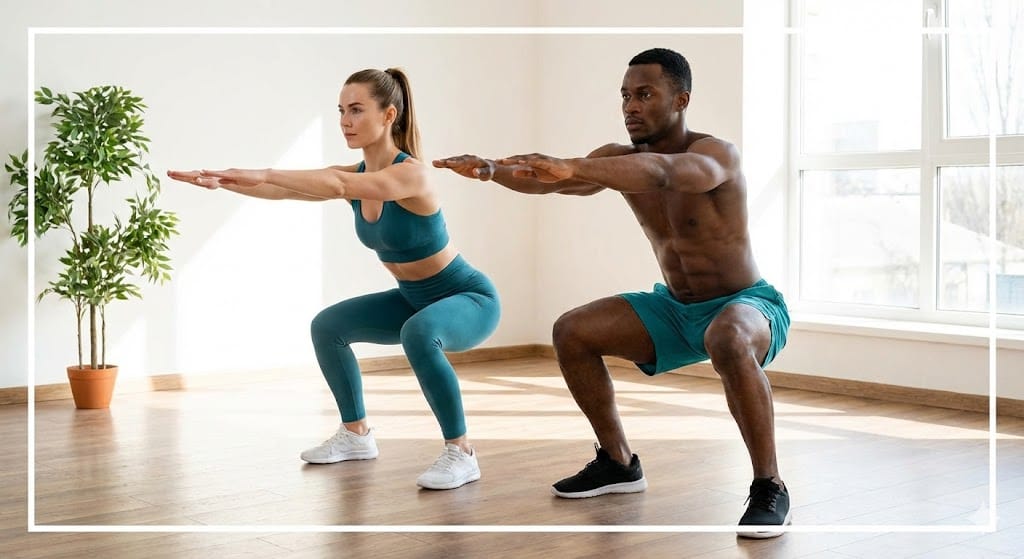
The squat is one of the most valuable movements you can learn. Because it recruits the large muscles of your legs and hips, it builds lower-body strength while also challenging your balance and core. Stand with your feet shoulder-width apart, sit your hips back as if reaching for a chair, keep your chest tall, and drive back up through your heels.
Works: quadriceps, glutes, hamstrings, and core.
2. Push-Up
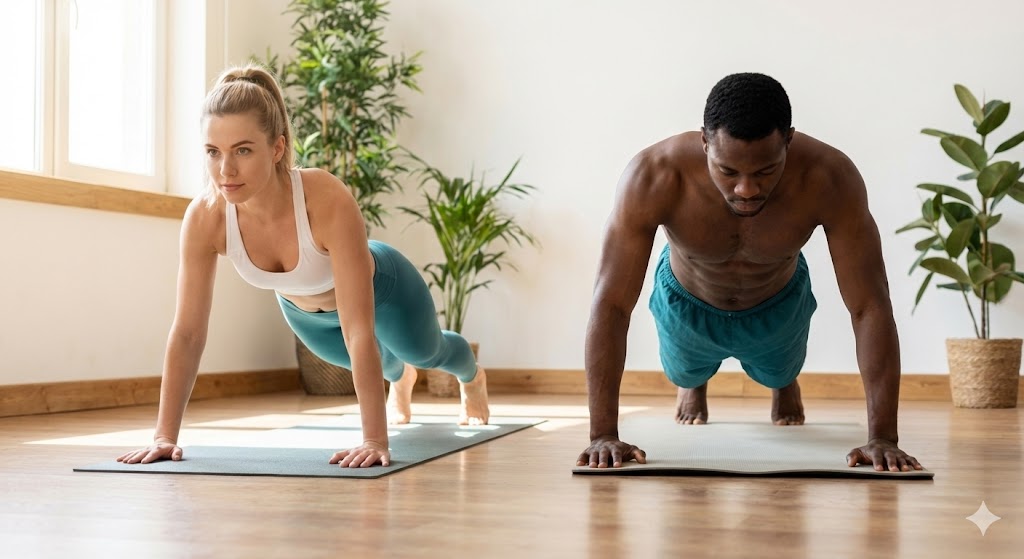
The push-up is the cornerstone of upper-body bodyweight training. Keep your body in one straight line from head to heels, lower with control until your chest nears the floor, then press back up. Too tough at first? Drop to your knees or place your hands on a sturdy surface. Want more challenge? Slow the tempo right down.
Works: chest, shoulders, triceps, and core.
3. Forward Lunge
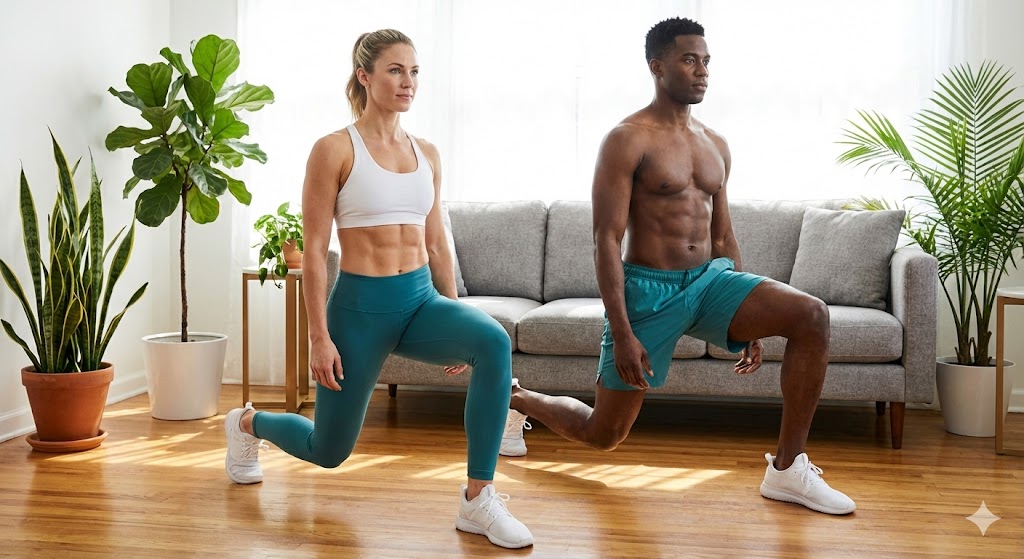
Lunges train each leg on its own, which helps even out strength differences and improves balance. Step forward, lower until both knees form roughly right angles, then push back to standing. Keep your front knee tracking over your toes and your torso upright.
Works: quadriceps, glutes, hamstrings, and calves.
4. Plank
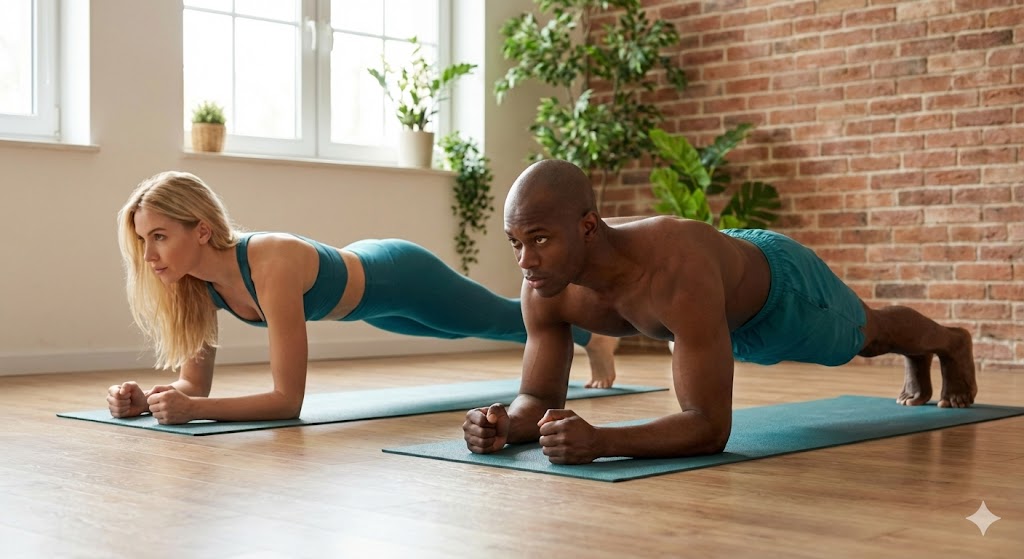
The plank is one of the most efficient core exercises there is. Rest on your forearms and toes, keep your body in a straight line, and brace your stomach as if bracing for a gentle poke. Start with 20 to 30 seconds and build from there. For more core ideas, our best bodyweight workouts for abs guide is full of progressions.
Works: entire core, shoulders, and glutes.
5. Glute Bridge
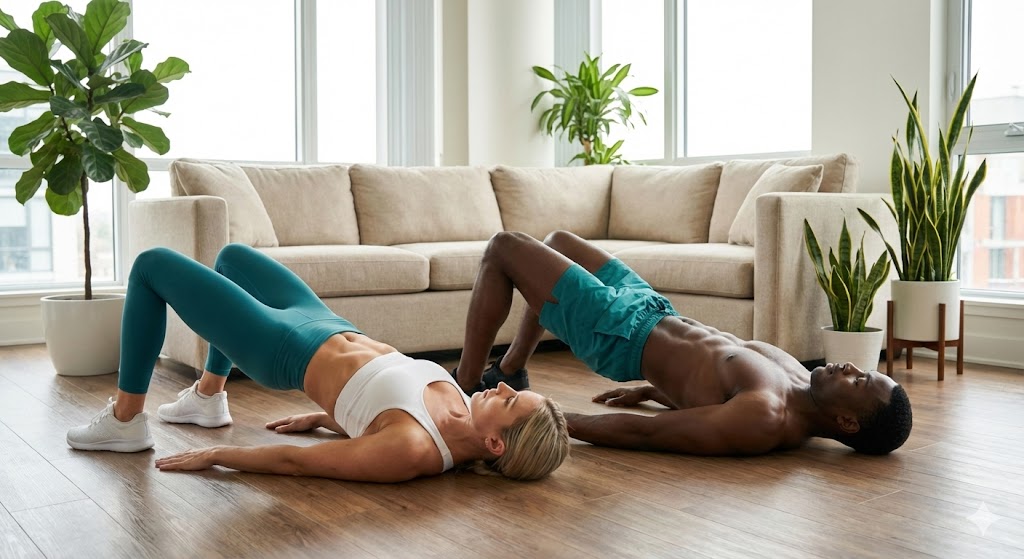
Lie on your back with knees bent and feet flat. Squeeze your glutes and lift your hips until your body forms a straight line from shoulders to knees, then lower with control. It is kind on the joints and brilliant for waking up muscles that sitting all day tends to switch off.
Works: glutes, hamstrings, and lower back.
Common Mistakes to Avoid
A few small habits make a big difference to your results and how good you feel afterwards. Watch out for these:
- Rushing your reps. Slower, controlled movement builds more strength than hurried flailing.
- Skipping the easier progressions. Master the basics before reaching for advanced variations.
- Comparing yourself to others. Your only fair comparison is the you from last week.
- Ignoring recovery. Muscles grow stronger in the rest between workouts, not during them.
The Sanook Fit Full-Body Workout
Knowing the moves is only half the story. The next step is stringing them together into something you can actually follow. The routine below suits a range of fitness levels — and remember, consistency beats perfection every single time. A short workout you finish today is worth far more than the perfect one you keep putting off.
Warm-Up (5 Minutes)
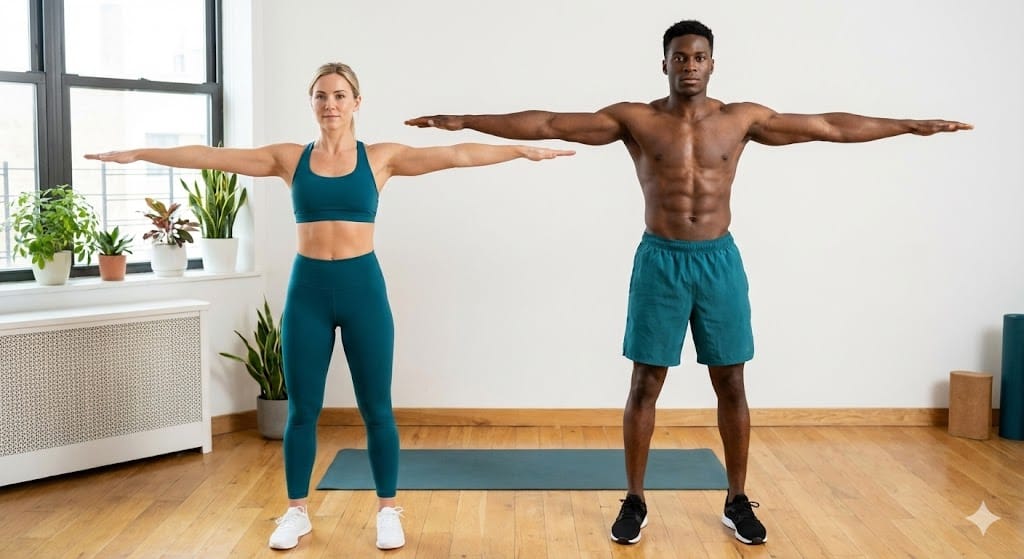
Never skip this part. A proper warm-up raises your body temperature, gets blood flowing, and prepares your joints for movement. Try one minute of marching on the spot, 30 seconds of arm circles, and a few gentle hip openers before you begin.
The Main Circuit
Move through the following exercises one after another, resting briefly between each. Then repeat the whole circuit two or three times, depending on your level.
- Bodyweight Squats — 12 to 15 reps
- Push-Ups — 8 to 12 reps (use an easier variation if needed)
- Forward Lunges — 10 reps each leg
- Glute Bridges — 15 reps
- Plank — hold for 20 to 40 seconds
Newer to all this? Stick to two rounds and take longer rests. Feeling strong? Add a third or fourth round, slow your tempo, or shorten your rest periods. For more ways to keep things interesting, our guide on creative ways to make exercise fun is packed with ideas.
Will This Help Me Lose Weight?
It certainly can help. Full-body workouts raise the amount of energy you burn each day and help preserve muscle while you lose fat. That said, no single exercise burns fat from one specific spot — so-called “spot reduction” is a myth. For lasting results, pair regular movement with balanced eating, decent sleep, and patience. The World Health Organization recommends at least 150 minutes of moderate activity each week, and bodyweight training is a simple way to get there.
How Often and How Long Should You Train?
- Beginners: 3 to 4 short sessions a week.
- Intermediate: 4 to 5 sessions a week.
- Advanced: 5 to 6 sessions, with planned recovery days.
Long sessions are not the goal. Most people see excellent progress with focused 15-to-30-minute workouts. The U.S. Centers for Disease Control offers a helpful overview of recommended weekly activity for adults if you want a benchmark to aim for.
Signs You Are Getting Fitter
Progress shows up in far more places than the bathroom scale. Keep an eye out for these everyday wins:
- Climbing stairs without getting winded
- Feeling stronger during ordinary daily tasks
- Recovering more quickly after effort
- Better posture and balance
- Improved flexibility
- More energy through the day, and better sleep at night
Celebrate these small wins. They usually arrive well before any dramatic physical change, and they are a sure sign your hard work is paying off.
Keep It Fun, Keep It Going
The people who stay fit are rarely the ones with the most willpower. They are the ones who found a way to enjoy it. Play your favourite music, train with a friend, take it outdoors, or rotate through different routines so it never gets stale. When movement feels good, you naturally do more of it.
Want to keep exploring? You might enjoy No Gym? No Problem, our take on home workouts versus the gym, or our myth-busting guide to what actually builds muscle and burns fat.
Train With Us
We share quick demos, full routines, and plenty of fun fitness motivation across our channels. Come and say hello:
- YouTube: @SanookFit
- TikTok: @sanookfit
- Facebook: Sanook Fit
- Instagram: @sanookfit
Roll out a towel, clear a little space, and give the circuit a go today. Your future self will thank you — and remember, the best workout is simply the one you actually finish.