Think you need a gym membership, a rack of dumbbells, and hours of free time to get fit? Bodyweight workouts at home prove otherwise. It’s one of the most common myths in fitness — and it stops far too many people before they ever begin. The truth is simpler and a lot more freeing: your body is already an incredibly effective training tool.
With a handful of well-chosen movements and a little consistency, you can build strength, improve your endurance, burn calories, and feel genuinely good in your body — all without stepping inside a gym. That’s the whole idea behind Sanook Fit: fitness that’s accessible, enjoyable, and sustainable for everyone, whether you’re training in your living room, your bedroom, a hotel room, or the backyard.
In this complete guide to bodyweight workouts at home, we’ll walk through why they work, the ten best beginner exercises (with photos), a full 7-day home workout challenge, the mistakes to sidestep, and simple ways to stay motivated long after the novelty wears off.
Quick Answer
Bodyweight workouts at home use your own body weight as resistance to build strength, improve cardiovascular fitness, increase mobility, and support healthy weight management. Because they require no equipment, they’re affordable, convenient, and suitable for everyone from beginners to advanced exercisers.
What You’ll Learn in This Guide
- Why bodyweight workouts genuinely work
- The real benefits of training at home
- Whether you can build muscle without weights
- How bodyweight workouts support weight loss
- The 10 best beginner exercises (with photos)
- A complete 7-day home workout challenge
- Common mistakes to avoid
- Simple strategies for staying motivated
Why Bodyweight Workouts at Home Work
Bodyweight training often gets underestimated because it looks simple. In reality, your muscles don’t know whether resistance comes from a barbell, a resistance band, or your own body weight — they only respond to challenge. As long as you gradually increase that challenge over time (a principle called progressive overload), your body keeps adapting and getting stronger.
That’s exactly why bodyweight workouts at home are trusted by everyone from elite gymnasts, military personnel, martial artists, professional athletes, and everyday people who simply want to feel healthier and more capable.
The Benefits of Bodyweight Workouts at Home
Home workouts offer far more than convenience. They quietly remove the obstacles that stop most people from exercising consistently in the first place.
1. No Equipment Required
Your own body provides enough resistance for hundreds of effective exercises — no dumbbells, barbells, machines, benches, or cable systems needed. If you’re curious about the science here, our guide on building muscle without lifting weights breaks it down in detail.
2. Save Time
A gym session often means driving, parking, waiting for equipment, and travelling home. A home workout begins the moment you press play. Even a focused 15-minute session makes a meaningful difference when you do it regularly.
3. Save Money
Gym memberships add up over the years. Bodyweight workouts cost virtually nothing, which makes consistent fitness genuinely accessible to almost everyone.
4. Exercise Anywhere
Your workout isn’t tied to one location. You can train at home, in a hotel room, at the park, while travelling, or on a quick lunch break. Fitness gets a lot easier when it fits your life instead of fighting it.
5. Build Functional Strength
Many bodyweight movements — squats, push-ups, reverse lunges, mountain climbers — train several muscle groups at once. These compound exercises build strength that carries directly into everyday activities like lifting, carrying, and climbing stairs.
Can You Really Build Muscle Without Weights?
Yes — and it comes down to progressive overload, not expensive equipment. As an exercise becomes easier, you simply make it more challenging. For example:
- Standard Push-Up → Decline Push-Up → Archer Push-Up → One-Arm Push-Up progression
- Squat → Split Squat → Bulgarian Split Squat → Pistol Squat
By gradually increasing the difficulty, you keep stimulating muscle growth without ever touching a weight. For a deeper explanation, see our complete guide: Can You Build Muscle Without Lifting Weights?.
Are Bodyweight Workouts at Home Good for Weight Loss?
Absolutely. Bodyweight workouts support healthy weight loss by increasing your daily energy expenditure, building and maintaining muscle, improving cardiovascular fitness, and encouraging consistent activity. The best results come from pairing exercise with balanced nutrition, adequate sleep, daily movement, and sustainable habits.
One important note: no workout can spot-reduce fat from a single area. Overall fat loss happens gradually as part of a consistent, healthy lifestyle — a message the World Health Organization’s physical activity guidelines echo as well.
Who Are Bodyweight Workouts at Home For?
One of the greatest strengths of bodyweight training is how welcoming it is. It suits almost everyone, including:
- Beginners — start with simple movements and build confidence gradually.
- Busy professionals — even short sessions fit into a hectic schedule.
- Parents — exercise while little ones nap, or invite them to join in.
- Older adults — most exercises can be modified for different fitness levels and mobility needs.
- Travellers — your workout comes with you, no hotel gym required.
💡 Sanook Fit Coach’s Tip: Don’t wait for the “perfect” setup. The best workout is the one you actually finish. A small space and 15 minutes are often all it takes to start a lifelong habit.
The 10 Best Bodyweight Workouts at Home for Beginners
A great home workout doesn’t need dozens of complicated moves. A handful of well-chosen exercises can strengthen your whole body, lift your cardiovascular fitness, and build the confidence to progress. These ten bodyweight workouts at home form the foundation of nearly every Sanook Fit routine because they’re effective, scalable, and equipment-free.
1. Bodyweight Squat
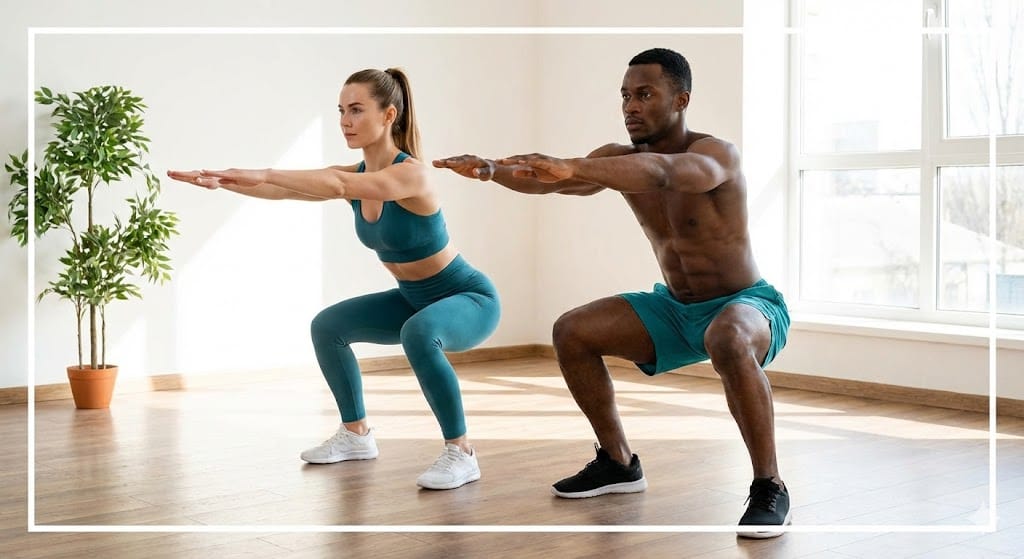
Difficulty: Beginner. Works: quadriceps, glutes, hamstrings, core. The squat is one of the most valuable movements you can learn, strengthening your legs while improving balance and coordination.
How to perform: Stand with feet shoulder-width apart, brace your core, push your hips back, and bend your knees until comfortable. Press through your heels to return to standing.
Beginner modification: sit down onto a sturdy chair, then stand back up. Progression: Chair Squat → Bodyweight Squat → Squat Pulse → Jump Squat.
2. Incline Push-Up
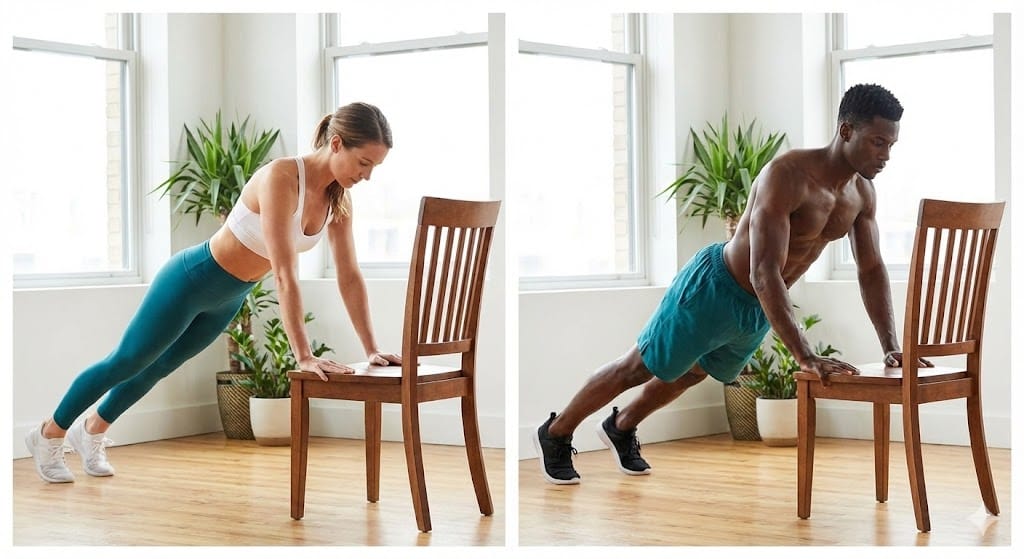
Push-ups are one of the best upper-body exercises, but they can feel tough at first. Using a wall, sturdy counter, or the back of a chair reduces the difficulty while teaching proper form. Works: chest, shoulders, triceps, and core. As you get stronger, gradually lower your hands until you’re ready for floor push-ups.
3. Glute Bridge
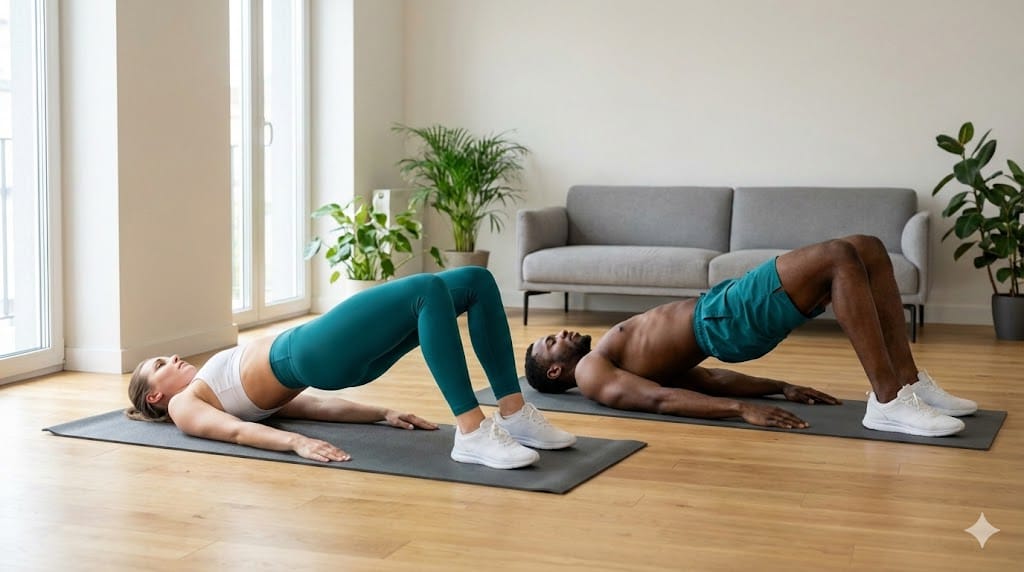
Many of us sit for hours each day, and glute bridges help strengthen muscles that often go quiet as a result. Benefits: stronger glutes, improved hip stability, better posture, and less lower-back strain. Pause briefly at the top of every repetition.
4. Bird Dog
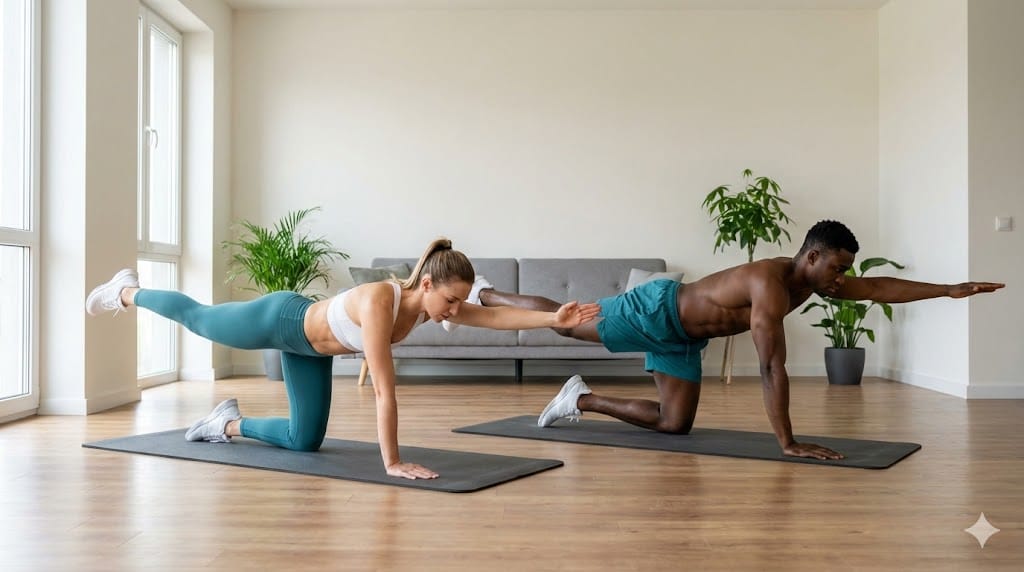
The bird dog improves core stability, balance, coordination, and lower-back control. Move slowly, as if you were balancing a glass of water on your back.
5. Reverse Lunge
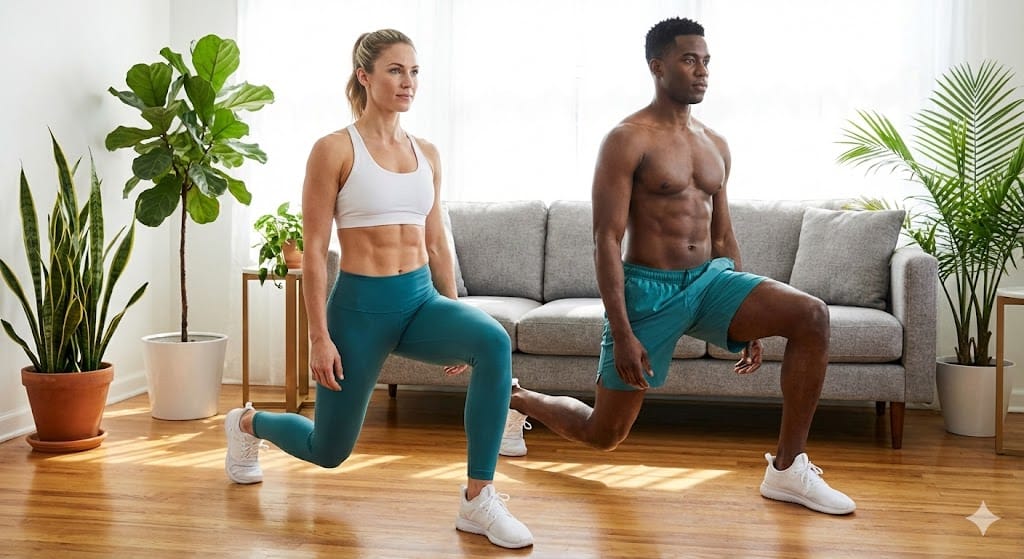
Stepping backwards is usually easier on the knees than stepping forwards. Reverse lunges strengthen the quadriceps, glutes, and hamstrings while challenging your balance. Take a comfortable step and move under control.
6. Marching in Place
Never underestimate simple movement. Marching in place raises your heart rate, improves coordination, builds confidence, and works beautifully as a warm-up. Swing your arms naturally and stand tall.
7. Dead Bug
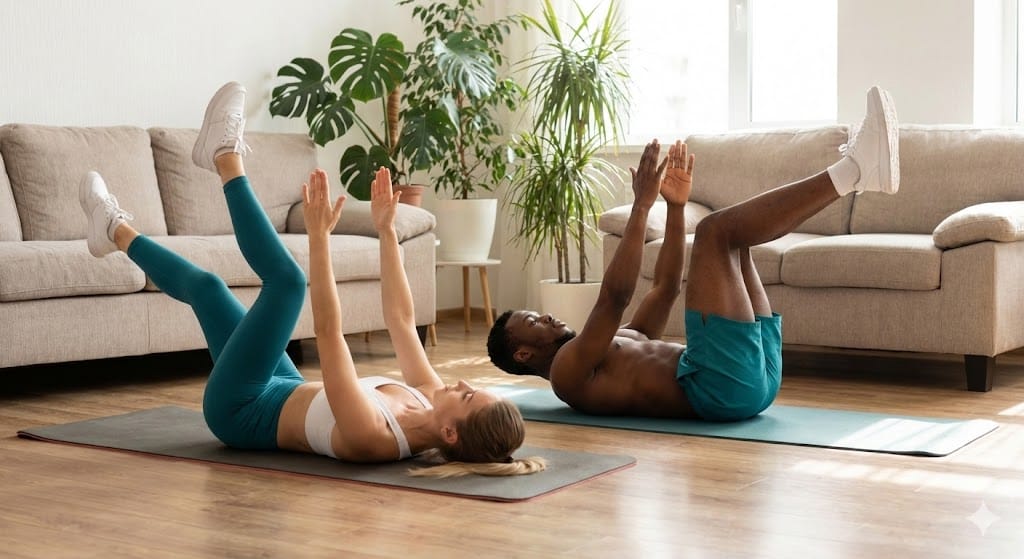
Don’t let the name fool you — the dead bug is one of the safest and most effective core exercises for beginners. Focus on slow movement, controlled breathing, and keeping your lower back gently in contact with the floor.
8. Wall Plank
Traditional planks can be demanding, so a wall plank lets beginners strengthen the core with less pressure on the shoulders and wrists. As you improve, work through this progression: Wall → Kitchen Bench → Sofa → Floor → Forearm Plank.
9. Standing Calf Raise
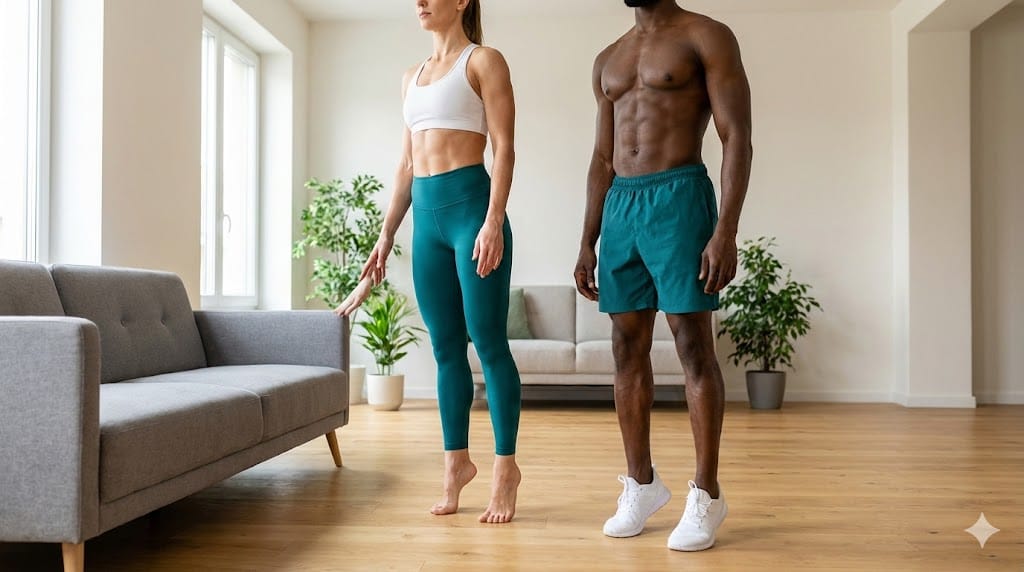
Strong calves support everyday movement — walking, climbing stairs, running, and jumping. Rise slowly onto your toes, pause, then lower with control.
10. Step Jack
Not everyone enjoys jumping, and that’s perfectly fine. Step jacks offer a low-impact alternative that still lifts your heart rate: instead of jumping both feet apart, step one foot to the side at a time while raising your arms. They’re ideal for beginners, older adults, low-impact days, and recovery sessions.
Which Exercises Should Beginners Start With?
You don’t need to do every exercise every day. A simple, balanced routine works best:
| Goal | Recommended Exercise |
|---|---|
| Legs | Bodyweight Squat |
| Upper Body | Incline Push-Up |
| Core | Bird Dog |
| Balance | Reverse Lunge |
| Cardio | Marching in Place |
| Mobility | Glute Bridge |
| Full Body | Step Jack |
Master these first, then progress to harder variations as your confidence grows.
Why Proper Technique Matters
Good form isn’t about looking perfect — it’s about moving safely and efficiently. Keep these coaching cues in mind:
- Move slowly. Control each repetition instead of rushing.
- Breathe naturally. Exhale during the effort, inhale as you return — never hold your breath.
- Focus on quality. Five excellent reps beat twenty rushed ones.
- Stop if something feels wrong. Muscle fatigue is normal; sharp pain is not. Modify the movement if needed.
Beginner Progression Roadmap
There’s no need to rush. Progress gradually through each variation as it starts to feel manageable.
| Movement | Easiest → Hardest |
|---|---|
| Push-Ups | Wall → Incline → Knee → Standard → Decline |
| Squats | Chair → Bodyweight → Pause → Split → Jump |
| Planks | Wall → Incline → Forearm → Shoulder Tap → Side Plank |
How Long Should Beginners Exercise?
You really don’t need an hour. Aim for 15 to 30 minutes, 3 to 4 days a week. As your fitness improves, gradually increase your workout duration, exercise difficulty, or weekly frequency. The key is building a routine you can actually maintain.
💡 Sanook Fit Coach’s Tip: Never compare your first workout to someone else’s hundredth. Everyone starts somewhere — the only person you need to be better than is yesterday’s version of you.
Common Beginner Mistakes to Avoid
- Trying advanced exercises too soon — master the basics first.
- Skipping warm-ups — prepare your muscles before training.
- Exercising only when motivated — build a routine instead, because habits outlast motivation.
- Ignoring recovery — rest is when your body adapts.
- Believing soreness equals success — you don’t need to feel wrecked to make progress.
The Sanook Fit 7-Day Home Workout Challenge
One of the biggest reasons people stop exercising isn’t a lack of motivation — it’s uncertainty about what to do next. This beginner-friendly 7-day challenge removes the guesswork. Just follow the plan. Each session builds on the last while giving your body enough variety to stay engaged and enough recovery to keep progressing. No equipment, no gym — just your body and a little space.
Before You Begin: Warm-Up (3–5 Minutes)
| Exercise | Time |
|---|---|
| March in Place | 60 sec |
| Arm Circles | 30 sec each direction |
| Hip Circles | 30 sec |
| Bodyweight Squats | 10 reps |
| Shoulder Rolls | 30 sec |
The goal of a warm-up isn’t to tire you out — it’s to prepare your body to move well.
Day 1: Full-Body Foundations
| Exercise | Reps |
|---|---|
| Bodyweight Squats | 12 |
| Incline Push-Ups | 10 |
| Glute Bridges | 12 |
| Bird Dogs | 10 each side |
| March in Place | 60 sec |
Complete 2–3 rounds, focusing on learning proper technique. The first workout is all about building quality movement patterns, not exhaustion.
Day 2: Cardio & Core
| Exercise | Time |
|---|---|
| Step Jacks | 45 sec |
| Dead Bugs | 10 each side |
| Mountain Climbers (slow) | 30 sec |
| Wall Plank | 30 sec |
| March in Place | 60 sec |
Repeat 3 rounds.
Day 3: Lower-Body Strength
| Exercise | Reps |
|---|---|
| Bodyweight Squats | 15 |
| Reverse Lunges | 10 each leg |
| Standing Calf Raises | 20 |
| Glute Bridges | 15 |
| Wall Sit | 30 sec |
Complete 3 rounds.
Day 4: Active Recovery
Recovery helps your body adapt — it isn’t a day off so much as preparation for tomorrow. Spend 15–20 minutes on gentle walking, hip and shoulder mobility, Cat-Cow, Child’s Pose, and deep breathing.
Day 5: Upper Body & Core
| Exercise | Reps |
|---|---|
| Incline Push-Ups | 12 |
| Wall Plank | 40 sec |
| Bird Dogs | 12 each side |
| Dead Bugs | 12 each side |
| Shoulder Taps (Incline) | 10 each side |
Complete 3 rounds.
Day 6: Full-Body Circuit
Time to combine everything. Perform each exercise for 40 seconds, resting 20 seconds between them: Bodyweight Squats, Step Jacks, Reverse Lunges, Incline Push-Ups, Glute Bridges, and Bird Dogs. Complete 3 rounds.
Day 7: Move Your Way
Celebrate your consistency by choosing an activity you genuinely enjoy — walking, hiking, dancing, cycling, swimming, yoga, or another Sanook Fit workout. Looking for ideas? Our guide on 15 creative ways to make exercise fun is packed with them. Fitness should feel like part of your life, not a punishment.
Cool-Down Routine (5 Minutes)
| Exercise | Time |
|---|---|
| Hamstring Stretch | 30 sec each side |
| Hip Flexor Stretch | 30 sec each side |
| Chest Stretch | 30 sec |
| Child’s Pose | 60 sec |
| Deep Breathing | 60 sec |
Finishing with gentle movement helps you relax after exercise and ease into the rest of your day.
Ready for a Bigger Challenge?
Once you can complete the 7-day plan comfortably, turn up the intensity by doing more rounds (2 → 3 → 4), increasing reps (12 → 15 → 20), reducing rest (45 → 30 → 20 seconds), or trying harder variations such as Bodyweight Squat → Pause Squat → Jump Squat. Small improvements add up surprisingly fast.
Nutrition to Support Your Training
Exercise is only part of the picture. A few simple nutrition habits make your workouts more effective:
Eat Enough Protein
Protein helps your muscles recover. Good options include eggs, chicken, fish, Greek yoghurt, cottage cheese, tofu, lentils, and beans.
Choose Mostly Whole Foods
Fill your plate with vegetables, fruit, whole grains, lean protein, and healthy fats. This doesn’t mean every meal has to be perfect — aim for consistency over perfection.
Stay Hydrated
Drink water throughout the day, especially before and after workouts. Good hydration supports energy, recovery, and overall performance.
Staying Motivated
Motivation naturally rises and falls, so the goal is to build habits that keep you moving even on the days you don’t feel like it. A few strategies that work:
- Schedule your workouts and treat them like any other appointment.
- Prepare in advance — lay out your clothes the night before to reduce decisions.
- Track your progress and celebrate wins like more reps, better technique, greater confidence, and increased energy.
- Don’t chase perfection — missing one workout doesn’t erase your progress. Just return to your routine tomorrow.
💡 Sanook Fit Coach’s Tip: Your goal isn’t to complete one perfect week. It’s to become someone who exercises regularly. Identity lasts much longer than motivation.
Expert Coaching Advice from Sanook Fit
After coaching thousands of home workouts, one lesson stands out: the people who achieve lasting results aren’t necessarily the fittest when they begin — they’re the ones who keep showing up. Here are the principles we encourage every member of our community to follow:
- Make fitness easy to start. Keep your mat nearby, pick a regular time, and have your clothes ready.
- Focus on progress, not perfection. Some workouts feel amazing, others won’t — both count.
- Build confidence before intensity. Good movement creates a stronger foundation for harder work later.
- Celebrate every victory — feeling stronger, climbing stairs more easily, better posture, improved balance, and sleeping better all matter.
- Enjoy the process. Fitness is far easier to maintain when it feels rewarding rather than punishing.
Signs You’re Making Progress
Success isn’t measured by body weight alone. Look for meaningful signs that your body is adapting: better technique, more repetitions, faster recovery, less stiffness, greater mobility, improved balance, more confidence, and more daily energy.
Build a Weekly Routine That Lasts
The best plan is one that fits your life. Here’s a simple weekly example you can adjust to your goals and schedule:
| Day | Workout |
|---|---|
| Monday | Full-Body Bodyweight Workout |
| Tuesday | Mobility & Walking |
| Wednesday | Upper-Body Workout |
| Thursday | Recovery & Stretching |
| Friday | Lower-Body Workout |
| Saturday | HIIT Workout |
| Sunday | Light Walk or Yoga |
Not sure whether to train at home or join a gym? Our honest comparison of home workouts vs the gym can help you decide what fits your lifestyle best.
Myth vs Reality
There are plenty of misconceptions about training at home. Let’s clear up the biggest ones — and if you enjoy myth-busting, our full breakdown of 15 bodyweight training myths goes even deeper.
Myth #1: “You need a gym to get fit.”
Reality: many people transform their fitness, strength, and endurance using nothing but bodyweight exercises. Consistency matters far more than location.
Myth #2: “Home workouts are only for beginners.”
Reality: bodyweight training scales from chair squats all the way to pistol squats, handstands, and one-arm push-ups. The challenge grows right alongside your ability.
Myth #3: “Short workouts don’t work.”
Reality: a focused 15–20 minute session done consistently beats an hour-long workout you rarely complete. Quality and consistency produce long-term results.
Myth #4: “You have to feel exhausted after every workout.”
Reality: not every session needs to leave you wiped out. Some build strength, others improve mobility, recovery, or technique — and all of them contribute to progress.
Frequently Asked Questions
Are bodyweight workouts really effective?
Yes. Bodyweight workouts effectively improve strength, cardiovascular fitness, muscular endurance, balance, and mobility. By gradually increasing the challenge over time, they keep producing results for beginners and experienced exercisers alike.
Can I build muscle with bodyweight exercises?
Absolutely. Muscle growth depends on progressive overload, proper nutrition, recovery, and consistency. As exercises become easier, you progress to harder variations, increase repetitions, slow the tempo, or reduce rest to keep building strength and muscle.
How many days a week should I work out at home?
Beginners do well with 3–4 workouts a week, intermediate exercisers with 4–5, and advanced exercisers with 5–6 plus planned recovery. Rest days matter at every level.
How long should a home workout be?
You don’t need long sessions. Most people see excellent results with 15–30 minutes, provided they train consistently and challenge themselves appropriately.
Do I need equipment?
No. Every workout in this guide uses only your body weight. As you get stronger, you can keep progressing through more advanced variations without buying anything.
Can home workouts help with weight loss?
Yes. Regular bodyweight workouts at home increase daily energy expenditure and help maintain muscle while you lose weight. For the best results, combine exercise with balanced nutrition, quality sleep, regular daily movement, and long-term consistency.
Ready to Start?
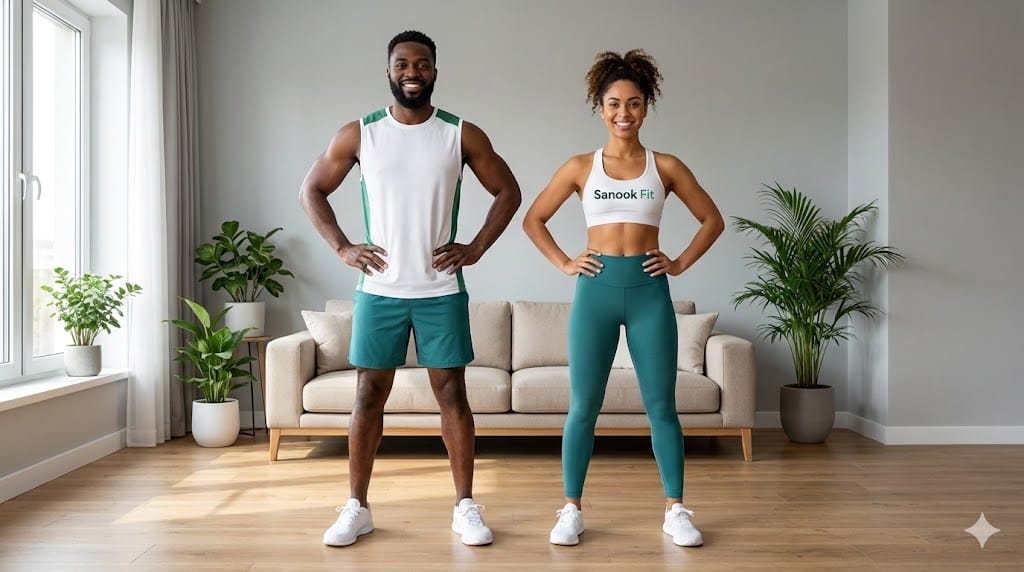
You don’t need expensive equipment, a perfect home gym, or hours of free time. You simply need to begin. One workout becomes a habit, one habit becomes a lifestyle, and over time those small decisions create remarkable changes. Your strongest body isn’t built in a single session — it’s built one workout at a time.
Join the Free 30-Day Sanook Fit Challenge
Ready to stop wondering what workout to do next? The 30-Day Sanook Fit Challenge gives you a structured plan with daily follow-along workouts, no equipment required, beginner-friendly progressions, and strength, cardio, and mobility sessions that fit busy schedules. Just press play and train alongside us — no guesswork, no complicated planning, just consistent progress. Follow along on YouTube, Instagram, and TikTok, and join our community on Facebook.
Continue Your Sanook Fit Journey
Explore these guides to build a complete home fitness routine:
- Can You Build Muscle Without Lifting Weights? — the science behind muscle growth using bodyweight exercises.
- 15 Bodyweight Training Myths Debunked — what actually builds muscle, burns fat, and gets results.
- How to Make Exercise Fun — 15 creative ways to gamify your home workouts.
- Home Workouts vs Gym — which is better for strength, weight loss, and staying consistent.
Final Thoughts
Fitness doesn’t have to be complicated. You don’t need expensive equipment, a gym membership, or hours of free time — you need a routine that fits your life. Bodyweight workouts at home give you the freedom to exercise almost anywhere, adapt workouts to your level, and keep progressing for years. Whether your goal is building strength, losing weight, improving your health, or simply feeling better each day, the most important step is getting started. Don’t wait for the perfect moment; start with the time, space, and ability you have today.
Recommended References
This article is supported by trusted, evidence-based resources: