Quick answer: If you sit for most of the day, a five-minute movement break during lunch can ease stiffness, improve posture, boost circulation, and lift your energy. Because it mixes gentle mobility, light bodyweight moves, stretching, and slow breathing, this desk worker’s lunch break reset helps you feel refreshed before you get back to work. Furthermore, you can do the whole routine at your desk with no gym, no equipment, and no sweating through your clothes.
Why Sitting Is Harder on Your Body Than You Think
Most office jobs don’t feel physically demanding. You sit comfortably, type, answer emails, join meetings, and stare at a screen. Therefore it seems easy. However, after a few hours your body starts to notice. Your neck tightens, your shoulders creep toward your ears, and your lower back stiffens. As a result, even walking to your car or climbing the stairs can feel surprisingly uncomfortable by the end of the day.
That’s exactly why a short desk worker’s lunch break reset matters. Because your body was built to move, small breaks help undo the effects of long, still hours.
The Hidden Cost of Sitting All Day
Modern work has changed fast. Many people now spend six to ten hours a day at a desk. Sitting itself isn’t harmful. However, staying in one position for long stretches can lead to real discomfort over time.
- Muscle stiffness and reduced mobility
- Poor posture and neck discomfort
- Shoulder tension and hip tightness
- Lower back discomfort and lower energy
The good news? Small movement breaks spread through the day can offset many of these effects. Therefore you don’t have to overhaul your schedule to feel better.
Why a Five-Minute Reset Actually Works
Many people skip movement because they think they need a full workout, such as an hour at the gym, a long run, or a complete fitness class. Those are great options when time allows. However, during a busy workday, five minutes is often far more realistic. And realistic habits are the ones you actually keep.
Because a short break lets your body change position, wake up stiff muscles, and clear your mind, it delivers a real payoff. Furthermore, movement is more than exercise. Standing up, stretching, walking down the hallway, or rolling your shoulders all count. As a result, you don’t need to break a sweat to feel the benefit.
Why Desk Workers Feel So Tight
When you stay seated for a long time, some muscles get stuck in shortened positions while others switch off. Because of this, tension tends to build in a few common spots: the neck, shoulders, chest, upper back, hip flexors, lower back, and hamstrings. Therefore many office workers feel stiff even though their jobs aren’t physically hard. Regular movement simply restores variety to your posture through the day.
Better Posture Starts With Movement
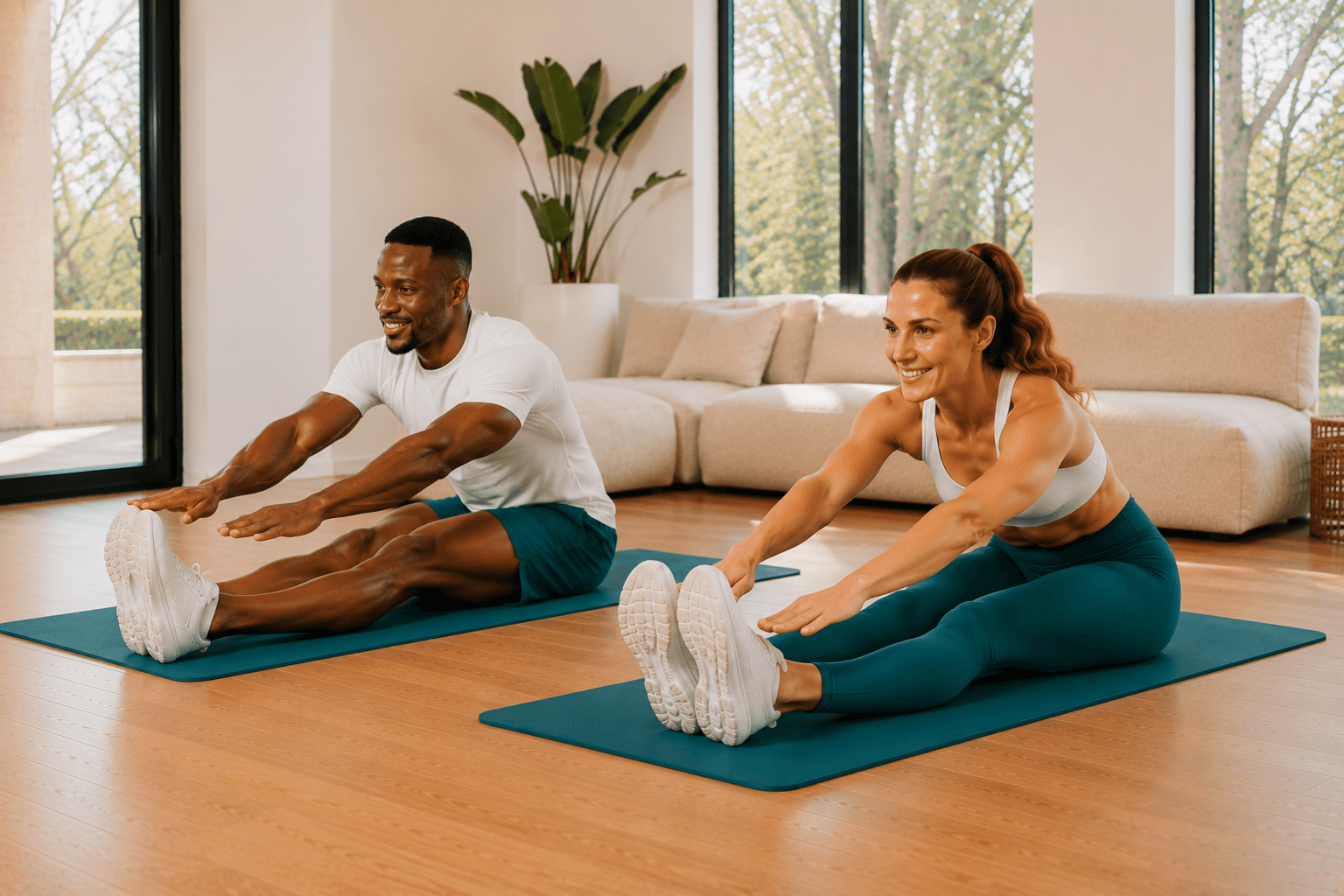
Many people search for the “perfect” sitting position. Good posture certainly matters. However, even the best posture becomes uncomfortable if you never change it. Instead of trying to sit perfectly for eight hours straight, aim to stand often, stretch through the day, walk when you can, and switch positions regularly. Because movement complements good posture, it works with your desk setup rather than against it. For a deeper look at prepping and resetting your body, see our best warm-up and cool-down routines.
Energy Doesn’t Always Come From Coffee
When your energy dips in the afternoon, another cup of coffee can seem like the obvious fix. Sometimes, though, what your body really needs is movement. Because standing, stretching, and walking for a few minutes breaks up a long stretch of sitting, you may feel more alert almost right away. As a result, movement wakes up more than your muscles. It refreshes your focus too.
💡 Sanook Fit Coach’s Tip: Don’t wait until your body feels stiff to move. Think of movement breaks like brushing your teeth. A few minutes done regularly beats waiting until the discomfort is hard to ignore.
Who This Lunch Break Reset Is For
This guide suits anyone who spends long hours seated. Therefore it fits a wide range of people:
- Office workers and remote employees
- Students, freelancers, and business owners
- Call centre staff and teachers
- Anyone who sits for most of the day
Whether you work from a corporate office or your kitchen table, these simple strategies can help you feel more comfortable. Furthermore, by the end of this guide you’ll understand why sitting affects your body, how to run a full five-minute reset, which office-friendly moves need no equipment, and how to build lasting movement habits into your workday.
Your Complete Five-Minute Lunch Break Reset
The goal of this routine isn’t to leave you breathless. Instead, it helps your body recover from sitting while it refreshes your mind before you get back to work. Because it’s designed for the office, you won’t need gym clothes, equipment, a yoga mat, or a large space. You only need five minutes and enough room to stand comfortably.
Before you begin: choose a safe spot where you can move freely, such as beside your desk, an empty meeting room, a quiet hallway, or an outdoor courtyard. Wear comfortable clothing, move slowly, and stop if anything causes pain.
Minute 1: Wake Up Your Upper Body
After hours of sitting, your neck and shoulders usually tighten first. Therefore we start there with gentle movement.
- Neck mobility (30 seconds): slowly look left, right, up, and down. Avoid forcing it, and stay within a comfortable range.
- Shoulder rolls (30 seconds): roll your shoulders forward and then backward in smooth, controlled circles.
- Deep breathing: take five slow breaths. Inhale through your nose, exhale through your mouth, and let your shoulders relax.
Because these gentle moves ease neck stiffness and relax the shoulders, they prepare your body for what comes next.
Minute 2: Wake Up Your Legs
Sitting reduces movement in your lower body, so let’s get those muscles working again.
- Chair squats (45 seconds): stand in front of your chair, lower until you lightly touch the seat, then stand back up. Keep your chest lifted throughout.
- Standing calf raises (30 seconds): rise onto your toes, pause briefly, and lower slowly. This wakes up your ankles and calves.
- Arm circles (45 seconds): start small, gradually go larger, then reverse direction halfway through.
Minute 3: Activate Your Core and Upper Body
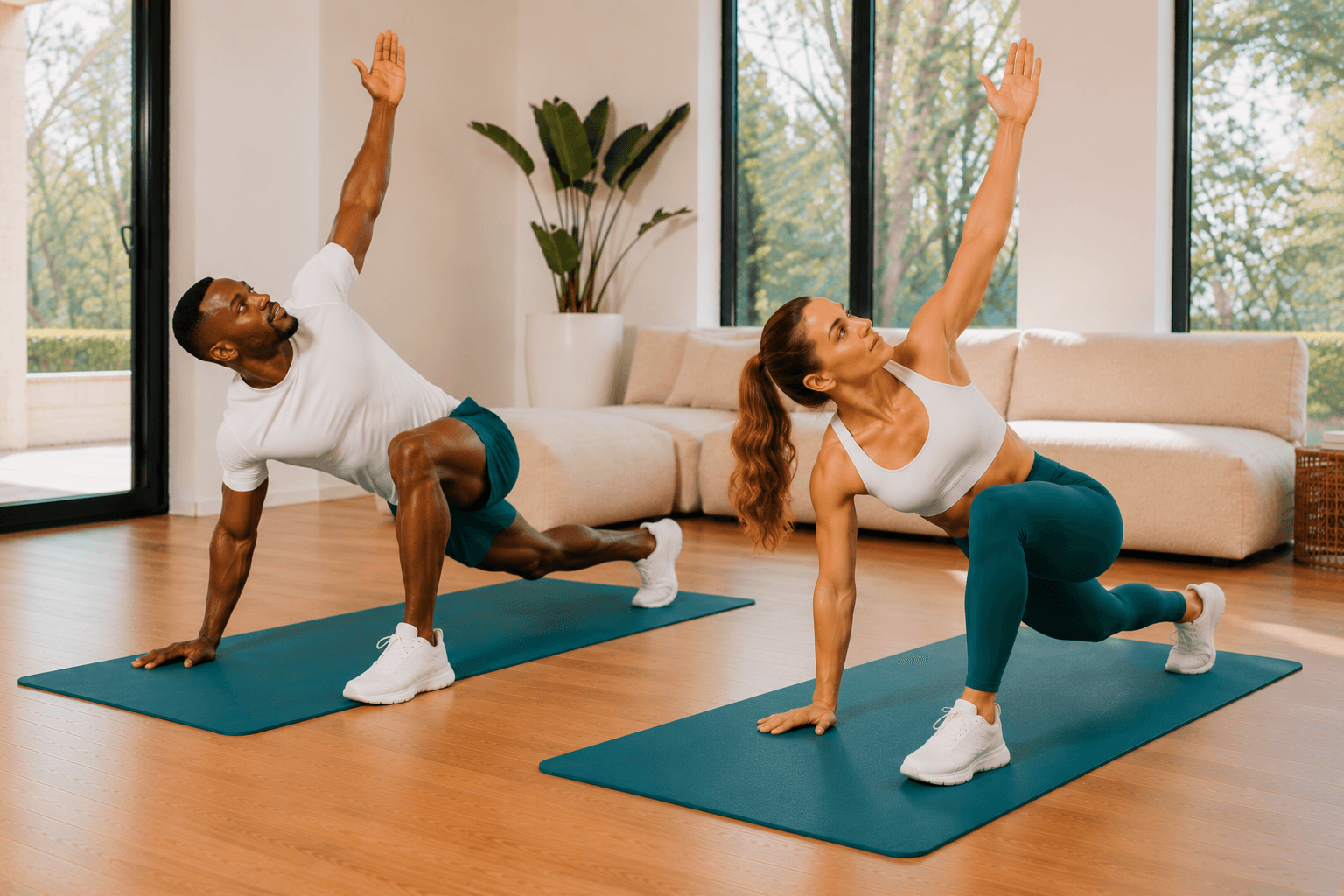
Now it’s time to gently raise your heart rate while strengthening the muscles that support good posture.
- Wall push-ups (45 seconds): face a wall, place your hands slightly wider than your shoulders, lower your chest toward the wall, then push back under control. This works your chest, shoulders, triceps, and core without getting on the floor.
- Standing knee raises (45 seconds): lift one knee toward your chest, lower it, and alternate sides. Swing your arms naturally if it feels comfortable.
- Standing torso rotations (30 seconds): stand tall and rotate gently side to side. Let your upper back move naturally, and avoid twisting hard.
Because these moves shift your body from sitting into active movement, they support better posture and circulation at the same time.
Minute 4: Open Up Tight Muscles
Next, we stretch the muscles that most often tighten during long periods of sitting.
- Hip flexor stretch (30 seconds each side): step one foot behind you, keep your chest upright, and gently shift your weight forward until you feel a stretch at the front of the hip.
- Chest stretch (30 seconds): clasp your hands behind your back if comfortable, lift your chest gently, and keep your shoulders relaxed. This helps counter the rounded shoulders that come from computer work.
- Upper back stretch (30 seconds): interlace your fingers in front of you, reach forward, and round your upper back slightly to feel the stretch between your shoulder blades.
Stretching should feel comfortable, so never bounce and never force it. Gentle, steady movement is enough.
Minute 5: Finish Strong
The final minute helps your body relax while your mind gets ready to return to work.
- Standing side stretch (30 seconds each side): reach one arm overhead, lean gently to the opposite side, and breathe slowly.
- Standing hamstring stretch (30 seconds each side): place one heel slightly forward, keep your back straight, and hinge gently at your hips until you feel a stretch behind your thigh.
- Three deep breaths: stand tall, inhale slowly, and exhale completely. Repeat three times, and let your breathing settle before you sit back down.
Office-Friendly Alternatives for a Shared Space
Working in a shared office? No problem. Because quieter swaps keep the same benefits, you can adapt each move without drawing attention.
- Instead of chair squats, try slow sit-to-stand movements.
- Instead of wall push-ups, use desk push-ups against a sturdy desk.
- Instead of standing knee raises, march slowly in place.
- Instead of large arm circles, do shoulder blade squeezes.
The goal isn’t dramatic exercise. Instead, it’s simply moving more than you were five minutes ago.
How Hard Should This Feel?
This routine isn’t a HIIT session. Therefore aim for an effort of about 3 to 5 on the Rate of Perceived Exertion (RPE) scale. You should feel warmer, move comfortably, breathe a little deeper, and finish refreshed rather than exhausted. However, if you’re sweating heavily or struggling to breathe, slow down a little. If you enjoy higher-intensity training on other days, our at-home HIIT workout guide explains how to pace real workout intensity safely.
The Five-Minute Reset Formula
Every lunch break follows the same simple structure: mobilize, then strengthen, then stretch, then breathe, and finally return to work feeling better. Because it’s simple, practical, and sustainable, you can repeat it any day without planning.
💡 Sanook Fit Coach’s Tip: Don’t think of this as taking a break from work. Instead, think of it as preparing your body to work more comfortably for the rest of the day.
Build Healthy Movement Into Your Whole Workday
A five-minute reset at lunch is a great start. However, your body benefits even more when movement becomes part of your entire day. Think of your workday like a long road trip. You wouldn’t drive for hours without stopping, and your body works the same way. Therefore regular breaks help interrupt long, still stretches and keep your muscles and joints moving.
Don’t Wait Until You Feel Stiff
Many people only stand up once their neck hurts or their back tightens. Instead, try to move before discomfort develops. Because small, regular breaks are easier than recovering after hours of sitting, they save you the worst of the stiffness. Your goal isn’t to cut out sitting completely. Rather, it’s to avoid staying in one position for too long.
Follow the 30-to-60-Minute Rule
One simple habit makes a big difference. Every 30 to 60 minutes, try to stand up, stretch your arms, roll your shoulders, walk for a minute or two, and take a few deep breaths. Because these micro-breaks fit naturally into most workdays, you won’t lose your focus. Instead, you simply give your body a chance to change position.
Build Movement Into Your Routine
Movement doesn’t always need to feel like exercise. Therefore look for natural chances throughout the day:
- Walk to refill your water bottle, and stand while taking phone calls.
- Walk over to a colleague instead of sending another message when practical.
- Stretch while a meeting loads, and take the stairs when appropriate.
- Walk for a few minutes after lunch.
Because these small habits stack up, they often add far more movement than you’d expect.
Create a More Movement-Friendly Workspace
Your workspace shapes how much you move. Because small tweaks encourage healthier habits, a few adjustments go a long way. For example, keep your water bottle away from your desk so you stand to refill it, place frequently used items just out of reach, set gentle reminders to stand, and adjust your chair and monitor for comfortable posture. As a result, healthy choices become the easy choices.
Let Hydration Encourage Movement
Drinking enough water supports your overall health. Furthermore, it has a hidden benefit. Because you’ll naturally need to stand up more often, refilling your bottle or visiting the restroom creates extra movement breaks. Therefore hydration and movement work surprisingly well together.
Try Walking Meetings
Not every meeting needs a conference room. When it suits your workplace, consider walking one-on-one meetings, taking phone calls on your feet, or brainstorming during a short walk. However, not every meeting fits this approach, so use it when circumstances allow.
Working From Home? This Still Helps
Remote workers face many of the same challenges, and sometimes more. Because there’s no commute and no walking between meeting rooms, it’s easy to sit almost all day. Therefore build in intentional breaks: stretch between video calls, walk around your home after meetings, use lunch as a movement break rather than more screen time, and end your workday with a short walk. If you juggle family and a home office, our home workouts for busy parents offer more quick, practical ideas.
Small Habits Create Big Results
Many people underestimate how much five minutes adds up. So let’s do the math. One five-minute movement break each workday equals 25 minutes a week, more than 100 minutes a month, and over 20 hours of movement a year. That’s time your body wouldn’t have spent moving otherwise. Because progress rarely comes from dramatic changes, it usually comes from small habits repeated consistently.
Movement breaks matter, and so do the habits around them. Therefore aim to get enough sleep, stay hydrated, eat balanced meals, manage stress, and move outside of work when you can. Your health isn’t built by one habit alone. Instead, it’s the combination of many good choices over time. If you’re curious how those choices stick, our guide on building consistent fitness habits breaks it down.
Common Workplace Movement Mistakes to Avoid
A few habits quietly cancel out your best intentions. Therefore watch for these common traps:
- Sitting through lunch: whenever possible, use part of your break to stand, stretch, or walk. Because even a few minutes helps, it breaks up prolonged sitting.
- Waiting until the end of the day: if you wait until 6 PM to move, your body has already spent hours in one position. Short breaks throughout the day usually help more than a single evening workout.
- Ignoring minor stiffness: a stiff neck, tight hips, or tired shoulders are reminders to change position. Therefore listen before the discomfort grows.
- Thinking every break must be a workout: sometimes all your body needs is to stand, walk, stretch, and breathe.
💡 Sanook Fit Coach’s Tip: The healthiest desk workers aren’t the ones with the most expensive office chairs. Instead, they’re often the ones who remember to stand up, stretch, and move through the day. Your body appreciates variety far more than perfect posture held for hours.
The Sanook Fit Desk Blueprint
At Sanook Fit, we believe fitness shouldn’t be limited to gyms or scheduled workouts. Movement belongs everywhere, including your desk. Therefore we recommend a simple daily rhythm: sit, then stand, then move, then stretch, then hydrate, then return to work, and repeat throughout the day. Because it’s easy to remember, it keeps you comfortable during long workdays.
Want more of this mindset in your feed? Follow Sanook Fit on YouTube, TikTok, Facebook, and Instagram for quick, equipment-free movement ideas you can use at work.
The Productivity Benefits of Movement
Movement doesn’t only help your muscles. Because it breaks up long, still hours, many people also return to work feeling more alert, better focused, less stiff, and mentally refreshed. Movement isn’t a substitute for good sleep, nutrition, or stress management. However, it can be a valuable part of a healthy workday.
Progress Is Measured Differently
Success here isn’t measured by sweating, burning the most calories, or completing hard workouts at your desk. Instead, look for signs such as less afternoon stiffness, better posture awareness, more comfortable movement, steadier energy, and fewer long stretches of uninterrupted sitting. Because these improvements build slowly, they’re easy to miss. For more ways to track wins beyond the scale, see how to measure fitness progress without a scale.
Desk Work Myth vs Fact
| Myth | Fact |
|---|---|
| Sitting comfortably all day isn’t physically demanding. | Staying in one position for hours can lead to stiffness and discomfort. |
| My evening workout makes up for sitting all day. | Regular breaks complement structured exercise and reduce prolonged sitting. |
| Good posture means sitting perfectly all day. | Healthy posture also means changing positions and moving regularly. |
| I don’t have time to exercise at work. | A five-minute reset fits most lunch breaks and needs no equipment. |
| Stretching is only for athletes. | Gentle mobility helps anyone who sits for long hours. |
Your Five-Minute Reset Checklist
Before your movement break:
- Stand up from your chair.
- Choose a safe area with room to move.
- Relax your shoulders, and set your phone aside for five minutes.
During your reset:
- Move slowly and with control, and breathe naturally.
- Avoid forcing any stretch, and focus on quality of movement.
After your reset:
- Drink some water, and return to your desk feeling refreshed.
- Adjust your sitting position if needed, and repeat later in the day if you can.
Because consistency matters more than intensity, showing up daily beats going hard once.
Signs Your Movement Breaks Are Working
You probably won’t notice dramatic changes after one session. Instead, watch for gradual improvements over time:
- Less neck and shoulder tension by the end of the workday.
- Better mobility, so standing up after sitting feels easier.
- Improved posture awareness, because you notice slouching and correct it.
- More afternoon energy, since movement breaks up long sitting.
- Healthier daily habits, as standing, stretching, and walking become automatic.
Expert Coaching Advice From Sanook Fit
Many people believe they need a full lifestyle makeover to feel better at work. In reality, small changes usually have the biggest long-term impact. Therefore we encourage every desk worker to remember five simple principles.
- Move more often. The best posture is your next posture, so changing position regularly is one of the simplest ways to reduce stiffness.
- Choose quality over quantity. A few minutes of mindful movement can beat hours of sitting without a break.
- Build movement into your schedule. Attach it to habits you already have, such as lunch, coffee breaks, or the end of meetings.
- Listen to your body. Stiffness is a reminder to stand, stretch, or walk, so respond early.
- Stay consistent. You don’t need perfect movement every day. You simply need to move a little more than yesterday.
Continue Your Sanook Fit Journey
Your lunch break reset is just one piece of a healthier lifestyle. Therefore keep building better habits with these guides:
- ➡ Best warm-up and cool-down routines — simple mobility to prepare your body and aid recovery.
- ➡ The science behind consistent home fitness habits — how small daily actions become lasting routines.
- ➡ The ultimate at-home HIIT workout — how to gauge and pace your workout intensity.
- ➡ Home workouts for busy parents — short, practical routines that fit around a full schedule.
- ➡ Rest days explained — why recovery is a key part of long-term fitness.
- ➡ How to track your progress without a scale — meaningful ways to measure improvement.
- ➡ Can you build muscle with only bodyweight exercises? — how bodyweight training supports strength.
Frequently Asked Questions
Is a five-minute movement break really enough?
Yes. While five minutes won’t replace your regular workouts, it can reduce stiffness, boost circulation, improve mobility, and break up long periods of sitting. Because small breaks done consistently add up, they support better overall activity across the week.
How often should I take movement breaks?
A practical goal is to stand up and move every 30 to 60 minutes whenever work allows. Even one or two minutes helps interrupt prolonged sitting. However, if your schedule is packed, aim for at least one dedicated five-minute reset during lunch.
Can I do these exercises in work clothes?
Usually, yes. Because this desk worker’s lunch break reset needs no special clothing, no equipment, no floor exercises, and very little space, it fits the workplace well. Simply move within a comfortable range and skip anything that doesn’t suit your clothing or footwear.
I work from home. Does this routine still help?
Absolutely. Remote workers often sit just as much as office workers. Therefore the same movement principles apply whether you’re in a corporate office, a home office, or a shared workspace.
Will these exercises improve my posture?
Movement breaks can reduce stiffness and improve posture awareness. However, they work best alongside an ergonomic workstation, regular position changes, strengthening exercises, and healthy habits. No single exercise permanently “fixes” posture, but regular movement helps you feel and move more comfortably.
What if I already go to the gym?
Great. This routine complements your regular workouts, because it helps your body recover from sitting between training sessions. Even active people benefit from moving regularly through the workday.
Start Your Reset Today
You don’t have to wait until you leave the office to take care of your body. Because a few minutes of movement can help you feel better, move better, and work more comfortably, the best time to start is now. So begin with one break today, and do it again tomorrow. Within a few weeks, this desk worker’s lunch break reset can become one of the healthiest habits in your day. Your neck, shoulders, back, and future self will thank you.
Recommended References
Support this guide with trusted, evidence-based resources on workplace health, physical activity, sedentary behaviour, and ergonomics:
- World Health Organization — Physical Activity Guidelines
- Centers for Disease Control and Prevention (CDC) — Physical Activity Basics
- National Institute for Occupational Safety and Health (NIOSH) — Workplace Safety and Health Topics
- American College of Sports Medicine (ACSM) — Exercise and Physical Activity Resources
- National Institutes of Health (PubMed) — Research on Sedentary Behaviour