If you’ve ever stood in your living room wondering whether push-ups and squats could actually change your body, you’re asking exactly the right question. The short answer is yes — you absolutely can build muscle with bodyweight exercises, and the science backs this up completely. In fact, you don’t need a gym membership, dumbbells, or any special equipment to get real results. What you do need, however, is a solid plan, enough challenge, and the consistency to keep showing up.
This guide is for anyone curious about what’s truly possible when training at home. Whether you’re a complete beginner or someone returning to fitness after a break, bodyweight training offers a surprisingly powerful path to real, visible muscle growth. So let’s unpack how it works, what the research says, and how you can start today.
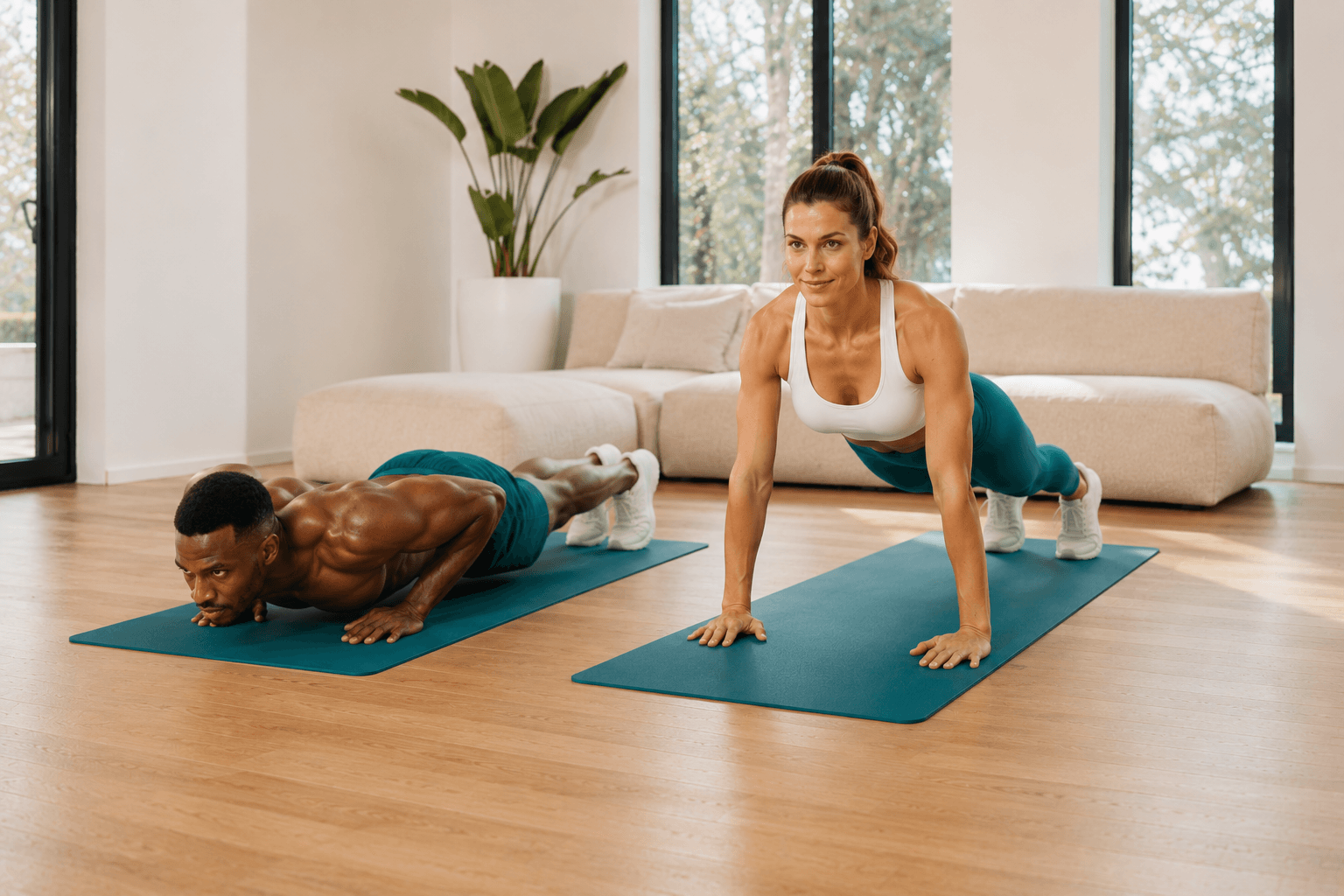
What Does Science Actually Say About Bodyweight Muscle Building?
Here’s something that surprises a lot of people: your muscles don’t care what type of resistance is challenging them. Whether you’re pushing against a barbell, a resistance band, or the floor during a push-up, the physiological process of muscle growth is essentially the same. It’s called mechanical tension, and it’s the primary driver behind every muscle gain you’ll ever make.
Research published in the Journal of Strength and Conditioning Research found that bodyweight training can produce comparable muscle and strength gains to weight training when effort and volume are matched. Consequently, the key variable isn’t the type of resistance at all — it’s how hard your muscles are working relative to their current capacity.
In other words, if a push-up genuinely challenges you, your body will adapt by building muscle. Once it becomes easy, you simply progress to a harder variation, and then your body adapts again. That cycle of challenge and adaptation is the foundation of all strength training — and it works just as well without a single piece of equipment.
The Three Drivers of Muscle Growth You Need to Know
Exercise science has identified three main triggers that cause muscles to grow. Understanding these changes how you think about training — especially when you’re working with only your bodyweight.
1. Mechanical Tension
This is the force your muscles produce while contracting against resistance. In bodyweight training, you create mechanical tension through exercises like push-ups, squats, pull-ups, lunges, and dips. Furthermore, the more challenging the variation and the more controlled your movement, the higher the tension on your muscles.
2. Metabolic Stress
You know that burning sensation near the end of a hard set? That’s metabolic stress — a buildup of metabolic byproducts like lactate that signals your body to grow and adapt. Notably, bodyweight circuits and high-rep sets are particularly good at creating this response, especially in the lower body.
3. Muscle Damage
Small amounts of muscle damage during exercise trigger your body’s repair response, leading to stronger, slightly larger muscle fibers over time. As a result, slow, controlled movements — like lowering yourself into a push-up for three to four seconds — are especially effective at causing this type of beneficial stress.
The great news is that bodyweight exercises naturally trigger all three of these mechanisms. You simply have to apply them correctly, however, to get the full benefit.
How to Build Muscle with Bodyweight Exercises: The Key Principles
Knowing that bodyweight training works is one thing. Knowing how to apply it effectively, however, is another. These are the principles that separate people who see real results from those who plateau early.
Progressive Overload: How to Keep Building Muscle with Bodyweight Exercises
Progressive overload simply means making your workouts harder over time so your muscles keep getting challenged. With weights, you add more plates. With bodyweight, however, you have other options that are just as effective:
- More difficult variations — Move from a knee push-up to a full push-up, then to a diamond push-up, then to an archer push-up.
- Slower tempo — A push-up with a 3-second lowering phase is significantly harder than a fast rep.
- More reps or sets — Add reps before progressing to harder variations.
- Reduced rest time — Shortening rest between sets increases metabolic stress on the muscle.
- Single-limb exercises — Pistol squats and single-leg hip thrusts dramatically increase the load on each working leg.
Additionally, if you want a structured approach to progressing your movements, check out our 2026 Bodyweight Progression Guide — it maps out exactly how to level up each exercise safely.
Train Close to Failure for Maximum Bodyweight Muscle Gains
Research consistently shows that training close to muscular failure is one of the most important factors for building muscle. “Close to failure” means the last few reps of a set should feel genuinely hard — not impossible, but challenging enough that you couldn’t do three or four more without a break.
For bodyweight training, therefore, this means you should pick a variation where you can do 8 to 20 reps with good form, and the final few reps genuinely test you. If you can blast through 30 reps of push-ups without much effort, it’s time to move to a harder variation.
Prioritise the Right Exercises for Muscle Growth
Not all bodyweight exercises are equally effective for building muscle. Specifically, the best ones are compound movements — exercises that work multiple muscle groups at once. These give you the most return for your effort:
| Exercise | Primary Muscles | Progression Path |
|---|---|---|
| Push-Up | Chest, shoulders, triceps | Incline → Standard → Diamond → Archer → Pike |
| Bodyweight Squat | Quads, glutes, hamstrings | Assisted → Standard → Pause → Jump → Pistol |
| Reverse Lunge | Quads, glutes, hamstrings | Standard → Slow → Bulgarian split squat |
| Plank / Hollow Hold | Core, shoulders, hips | Knee → Full → Extended → One-arm |
| Hip Thrust | Glutes, hamstrings | Two-leg → Pause → Single-leg |
| Pike Push-Up | Shoulders, triceps | Elevated pike → Wall handstand push-up |
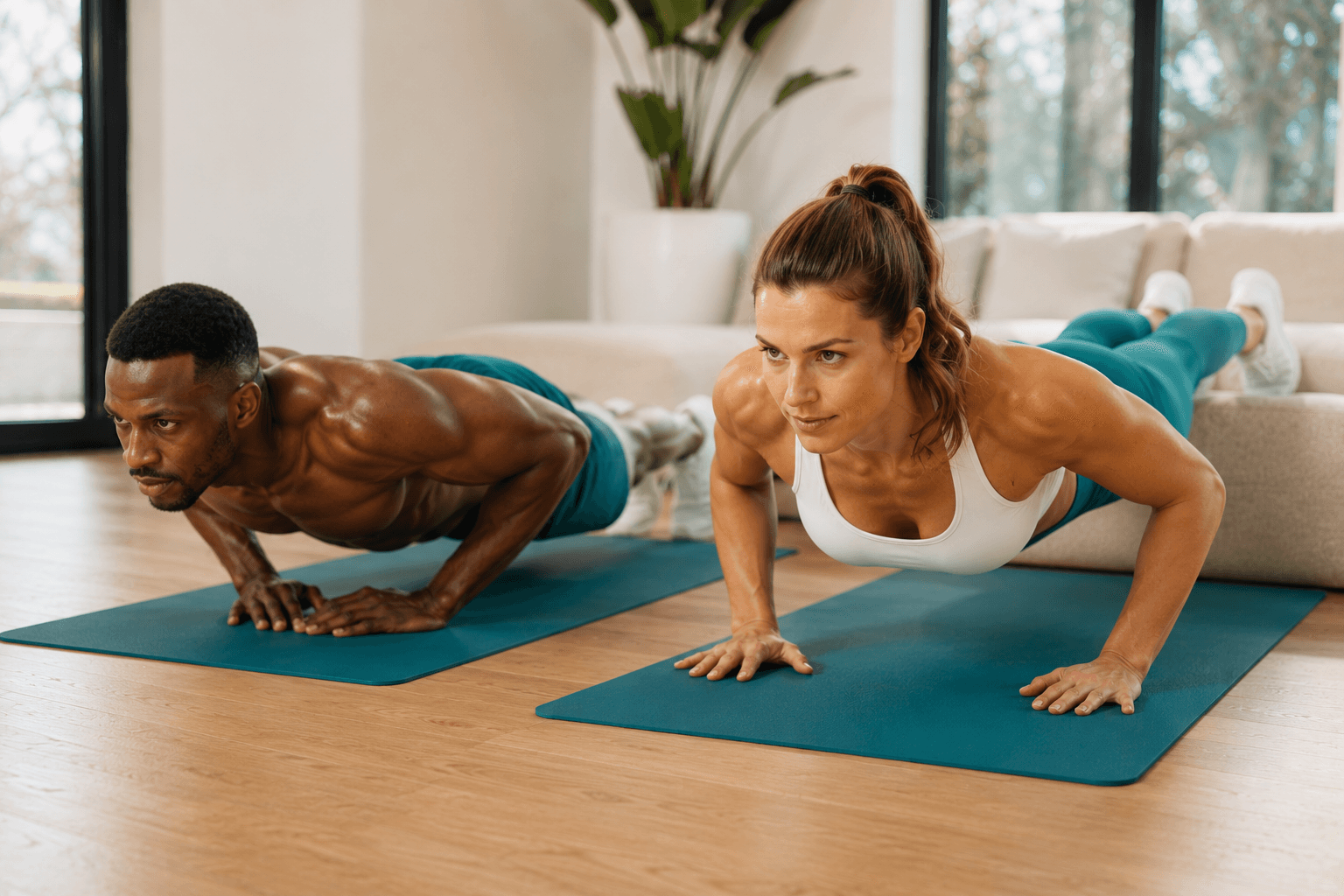
Can Bodyweight Exercises Build Muscle in Every Part of Your Body?
This is a common concern, and it’s a fair one. To be honest, let’s look at where bodyweight training shines and where it requires a bit more creativity.
Upper Body
Bodyweight training absolutely delivers for the chest, shoulders, and triceps. Push-up variations alone can take you from beginner to seriously strong. Moreover, our Ultimate Upper Body Workout at Home walks you through exactly how to structure that. For the back and biceps, pull-ups and inverted rows are highly effective, though they do require a bar or a low table.
Lower Body
The lower body actually responds very well to bodyweight work, particularly with high-volume squats, lunges, hip thrusts, and wall sits. Because leg muscles are large and accustomed to carrying your bodyweight all day, you may need to work at higher reps and progress to challenging single-leg variations to keep growing. Nevertheless, our No-Equipment Leg Workout covers some of the most effective approaches for building strong legs and glutes at home.
Core
The core is arguably where bodyweight training is most effective. Planks, hollow holds, dead bugs, mountain climbers, and leg raises provide intense, functional core training that many gym-goers never achieve with machines. In addition, a strong core transfers directly to every other exercise you do, making it well worth prioritising above almost everything else.
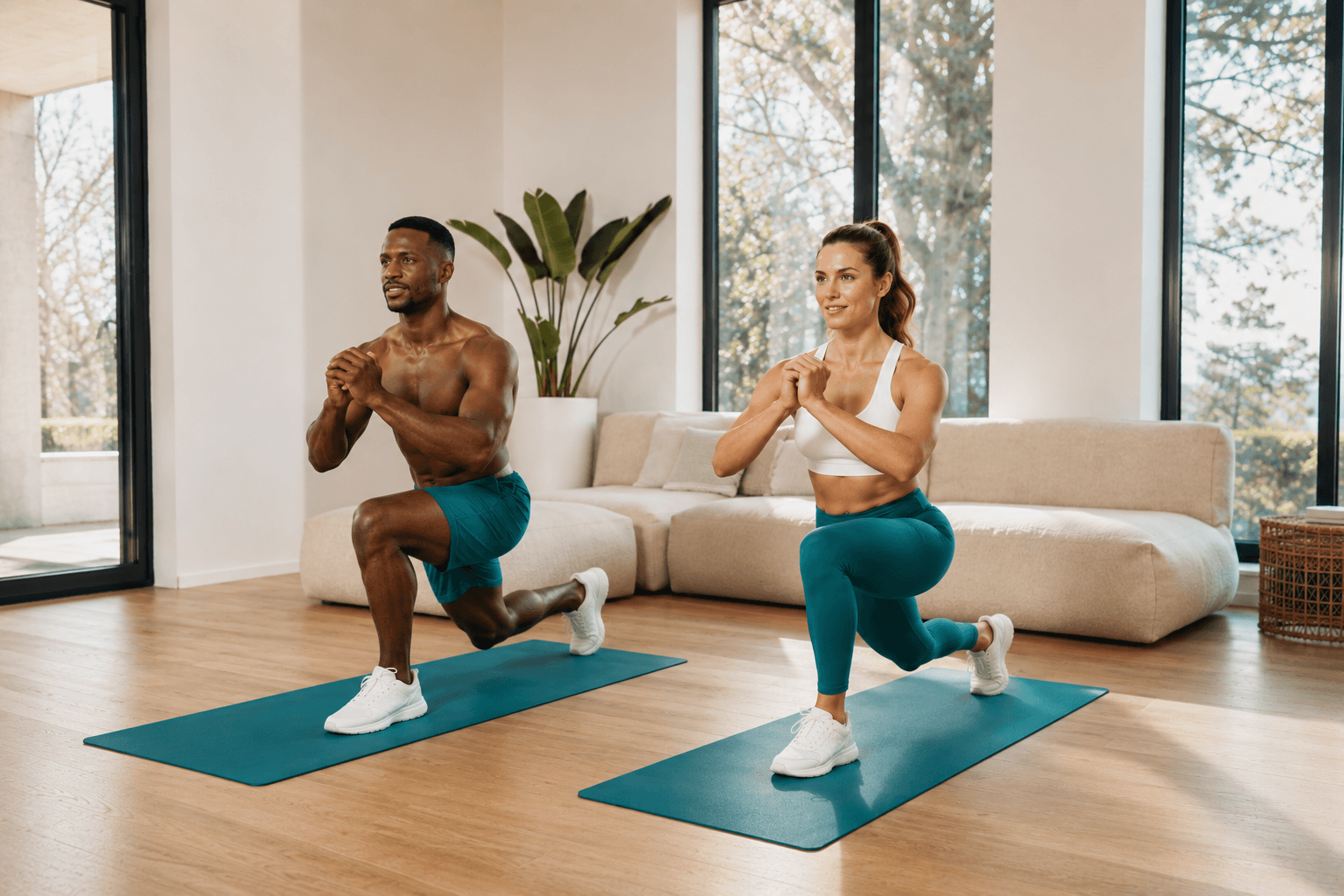
A Sample Bodyweight Muscle-Building Workout Plan
Here’s a simple three-day-per-week structure that targets every major muscle group and creates enough stimulus for real bodyweight muscle growth. Importantly, rest at least one day between sessions to allow your muscles to recover fully.
Day 1 — Push and Core (Upper Body Focus)
- Push-Ups (or chosen variation): 4 sets x 10–15 reps
- Pike Push-Ups: 3 sets x 8–12 reps
- Diamond Push-Ups: 3 sets x 8–12 reps
- Plank Hold: 3 sets x 30–45 seconds
- Dead Bug: 3 sets x 8 reps per side
Day 2 — Legs and Glutes (Lower Body Focus)
- Bodyweight Squats: 4 sets x 15–20 reps
- Reverse Lunges: 3 sets x 10–12 reps per leg
- Single-Leg Hip Thrust: 3 sets x 10–15 reps per side
- Wall Sit: 3 sets x 30–60 seconds
- Calf Raises: 3 sets x 20 reps
Day 3 — Full Body and Core
- Burpees: 3 sets x 8–10 reps
- Mountain Climbers: 3 sets x 20 reps (10 per side)
- Push-Ups (slow tempo, 3-sec lower): 3 sets x 8–10 reps
- Jump Squats: 3 sets x 10 reps
- Hollow Body Hold: 3 sets x 20–30 seconds
For a complete introduction to this style of training, our Bodyweight Training for Beginners Guide has everything you need to get started safely and effectively.
Nutrition: The Missing Piece When You Build Muscle with Bodyweight Training
Training is the trigger. Nutrition, however, is what actually builds the muscle. Even the most perfect bodyweight exercise routine won’t produce much if your diet doesn’t support recovery and growth. For that reason, it’s worth paying just as much attention to what you eat as to how you train.
Eat Enough Protein
Protein provides the amino acids your body uses to repair and build muscle tissue. Most research suggests aiming for around 1.6 to 2.2 grams of protein per kilogram of bodyweight per day. Good sources include eggs, chicken, fish, Greek yogurt, legumes, tofu, and cottage cheese. Consequently, you don’t need protein shakes — real food works just fine, as long as you hit your daily target consistently.
Don’t Fear Carbohydrates
Carbohydrates fuel your workouts and support recovery. Cutting carbs too aggressively while trying to build muscle makes your sessions feel flat and limits your progress. Instead, think oats, rice, sweet potato, and whole grain bread as your primary carb sources around workouts. These will support your performance and keep your energy levels stable throughout the day.
Sleep Is Non-Negotiable
Most muscle repair happens during sleep, specifically during deep sleep phases when growth hormone is released. As a result, consistently sleeping less than seven hours per night will meaningfully slow your results, regardless of how hard you train. Therefore, prioritise sleep the same way you prioritise your workouts — it’s not optional, it’s part of the programme.
Common Mistakes That Slow Down Bodyweight Muscle Building
Even motivated people can plateau if they fall into these traps. Knowing about them in advance, however, puts you at a real advantage.
Staying with Easy Variations Too Long
The most common reason people stop making gains is that they keep doing the same routine long after it stopped being challenging. If you’ve been doing 20 push-ups easily for three weeks, you’re maintaining — not growing. As a result, it’s time to move to the next variation and give your muscles a fresh challenge to respond to.
Skipping Warm-Ups and Cool-Downs
Jumping cold into hard sets increases injury risk and reduces performance. A proper warm-up prepares your joints, raises your body temperature, and primes your nervous system for effort. Similarly, cooling down properly helps with recovery and long-term consistency. Our Warm-Up and Cool-Down Routines Guide is a great starting point for anyone who tends to skip this step.
Not Tracking Your Progress
Without tracking, it’s easy to feel like you’re progressing when you’re actually spinning your wheels. A simple workout log — even just a note on your phone — helps you see whether you’re adding reps, mastering harder variations, or shortening your rest times. Furthermore, progress is real only when it’s measurable, so start tracking from day one.
Ignoring Recovery
More training is not always better. In fact, muscles grow during rest, not during the workout itself. Overtraining leads to fatigue, soreness that doesn’t go away, and eventually regression. For most people, therefore, three to four well-structured sessions per week with rest days in between is more than enough to build real muscle with bodyweight exercises consistently.
Bodyweight vs Gym: Which Builds More Muscle?
Honestly? For most people — especially beginners and intermediates — the difference is smaller than you’d expect. Both approaches can build meaningful muscle when programmed correctly. The gym does have advantages for advanced lifters who need very heavy loads to keep progressing. Bodyweight training, on the other hand, has advantages in convenience, cost, injury resistance, and accessibility.
The best training programme is ultimately the one you’ll actually stick to. For a deeper breakdown of both approaches, read our comparison: Home Workouts vs Gym: Which Is Better?
Additionally, if you’re already training at home and wondering how many sets you actually need, don’t miss our evidence-based breakdown: How Many Sets Per Exercise? The Science-Based Guide.
Frequently Asked Questions About Building Muscle with Bodyweight Exercises
How long does it take to build muscle with bodyweight exercises?
Most people notice strength improvements within two to four weeks. Visible muscle changes typically take eight to twelve weeks of consistent training and adequate nutrition. Beginners tend to progress faster, as the body is responding to new stimuli for the first time. However, results vary depending on consistency, nutrition, and sleep quality.
Do I need to eat differently to build muscle at home?
Protein intake is the most important nutritional factor. Aim for around 1.6 to 2 grams of protein per kilogram of bodyweight daily, and make sure you’re eating enough calories overall to support your training. Furthermore, a slight calorie surplus accelerates muscle growth, while a large deficit slows it down significantly.
Can I build muscle with bodyweight exercises if I’m a complete beginner?
Absolutely. Beginners actually tend to respond very well to bodyweight training because their muscles aren’t yet adapted to regular resistance exercise. Even basic push-ups, squats, and lunges will produce real muscle growth in the early months — as long as effort, consistency, and nutrition are all in place.
Are bodyweight exercises enough for long-term muscle building?
For most people, yes. With progressive variations, consistent training, and good nutrition, bodyweight training can build and maintain meaningful muscle indefinitely. Advanced athletes may eventually need additional resistance for certain muscle groups. Nevertheless, the vast majority of people will never actually hit that ceiling.
Should I do cardio if I’m trying to build muscle with bodyweight training?
Moderate cardio is fine and even beneficial for recovery and heart health. However, excessive cardio — especially very long sessions — can interfere with muscle growth by burning calories needed for recovery. As a result, keep cardio sessions moderate and, whenever possible, separate from your strength-focused bodyweight workouts.
Ready to Build Muscle with Bodyweight Exercises? Start Today
The evidence is clear, the path is simple, and the starting line is right where you are. Whether you’ve got 20 minutes before work, a quiet evening, or a spare corner of your bedroom, you have everything you need to start building real muscle with bodyweight exercises today.
No gym membership is needed. Nothing to buy or carry. Just start — and then keep showing up consistently. Above all, remember that every expert was once a beginner, and the best session you’ll ever do is the next one.
If you want to make sure you’re training safely and avoiding the most common beginner mistakes, our guide on How to Prevent Home Workout Injuries is a must-read before you dive in.

Follow Sanook Fit for More Bodyweight Training Content
We share practical home workout content, training tips, and motivation every week across all our platforms. Come join the community and keep the momentum going: