No equipment? No problem. A household items workout proves you can get fit at home with the everyday objects you already own.
Here is the quick answer most people are searching for: yes, a household items workout really works. In fact, you can build a complete, full-body session using nothing but everyday household items. So, grab a few chairs, backpacks, water bottles, towels, stairs, laundry baskets, and even a sturdy wall. Together, these simple objects help you build strength, improve stamina, and boost mobility — all without spending a single dollar on fitness gear. With a little creativity, almost any home becomes a surprisingly great training space.
The Biggest Household Items Workout Myth
First, let’s clear up the most common excuse of all: “I don’t have any equipment.” At first glance, that sounds perfectly reasonable. After all, social media constantly shows us expensive home gyms, polished dumbbell sets, commercial machines, and glossy studio setups. As a result, it’s easy to believe that real results demand special gear.
However, the truth is far simpler — and a lot more encouraging. Look around your living room for a moment. Chances are, you already own everything you need. For instance, that dining chair can become a workout bench. Meanwhile, a loaded backpack doubles nicely as a weighted vest. Even your staircase can turn into a surprisingly great cardio machine, while a humble bath towel delivers tough resistance work.
Therefore, instead of waiting for the “perfect” setup, you can start training today. This guide walks you through practical, beginner-friendly ways to use household items for a full-body workout, so you can stay consistent no matter your budget or space.
Build Your Upper-Body Household Gym
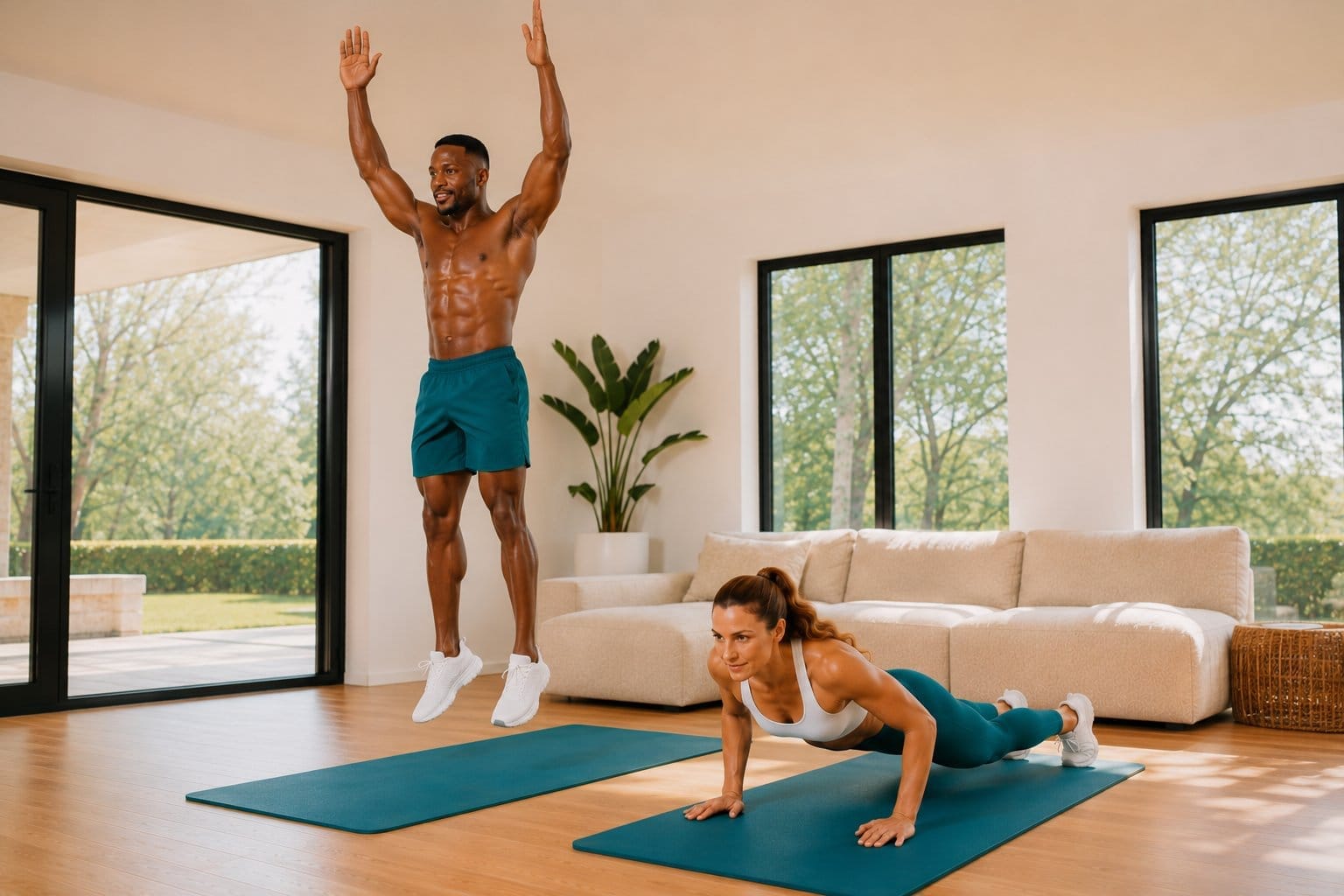
To begin, let’s tackle the upper body. The good news? You do not need dumbbells to strengthen your chest, shoulders, arms, back, and core. On the contrary, a smart household items workout uses things you already own. The trick, quite simply, is to use ordinary objects creatively and with good form.
Chair Dips for Triceps and Chest
First, grab a sturdy chair. Position your hands on the edge, slide your hips forward, and lower yourself slowly until your elbows reach roughly 90 degrees. Then, press back up. so, you’ll feel your triceps and chest working hard. For an easier version, keep your knees bent; for a harder one, extend your legs farther out.
Backpack Rows for a Stronger Back
Next, fill a backpack with books or water bottles. Hinge at your hips, keep your back flat, and row the bag toward your ribs. Because the load sits close to your body, your lats and upper back do most of the work. As you grow stronger, simply add more weight to the bag.
Water Bottle Shoulder Press
After that, pick up two full water bottles. Hold one in each hand at shoulder height, then press overhead until your arms straighten. Although the load feels light at first, higher reps quickly challenge your shoulders. Moreover, this move improves overhead balance for everyday lifting.
Towel Pull-Aparts and Wall Push-Ups
Finally, finish with two no-equipment classics. For towel pull-aparts, hold a towel taut and pull outward to fire up your upper back and rear shoulders. For wall push-ups, lean into a wall and press away to build pushing strength gently. Together, these moves round out a complete upper-body session.
Want a deeper routine? Then explore our complete guide to the ultimate upper-body workout at home for more next steps you can layer in over time.
Build Your Lower-Body and Core Household Gym
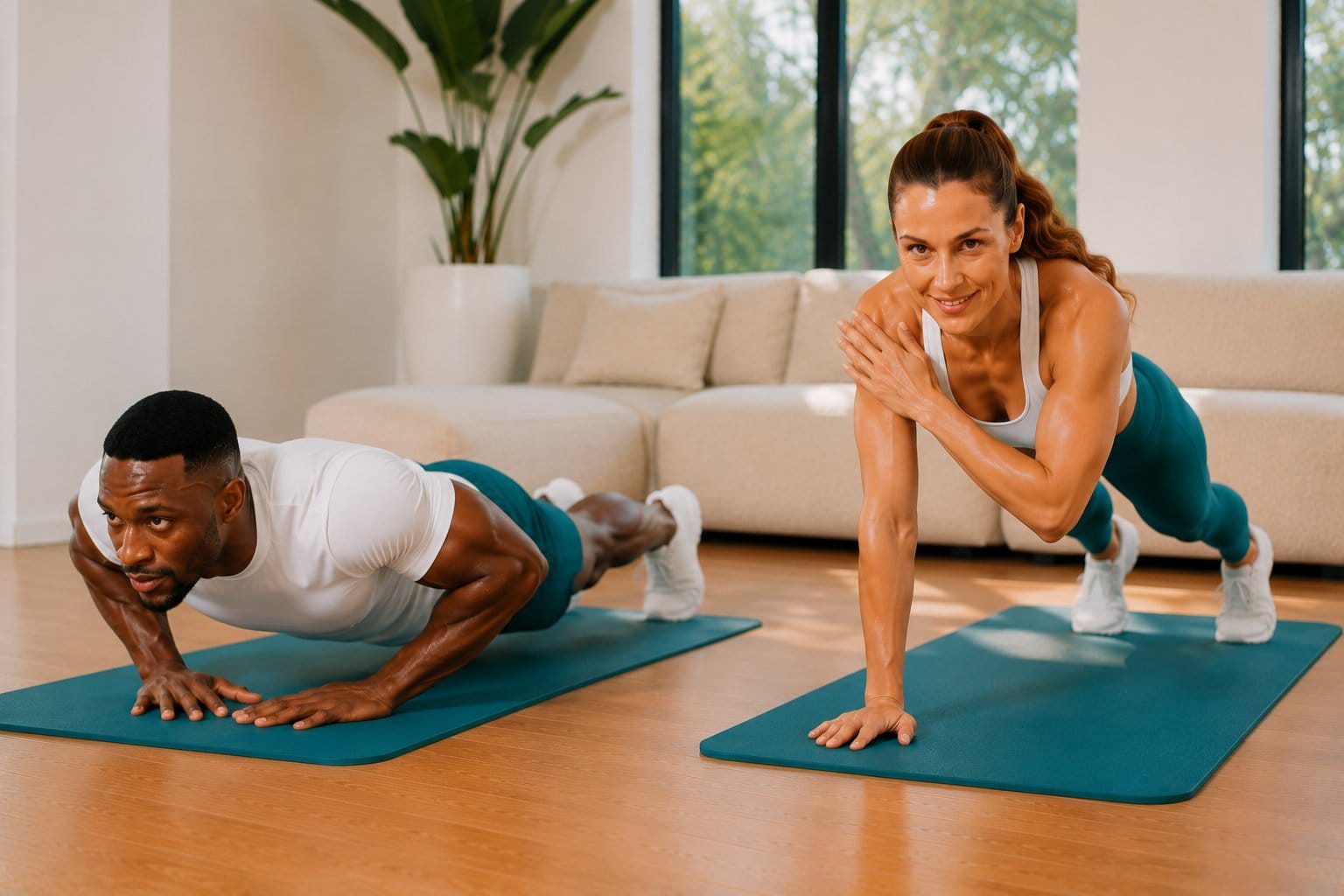
Of course, your upper body is not the only area that benefits. In reality, a great household items workout trains your legs and core too. So, let’s put your stairs, sofa, and laundry basket to work and build strong lower-body muscle at home.
Stair Step-Ups for Legs and Cardio
To start, use the bottom step of your staircase. Step up with one foot, drive through your heel, and stand tall before lowering back down. Then, switch sides. Not only does this build your quads and glutes, but it also raises your heart rate for a quick cardio boost.
Sofa Bulgarian Split Squats
Next, rest the top of one foot on your sofa behind you. Lower into a single-leg squat, keeping your front knee tracking over your toes. Because one leg carries most of the load, this exercise builds serious strength and balance. Sure, it feels tough at first — yet your legs will thank you later.
Laundry Basket Squats and Loaded Carries
After that, fill a laundry basket with towels or books. Hold it close to your chest, then squat down and stand back up with control. Afterward, walk it across the room for a loaded carry. As a result, you train your legs, core, and grip all at once.
Towel Hamstring Curls and Water Jug Squats
Meanwhile, on a smooth floor, place your heels on a towel, lift your hips, and slide your feet out and in to challenge your hamstrings. also, a full water jug makes an excellent goblet-squat load. Hold it tight against your chest, squat deep, and feel your whole lower body engage.
If you love training your legs, you’ll also enjoy our no-equipment leg workout for strong legs and glutes. For a stronger midsection, check out our best bodyweight workouts for abs too.
Your Full Household Items Workout Circuit
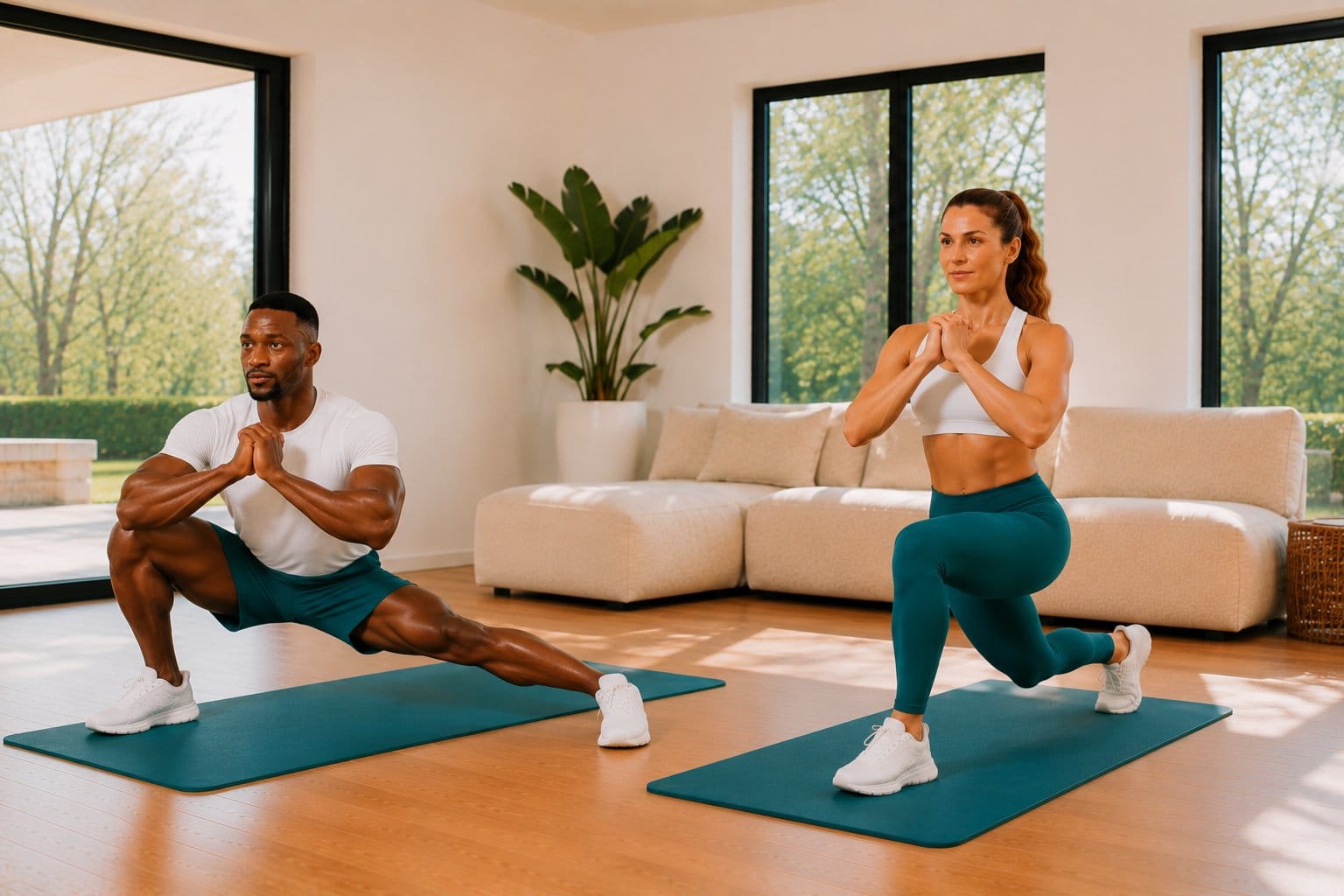
Now that you have the moves, let’s combine them into one efficient household items workout circuit. Ideally, aim for three to four rounds, with about 45 to 60 seconds of rest between rounds. Because each exercise flows into the next, you keep your heart rate up while you train every major muscle group.
- Chair dips — 10 to 12 reps
- Backpack rows — 12 reps per side
- Water bottle shoulder press — 12 to 15 reps
- Stair step-ups — 30 to 45 seconds
- Sofa Bulgarian split squats — 10 reps per leg
- Towel hamstring curls — 10 to 12 reps
- Plank hold — 30 to 45 seconds
Pressed for time? In that case, our 15-minute full-body workout at home gives you a fast, structured option. Alternatively, if fat loss is your goal, try our at-home HIIT workout that burns fat in just 20 minutes.
How Many Sets and Reps in a Household Items Workout?
of course, the right volume depends on your goal and your experience. As a general rule, beginners do well with two to three sets per exercise, while more advanced trainees can push toward four or five. According to the American College of Sports Medicine, adults benefit from strength training at least twice per week. Likewise, the World Health Organization recommends regular muscle-strengthening activity for overall health.
To keep improving, focus on steady increases — slowly adding reps, rounds, or weight in your backpack and jugs. For a full breakdown, read our guide on leveling up your bodyweight gains and our deep dive into advanced bodyweight training.
Stay Safe During Your Household Items Workout
Before you dive in, remember that safety always comes first. Therefore, test every item for balance — a wobbly chair or slippery sofa can cause injury fast. In addition, warm up for a few minutes, move with control, and stop if anything feels sharp or painful.
If you’re new to exercise or returning after a break, our complete guide to exercise modifications shows you how to scale every movement to your level. Furthermore, a solid home mobility routine keeps your joints healthy and your progress steady.
Why a Household Items Workout Actually Works
In the end, the best workout is the one you actually do. Because a household items workout removes the usual roadblocks — cost, travel, and gym nerves — it makes staying consistent far easier. In fact, many people train more often once the gym is no longer a must.
Still, staying motivated matters just as much as the exercises themselves. So, if you ever feel your energy dipping, our article on staying motivated to exercise offers 15 science-backed strategies. And if you simply want training to feel lighter, our tips on making exercise fun will help you stick with it. Curious how this approach compares to a membership? Our home workouts vs gym breakdown lays it all out.
Your home is already a gym. You just have to start seeing it that way.
Join the Sanook Fit Community
Finally, fitness feels better when you do it together. At Sanook Fit, we believe in fun, accessible, no-excuses workouts for every body and every budget. So, come train with us and share your progress.
Follow along for free workouts, demos, and daily motivation: subscribe on YouTube, follow us on TikTok, like our page on Facebook, and join the community on Instagram. We’d love to cheer you on.
In short, you do not need a gym membership or fancy gear to get fit. With a simple household items workout and a little creativity, you can build strength, burn calories, and feel amazing — right at home. So grab that chair, fill that backpack, and let’s get moving!