
Ever stood up after a long stretch at your desk and felt your hips lock up? Or woken with a stiff back, or noticed your shoulders complaining every time you reach overhead? You are far from alone. Modern life keeps most of us sitting far longer than our bodies were built for — and that stiffness is your body asking for movement.
The good news is that a simple home mobility routine can change how you feel day to day. At Sanook Fit, we treat mobility as gentle, enjoyable maintenance rather than a chore. This guide explains what mobility really is, why it matters, and a follow-along routine you can do in minutes — no equipment, no gym, just a little floor space.
Quick Answer
A home mobility routine improves how well your joints move through their full range of motion. Unlike plain stretching, mobility training blends flexibility, strength, and control so you move more comfortably, feel less stiff, stand taller, and perform better in both workouts and everyday life.
Mobility vs Flexibility: What Is the Difference?
People often use these words interchangeably, but they are not quite the same. Flexibility is about how far a muscle can lengthen — a fairly passive quality. Mobility is your ability to actively move a joint through its range with strength and control. In short, flexibility gives you the range, and mobility lets you actually use it.
- Mobility: active movement that needs strength and control, and improves movement quality.
- Flexibility: passive tissue length that improves your overall range of motion.
Ideally you want both working together. The benefits of regular stretching and movement are well documented, and mobility work helps you put that range to good use.
Why Mobility Training Matters
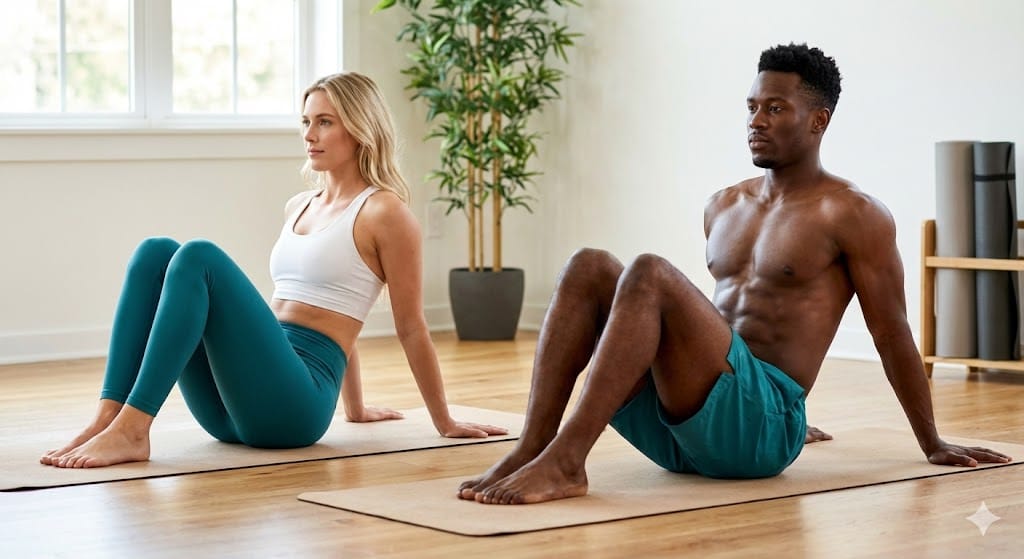
Improving mobility is about much more than touching your toes. It makes ordinary life noticeably easier and more comfortable. Regular practice can lead to:
- Better posture
- Easier squats and lunges
- More comfortable overhead reaching
- Improved balance
- Healthier, happier joints
- Better technique during workouts
- Less day-to-day stiffness
Mobility also prepares your body before training. If you enjoy strength work, pairing it with mobility helps you get more from sessions like our fun full-body workouts at home and our advanced bodyweight training guide.
The Sanook Fit Home Mobility Routine
You can run through this routine in as little as five to ten minutes. For controlled movements, aim for 8 to 12 smooth repetitions. For gentle holds, settle in for 20 to 40 seconds. Never force your body into anything painful — a feeling of gentle tension is exactly enough.
Neck and Shoulders
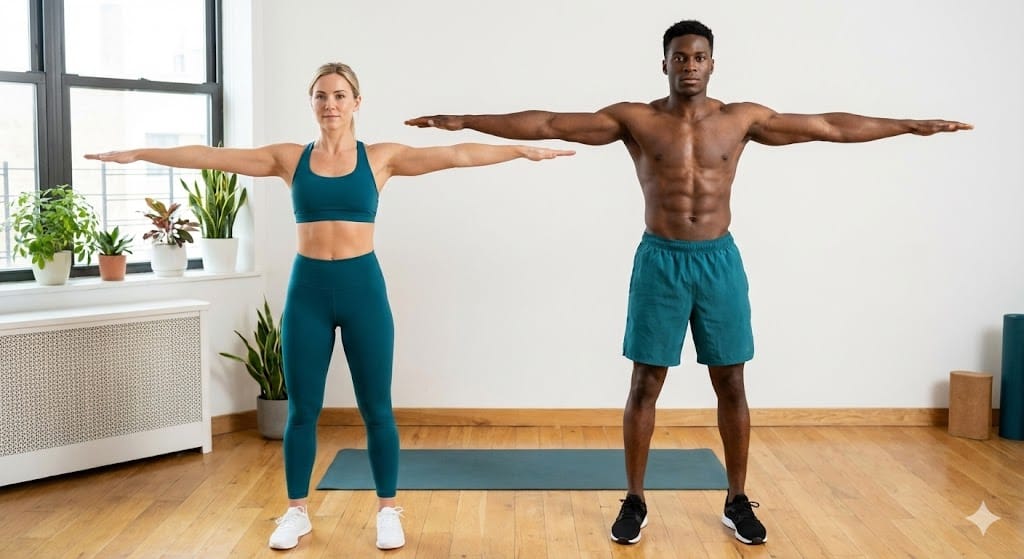
Start at the top. Roll your shoulders backward several times, then sweep into slow, controlled arm circles in both directions. Finish with gentle neck rotations, moving only as far as feels comfortable.
Spine and Mid-Back
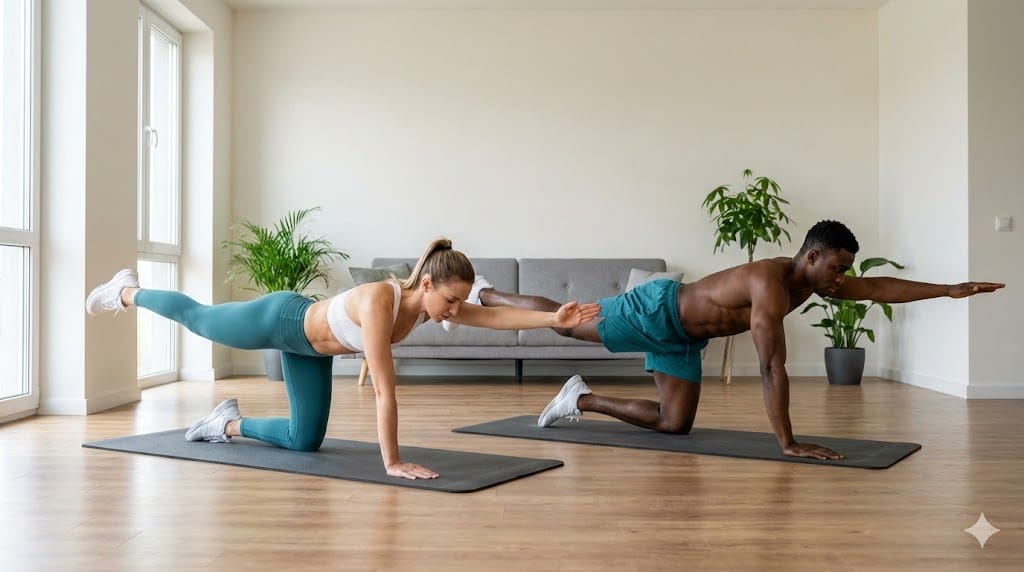
Move to your hands and knees and flow through a few rounds of arching and rounding your spine. Then try the bird-dog: extend one arm and the opposite leg, hold briefly, and switch. It is a brilliant way to combine spinal mobility with control.
Hips and Legs
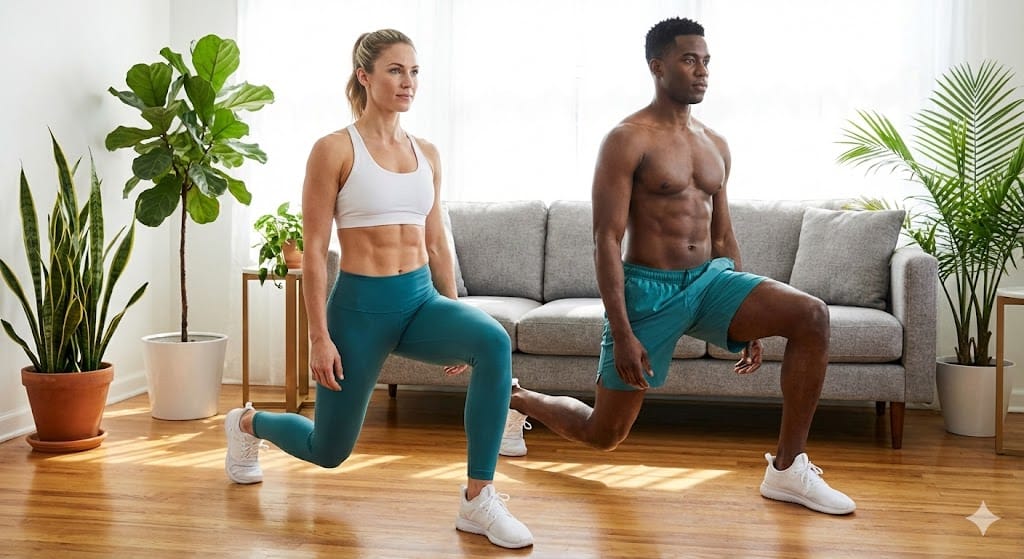
Your hips usually carry the most tension from sitting. Work through dynamic hip openers, slow and deep lunges, and gentle leg swings. Finish with a glute bridge or two to wake up muscles that long sitting tends to switch off.
Daily Mobility vs Recovery Mobility
Mobility is not only for training days. Think of it in two simple modes:
- Daily mobility: 5 to 10 minutes of gentle movement, ideally before work, focused on easing stiffness.
- Recovery mobility: 10 to 20 minutes of slower stretches after training, focused on helping you recover.
Both have value, and even five minutes each morning adds up to a real difference over time.
Sanook Fit Coach’s Tip
Do not wait until you feel stiff to start moving. Treat mobility like brushing your teeth — a small, regular habit of maintenance. A few minutes a day can help keep your body moving comfortably for years to come.
Common Mobility Mistakes
A few habits quietly undermine good mobility work. Keep these in mind:
- Bouncing through stretches. Smooth, controlled movement is safer and far more effective.
- Chasing extreme flexibility. Your goal is comfortable, usable range — not circus contortion.
- Holding your breath. Relaxed, steady breathing helps your body let go of tension.
- Only stretching when sore. Consistency beats the occasional desperate stretch.
Frequently Asked Questions
Should I do mobility before a workout?
Yes — gentle, dynamic mobility is a great warm-up. Dynamic movements prepare your muscles and joints far better than long static stretches before exercise. A short routine helps you move more comfortably during strength sessions, HIIT, running, sport, and everyday life. Try it before our 15-minute full body workout.
Can mobility improve my posture?
It can certainly help. Posture is shaped by several things — strength, habits, your workstation, and time spent sitting. Improving mobility in your shoulders, upper back, and hips makes it easier to hold a comfortable, upright posture through the day.
Am I too old to improve my mobility?
Not at all. People can improve mobility at almost any age. Progress may come more gradually with age, but consistent practice reliably leads to meaningful gains in comfort, movement, and confidence. The U.S. National Institute on Aging encourages regular movement at every stage of life.
Train With Us
We share quick mobility flows, follow-along workouts, and plenty of fun fitness motivation across our channels. Come and move with the community:
- YouTube: @SanookFit
- TikTok: @sanookfit
- Facebook: Sanook Fit
- Instagram: @sanookfit
Roll out a mat, take a slow breath, and give the routine a go this morning. Your hips, back, and shoulders will thank you — and the best part is that mobility only gets easier the more you practise it.