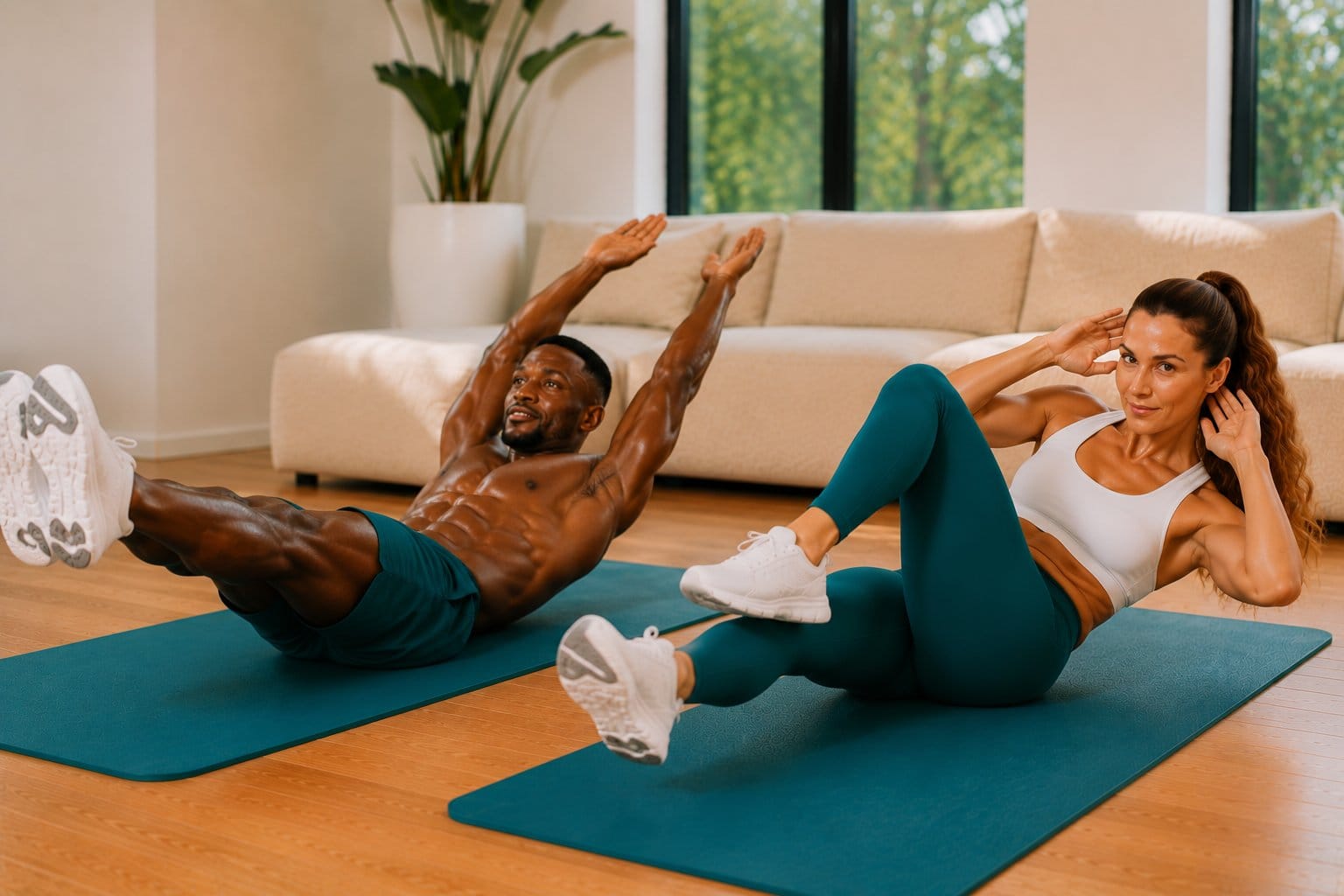
Want a stronger core without ever lying on the floor? A standing abs workout lets you train your midsection on your feet, which feels easier on your neck and back while still firing up every muscle around your waist. Better yet, you need no mat and no equipment, so you can do it almost anywhere. In this guide, you will learn the benefits, the exact moves, and a simple weekly plan to follow.
The Benefits of Training Your Core Standing Up
First, standing core work brings several beginner-friendly benefits that floor crunches simply cannot match. Because you stay upright, you avoid the neck strain that often comes from lifting your head off the floor. Moreover, the upright position naturally recruits more muscles, so each move does more for you.
- It stays gentle on the neck and lower back, since you never strain to lift your head off the floor.
- It improves balance and posture, because it switches on your deep stabilising muscles.
- It keeps your heart rate up, which adds a light cardio effect and burns extra calories.
- It needs no mat and no equipment, so you can train anywhere, anytime.
- It scales easily, whether you are a complete beginner or someone with sensitive joints.
Can a Standing Abs Workout Really Burn Belly Fat?
Here is the honest answer, because plenty of myths float around online. Unfortunately, no single exercise can spot-reduce fat from your belly. Instead, your body draws fat from all over, in an order largely set by your genetics, whenever you sit in an overall calorie deficit. Therefore, crunches alone — standing or otherwise — will not melt belly fat by themselves.
That said, this workout is far from pointless. In fact, building the muscle underneath the fat genuinely changes how your midsection looks as you lean out, giving you a firmer, flatter shape. Additionally, the raised heart rate burns extra calories, which helps tip you toward that deficit. So pair this routine with regular walking and balanced eating, and it becomes a real part of a plan that actually works. For a deeper dive, explore our guide to the best bodyweight workout for weight loss.
The No-Equipment Standing Abs Workout
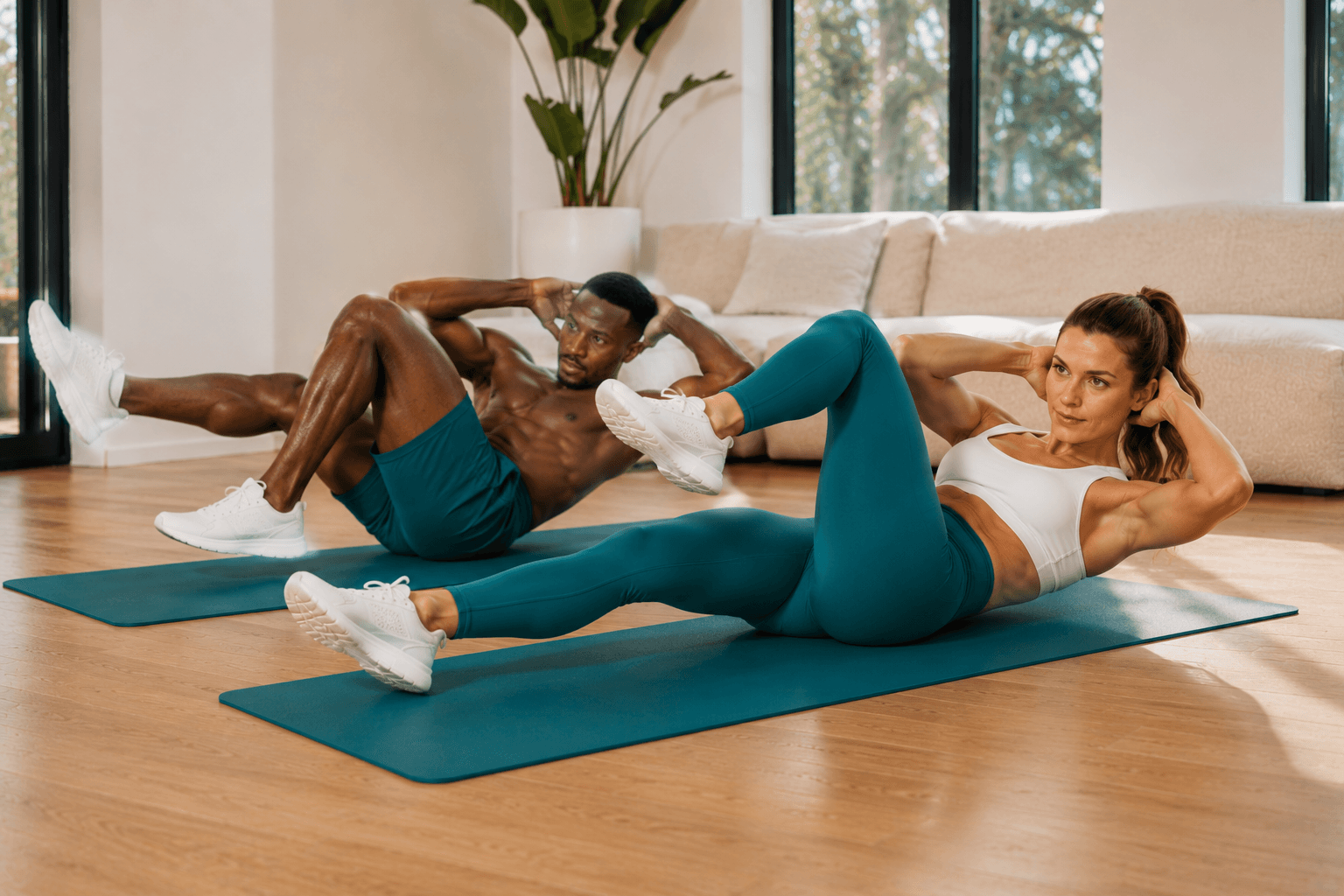
Rather than chasing dozens of moves, focus on a few done really well. Together, these five exercises form a complete core circuit. Simply perform each move for 40 seconds, rest for 20, and then repeat the whole circuit two or three times. Remember, quality beats speed, so squeeze your abs on every rep instead of rushing.
1. Standing Crunch
First, master the foundation of the whole routine. Lift one knee while you pull both elbows down toward it, and crunch your abs hard at the top. Then lower with control and switch sides.
2. Standing Oblique Crunch
Next, target the sides and love-handle area. Raise one knee out to the side and bring the same-side elbow down to meet it. Throughout, stay tall and resist flopping sideways.
3. Knee-to-Elbow Twist
This move trains the rotation that most floor exercises skip. Place your hands behind your head, twist your torso, and drive the opposite elbow toward your lifted knee.
4. Standing Side Bend
Now sculpt the waistline. Slowly reach one hand down the side of your leg, feel the gentle stretch, and return to centre. Here, slow and deliberate movement wins every time.
5. High Knees
Finally, finish each round with a cardio kick. Drive your knees up quickly in a march or light jog, while you pump your arms and keep your core braced. If you enjoy this finisher, you will love our at-home HIIT workout too.
Standing Abs Workout for Beginners (No Jumping)
If high-impact moves are not for you, this routine adapts in seconds. Simply swap the high knees for a slow, controlled march, and keep one foot on the ground at all times. As a result, you will still raise your heart rate and fully engage your core, yet without any jumping or pounding. Consequently, this version suits beginners, anyone with sensitive joints, and quiet workouts at home. New to training overall? Start with our complete guide to bodyweight training for beginners.
How to Know You Are Ready to Progress
A common question is, “When should I make it harder?” Fortunately, the answer is simple. If you can finish all the rounds with good form and still feel you could keep going, then you are ready for the next step. Here is how the progressions typically flow:
- Bodyweight moves → holding a light weight
- Slow march → high knees
- Two rounds → three rounds
- Light dumbbell → slightly heavier dumbbell
Honestly, a single dumbbell, a water bottle, or even a tin from the kitchen is all you need to add load. So start light, and let your form decide when you are ready for more. For a structured path, follow our 2026 bodyweight progression guide.
Why Rest Matters
Many beginners assume that more is always better, so they train their abs every single day. However, it does not work that way. Like any other muscles, your abs grow during recovery, so aim for three to four sessions a week with rest in between. Meanwhile, on your off days, keep moving with a walk or some light activity to support steady fat loss.
A Simple Weekly Plan
You do not need anything fancy to make real progress; instead, you simply need consistency. For example, a balanced week might look like this:
- 3 to 4 standing abs sessions (about 10 minutes each)
- 2 to 3 days of walking or light activity
- 1 to 2 recovery days with gentle movement
Altogether, this gives your core enough stimulus to get stronger while leaving plenty of room to recover. If you want to vary your week, try mixing in our 15-minute full body workout or these other bodyweight ab exercises.
Frequently Asked Questions
Do standing abs workouts really work?
Yes, they absolutely do. Standing core moves engage your abs effectively while also recruiting your legs, hips, and back. Therefore, they give you a more functional, full-body challenge than floor crunches alone.
How often should I do this workout?
For most people, three to four times a week is the sweet spot. In addition, rest days in between let your muscles recover and grow.
Can I do this if I have bad knees or a sore back?
Yes, you usually can. Simply choose the no-jumping option, keep every move controlled, and stop if anything feels sharp. In fact, standing core work is one of the most joint-friendly ways to train your abs. Even so, if you have an injury, please check with a healthcare professional first.
Train With Us
Finally, we share beginner-friendly routines, technique tips, and plenty of fun fitness motivation across our channels. So come and start your journey with the Sanook Fit community:
So clear a little space, put ten minutes on the clock, and run through the circuit today. After all, starting is the hardest part — and you are already halfway there just by reading this far.