Looking for home workout tips that actually make a difference? Whether you’ve been training at home for years or just getting started, there’s almost always room to get more out of every session. The truth is, it’s not about working harder — it’s about working smarter. With the right home workout tips and a bit of structure, your living room becomes one of the most effective gyms you’ll ever step into.
Why Your Home Workout Tips Matter More Than Your Equipment
Most people assume that gym results require gym equipment. However, that simply isn’t true. Research consistently shows that bodyweight training, when structured properly, builds real muscle, improves cardiovascular fitness, and supports long-term fat loss just as effectively as weighted workouts. Furthermore, the convenience of training at home eliminates one of the biggest barriers to consistency — the commute. Consequently, people who work out at home often end up training more frequently than those who rely on a gym membership.
That said, equipment alone doesn’t build fitness — your approach does. The best home workout tips aren’t about buying resistance bands or dumbbells. Instead, they’re about setting up your environment, your mindset, and your routine so that showing up every day feels natural. Let’s break down exactly how to do that.
1. Set Up a Dedicated Workout Space
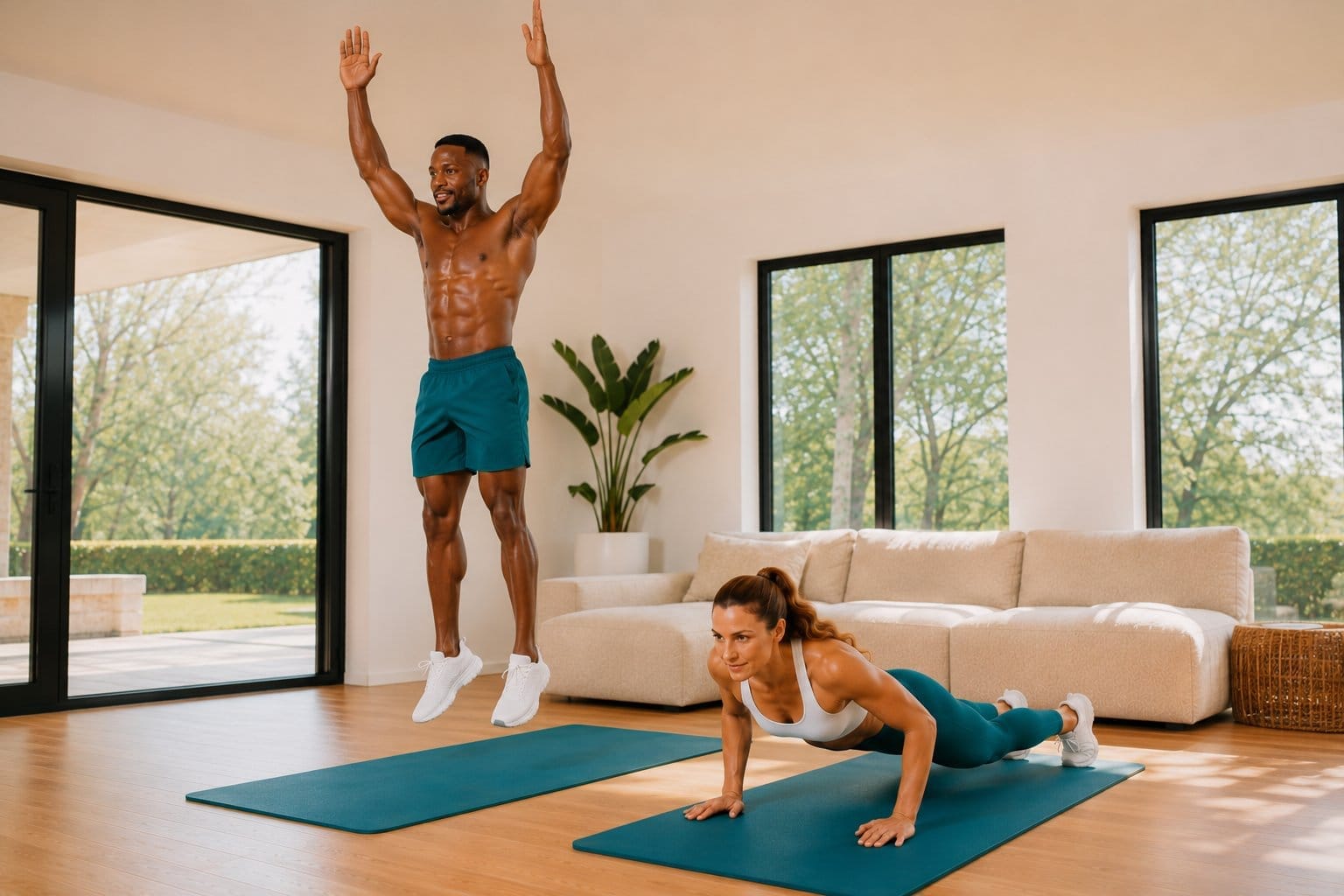
One of the most underrated home workout tips is creating a specific area in your home just for exercise. This doesn’t need to be a spare room or a converted garage — a cleared corner of your living room works perfectly. The idea is to associate that physical space with movement. As a result, when you walk into that area, your brain shifts into “workout mode” automatically. Over time, this mental cue makes it far easier to start your sessions without hesitation or procrastination.
Keep it simple. Roll out your mat, make sure you have enough space to extend your arms fully in every direction, and remove clutter. In addition, good ventilation and natural lighting can dramatically improve your energy during a session. Small details like these make a bigger difference than most people realize.
2. Plan Your Home Workout Sessions in Advance
Spontaneous workouts are better than nothing, but planned workouts produce better results. Moreover, having a weekly schedule removes the daily decision of “what should I do today?” which is one of the most common reasons people skip sessions. Take five minutes every Sunday to map out the week ahead — which days you’ll train, what body parts you’ll focus on, and roughly how long each session will run.
For example, a balanced weekly structure might look like this:
| Day | Focus | Duration |
|---|---|---|
| Monday | Full Body Strength | 30–40 min |
| Tuesday | Cardio / HIIT | 20–25 min |
| Wednesday | Active Recovery / Stretching | 20 min |
| Thursday | Upper Body Push + Pull | 30–35 min |
| Friday | Lower Body + Core | 35–40 min |
| Saturday | Fun Full Body or Yoga | 30 min |
| Sunday | Full Rest | — |
This structure is flexible. Therefore, if life gets in the way on Thursday, shift it to Friday and adjust accordingly. The goal isn’t rigid perfection — it’s consistent progress over time. Check out our guide on building consistent home fitness habits for more on how to make this stick long-term.
3. Use Progressive Overload — Even Without Weights
Progressive overload is arguably the most important principle in all of fitness, and it applies just as much to bodyweight training as it does to lifting. In other words, your body needs to be challenged a little more over time in order to keep improving. Without this, you’ll plateau quickly — no matter how hard each individual session feels.
Fortunately, there are many ways to apply progressive overload at home without any equipment:
- Increase reps — move from 3 sets of 10 push-ups to 3 sets of 15 over two to three weeks
- Reduce rest time — cut your rest from 90 seconds to 60 seconds between sets
- Slow down the movement — a 3-second lowering phase on squats increases time under tension significantly
- Progress to harder variations — go from regular push-ups to decline push-ups or archer push-ups
- Add sets — increase from 3 sets to 4 sets per exercise
Above all, track your progress in a simple notebook or phone app. Seeing your numbers improve week after week is one of the most motivating things you can experience — and it keeps your training honest. Our guide on progressive bodyweight training walks through this in detail.
4. Warm Up Properly Before Every Home Workout
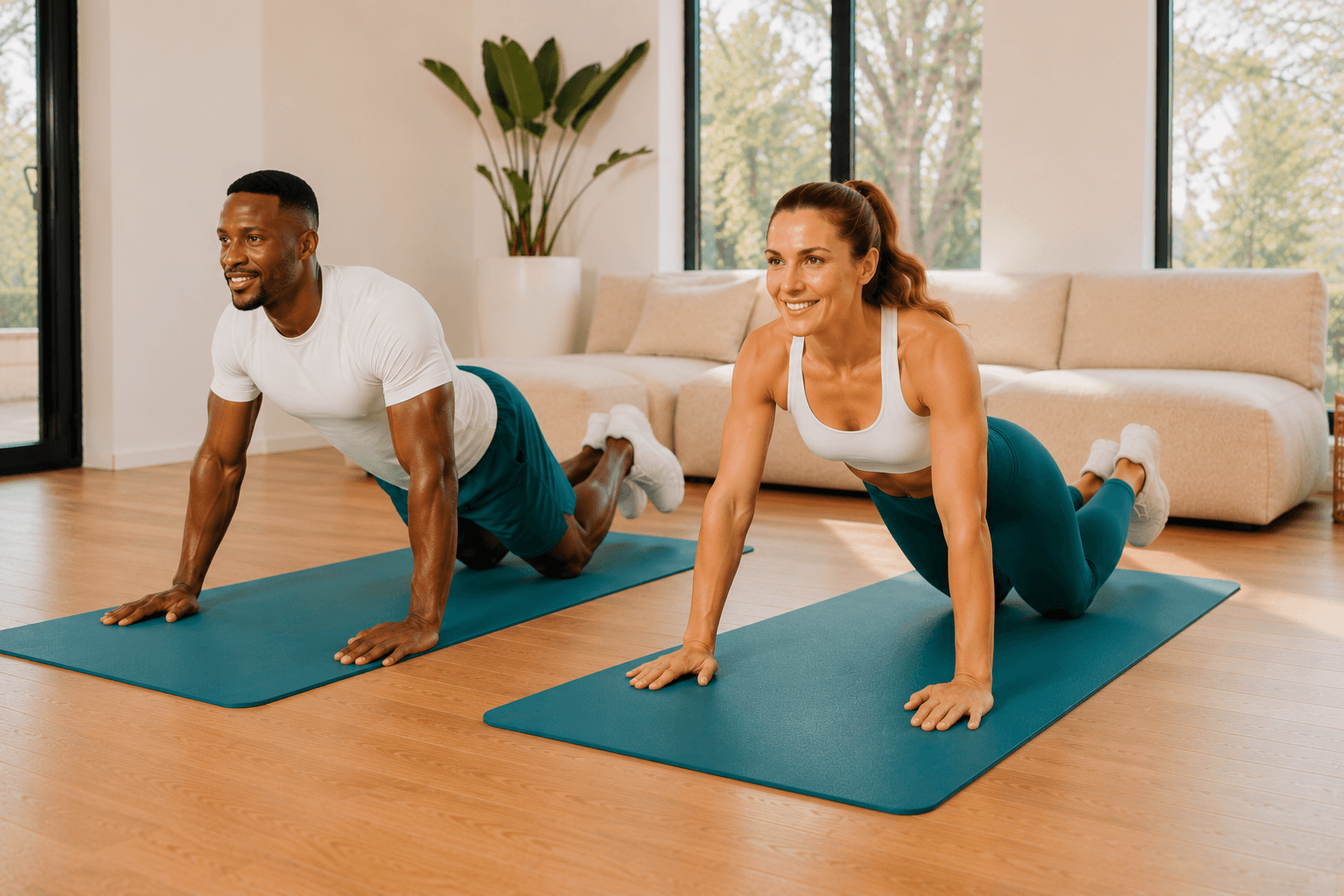
Skipping the warm-up is one of the most common and costly mistakes in home training. Nevertheless, it’s understandable — when you’re already in your living room, it’s tempting to just dive straight in. In reality, a proper five to ten minute warm-up increases blood flow to your muscles, raises your core body temperature, and significantly reduces your risk of injury. Additionally, it primes your nervous system for the work ahead, which means your actual working sets will feel smoother and more powerful from the very first rep.
A solid home workout warm-up might include arm circles, leg swings, hip rotations, high knees in place, and a few bodyweight squats. Essentially, you want to move through the same patterns you’ll use in your main workout, just at a lower intensity. For a detailed warm-up and cool-down routine, check out our post on the best warm-up and cool-down routines.
5. Mix Strength and Cardio for Better Home Workout Results
One of the most effective home workout tips for people with limited time is combining strength and cardio in a single session. This approach — often called circuit training or HIIT — keeps your heart rate elevated throughout, burning more calories while simultaneously building muscle. In addition, it makes workouts feel more varied and engaging, which helps with long-term motivation.
A simple circuit might look like this: 10 push-ups, 15 squats, 30 seconds of high knees, 10 reverse lunges per leg, 20 seconds of mountain climbers, then rest for 60 seconds. Repeat for three to four rounds. This kind of session hits your upper body, lower body, and cardio system all at once — and it takes under 25 minutes. For a full protocol, see our ultimate at-home HIIT workout guide.

6. Prioritize Form Over Speed in Every Home Training Session
Speed is overrated. Particularly in home training, where there’s no coach watching your form, it’s easy to rush through reps without engaging the right muscles. Consequently, you end up doing a lot of work without actually getting the results you’re after. Slowing down and focusing on how each movement feels is one of the home workout tips that separates people who plateau from people who keep improving month after month.
For example, on a push-up, think about squeezing your chest at the top, keeping your core tight throughout, and lowering slowly under control. That one adjustment transforms a mediocre rep into a highly effective one. Similarly, on a squat, drive through your heels, keep your chest up, and pause briefly at the bottom before pressing back up. These cues make every rep count. If you’re newer to this, our exercise modifications guide covers safer movement patterns for every level.
7. Don’t Skip Rest and Recovery
Rest is not laziness — it’s when your body actually gets stronger. Therefore, building scheduled rest days into your home workout routine is just as important as the training itself. Muscles grow and repair during recovery, not during the workout. Furthermore, training every single day without adequate rest leads to overtraining, which causes fatigue, decreased performance, and a higher risk of injury over time.
On rest days, consider doing light mobility work, gentle stretching, or a slow walk. These activities support recovery without adding stress to your system. For a deeper look at how to structure rest and recovery effectively, check out our home mobility routine guide — it’s a great complement to any home workout programme.
8. Stay Accountable with Tracking and Community
One of the often-overlooked home workout tips is accountability. When you work out at home, nobody is watching — which means it’s entirely up to you to show up. As a result, many people find that logging their workouts and sharing their progress keeps them far more consistent than training in silence.
Consider keeping a simple workout journal. Write down what you did, how many reps, and how you felt. Moreover, connecting with an online fitness community can provide the same energy as a gym environment. Sanook Fit has an active community across social media — follow us for daily motivation, workout ideas, and support:
- 📺 Sanook Fit on YouTube — full workout videos you can follow along at home
- 🎵 Sanook Fit on TikTok — quick tips, moves, and daily motivation
- 👍 Sanook Fit on Facebook — workout challenges and community updates
- 📸 Sanook Fit on Instagram — visual inspiration and fitness content
9. Make Your Home Workouts Enjoyable
Enjoyment is one of the most powerful predictors of long-term fitness consistency. In fact, research on exercise psychology consistently shows that people who enjoy their workouts stick with them far longer than those who treat training as a chore. Consequently, finding ways to make your home sessions more fun is one of the smartest home workout tips you can act on.
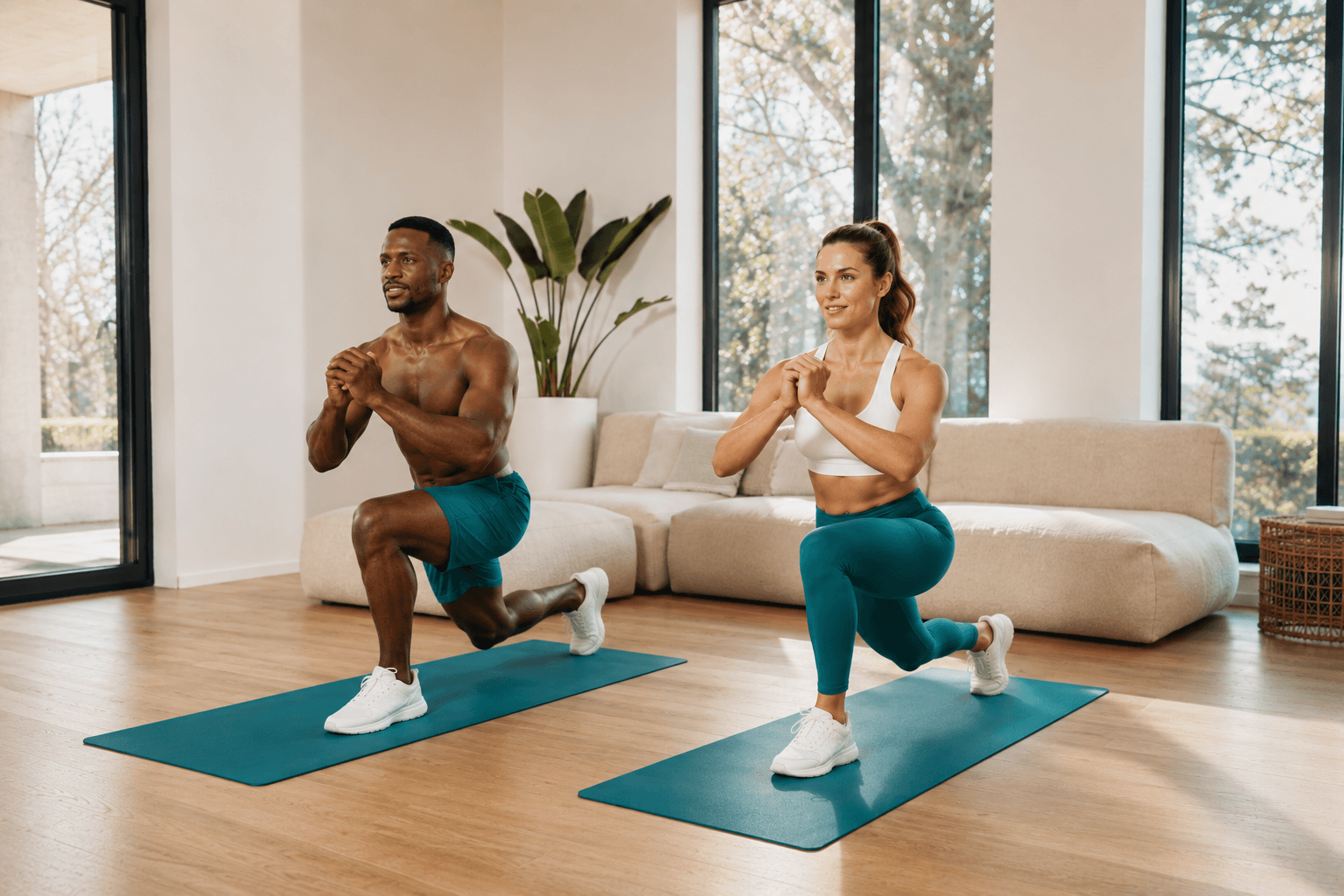
Try building a workout playlist that gets you fired up. Alternatively, follow along with video workouts to make the time feel shorter and the effort feel shared. If you have family members or housemates, invite them to join you — working out together adds energy, friendly competition, and mutual motivation. Additionally, switching up your routine every few weeks prevents boredom and keeps your body adapting. See how other people are keeping things fun in our post on fun full-body workouts at home.
10. Fuel Your Body Well Before and After Training
Nutrition is the often-forgotten side of home workout success. Nevertheless, what you eat before and after training has a direct impact on your performance, your recovery, and your results. In particular, getting enough protein is essential for muscle repair and growth — aim for a protein-rich snack or meal within one to two hours after your session.
Before training, a light, easily digestible meal about 60 to 90 minutes beforehand gives you energy without weighing you down. Good options include a banana with peanut butter, a small bowl of oats with fruit, or Greek yoghurt with granola. Staying well-hydrated throughout the day is equally important — even mild dehydration can reduce performance by up to 10 per cent. That said, you don’t need any special supplements or powders. Real food, consistently eaten, does the job just as well.
Frequently Asked Questions About Home Workout Tips
How often should I use these home workout tips to see results?
Most people see noticeable changes within four to six weeks of consistent training. However, the key word here is consistent — three to five sessions per week, combined with good nutrition and adequate sleep, produces results far more reliably than occasional intense sessions. The home workout tips in this guide work best when applied together as a long-term approach rather than short bursts of effort.
Can home workout tips help if I’m a complete beginner?
Absolutely. In fact, home training is arguably the best place to start for beginners. The lower-pressure environment means you can learn movements at your own pace without feeling self-conscious. Furthermore, you can pause, rest, and modify whenever you need to without worrying about holding up a class. Our complete beginners guide to bodyweight training is a great place to get started.
How do I stay motivated with home workout tips when training alone?
Motivation naturally fluctuates — that’s completely normal. The best strategy is to rely less on motivation and more on habit and routine. Set a specific time for your workouts, treat them like appointments, and keep your workout space ready so there’s minimal friction to starting. Additionally, tracking your progress and celebrating small wins keeps momentum going on the days when motivation is low. For more strategies, see our article on how to stay motivated to exercise.
Do I need any equipment to use these home workout tips?
Not at all. Every tip in this guide applies to completely equipment-free training. Your bodyweight alone is enough to build real strength, improve your cardio, and change how you look and feel. That said, if you eventually want to add a resistance band or a yoga mat, those are low-cost additions that can expand your options. For now, the floor and your own body are more than enough to get started and see real results.
Start Applying These Home Workout Tips Today
The gap between wanting results and getting them comes down to consistency and approach. These home workout tips aren’t complicated — in fact, that’s the point. The simpler your strategy, the easier it is to stick with it. Start with one or two changes this week, build from there, and watch what happens over the next few months. Furthermore, remember that every session counts, even the short ones. A 15-minute workout done regularly beats a two-hour session done once a month every single time.
If you’re looking for more structured programmes and workout ideas, explore the full Sanook Fit library — we’ve built everything around helping you train smarter at home, without equipment, and at every fitness level. Above all, enjoy the process. Fitness is a lifelong journey, and your home is already the best gym you could ever have.

Follow Sanook Fit for More Home Workout Tips and Inspiration
Stay connected with Sanook Fit across all platforms for fresh workouts, expert tips, and a community that keeps you going:
- 📺 YouTube: youtube.com/@SanookFit
- 🎵 TikTok: tiktok.com/@sanookfit
- 👍 Facebook: facebook.com/SanookFit68
- 📸 Instagram: instagram.com/sanookfit