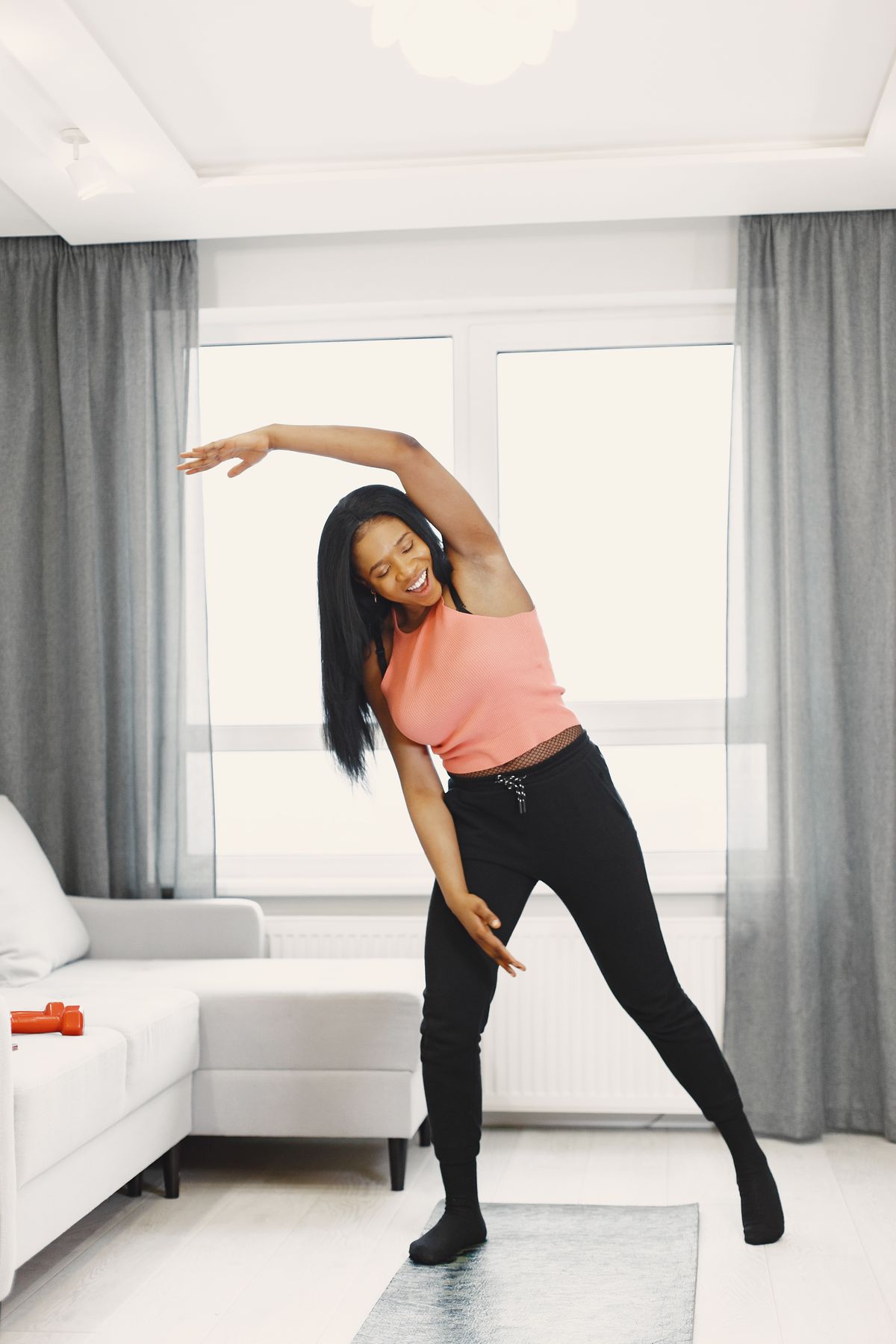
Can you build muscle without weights? Short answer: yes, you absolutely can. You don’t need a gym membership, a squat rack, or an expensive set of dumbbells to build muscle. Train with enough intensity, apply progressive overload, eat enough protein, and recover well, and your muscles respond by growing stronger and larger.
You can build muscle without weights because it’s exactly why gymnasts, calisthenics athletes, and military personnel develop impressive physiques using little more than their own body weight. Whether you train in your living room, a spare bedroom, or the garden, bodyweight workouts can help you build lean muscle, get stronger, and move better.
In this guide you’ll learn how muscle actually grows, why bodyweight training works so well, the best exercises to try, how to keep progressing without weights, a beginner-friendly 4-week plan, and the nutrition basics that tie it all together. If your goal is to build muscle at home, you’re in the right place. Prefer to follow along on video? Our 30-Day Sanook Fit Challenge walks you through it one short session at a time.
Why This Question Matters
One of the biggest myths in fitness is that heavy weights are the only path to muscle growth. It’s easy to see why people believe it. Walk into almost any commercial gym and you’ll see barbells loaded with plates and rows of machines, and social media tends to reinforce the idea that bigger weights automatically mean bigger muscles.
Fortunately, the science tells a more encouraging story. Your muscles don’t recognise whether resistance comes from a barbell, a resistance band, or your own body weight. They respond to tension. When a workout creates enough mechanical tension and takes your muscles close to failure, your body adapts by building stronger fibres. That’s exactly what good bodyweight training does.
The Science Behind Building Muscle Without Weights
Essentially, muscle growth, known as hypertrophy, happens when training places enough stress on muscle fibres that your body repairs them stronger than before. Researchers generally agree that three key factors drive this process — and the good news is that all three are easy to trigger when you build muscle without weights at home.
1. Mechanical Tension
This is the most important driver of muscle growth. Mechanical tension occurs whenever your muscles work against resistance. In traditional training that resistance comes from weights; in bodyweight training it comes from gravity and your own body. For instance, push-ups challenge your chest, shoulders, and triceps, while Bulgarian split squats load one leg heavily and pike push-ups shift more weight onto your shoulders. As a result, the harder the movement, the greater the tension.
2. Metabolic Stress
Ever felt your muscles burning mid-set? That burn is largely metabolic stress. As your muscles keep working, by-products build up inside the cells and create the familiar “pump.” The pump itself isn’t the goal, but training that produces metabolic stress appears to support growth when combined with mechanical tension.
3. Progressive Overload
Muscles stop growing if every workout stays the same, because your body adapts quickly. Progressive overload simply means making your workouts a little more challenging over time. With weights you might add 5 kg to the bar. With bodyweight training you can increase reps, slow each rep down, shorten rest, move to harder variations, add volume, improve range of motion, or add pauses in tough positions.
Is There Scientific Evidence?
Yes. Multiple studies have shown that bodyweight exercises performed close to muscular failure can stimulate growth comparable to traditional resistance training in many people. The key isn’t the amount of weight on the bar; it’s how hard your muscles are working. If your final few reps are genuinely difficult while you keep good form, you’re creating the conditions for growth. You can explore the underlying research on PubMed (National Institutes of Health).
Why You Can Build Muscle Without Weights at Home
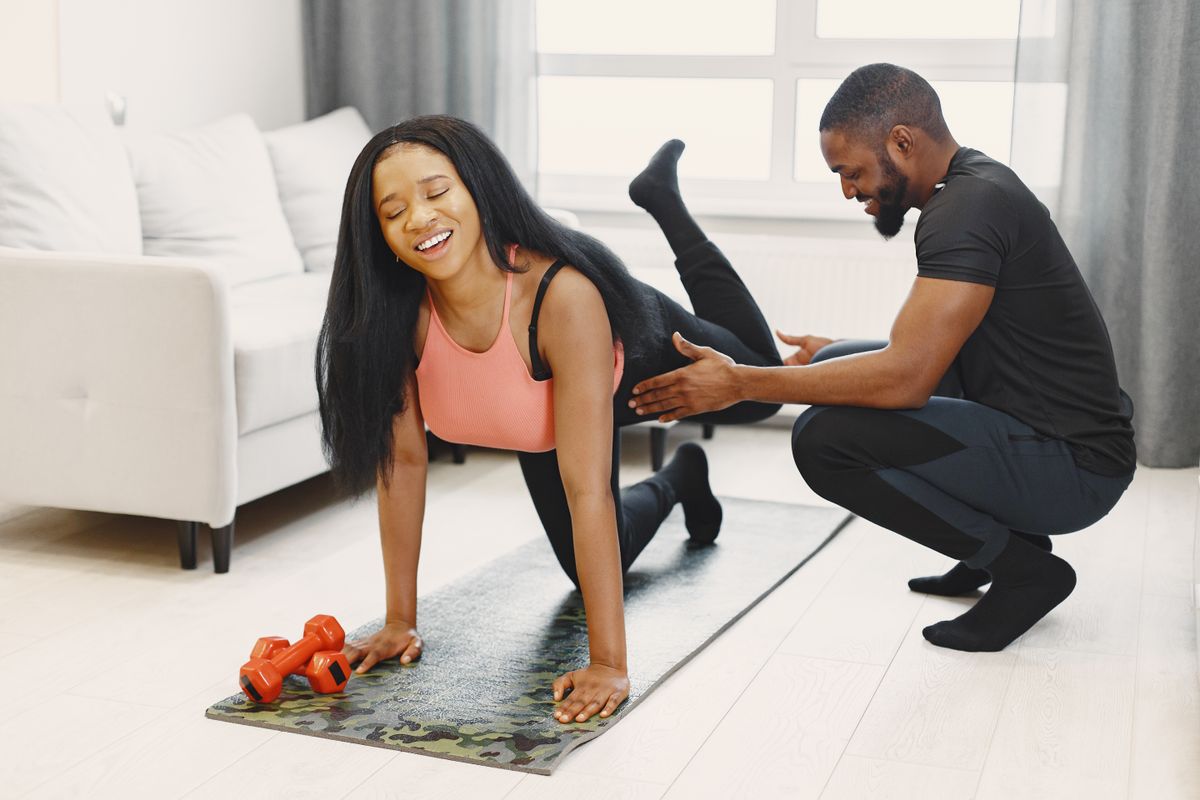
Bodyweight workouts offer advantages that are easy to overlook:
- Functional strength. Instead of moving a machine along a fixed path, your body learns to stabilise itself, building coordination, balance, and real-world strength.
- Better joint health. Many bodyweight moves let your shoulders, hips, knees, and ankles travel through natural patterns, which often feels more comfortable than fixed machines.
- More core activation. Push-ups, lunges, split squats, mountain climbers, and planks all ask your core to stabilise — you train it without thinking about it.
- Minimal cost. No memberships, dumbbells, barbells, machines, or benches. All you need is enough space to move safely.
That accessibility is what keeps people consistent at home, while travelling, or on holiday — and consistency, not equipment, is the real reason you can build muscle without weights over the long run.
Sanook Fit tip: the best workout is the one you’ll actually do. If skipping the commute means you train three or four times a week, bodyweight training may beat the “perfect” gym routine you never get round to. Our beginner bodyweight workouts are a friendly place to start.
The Best Bodyweight Exercises to Build Muscle Without Weights
Importantly, when you set out to build muscle without weights, you quickly learn that bodyweight training isn’t limited to push-ups and sit-ups. Your body becomes a remarkably effective tool once you choose the right exercises and keep raising the challenge. The aim is to train every major muscle group through a full range of motion, progressing to harder variations over time. Let’s break it down by movement pattern.
Push Exercises (Chest, Shoulders & Triceps)
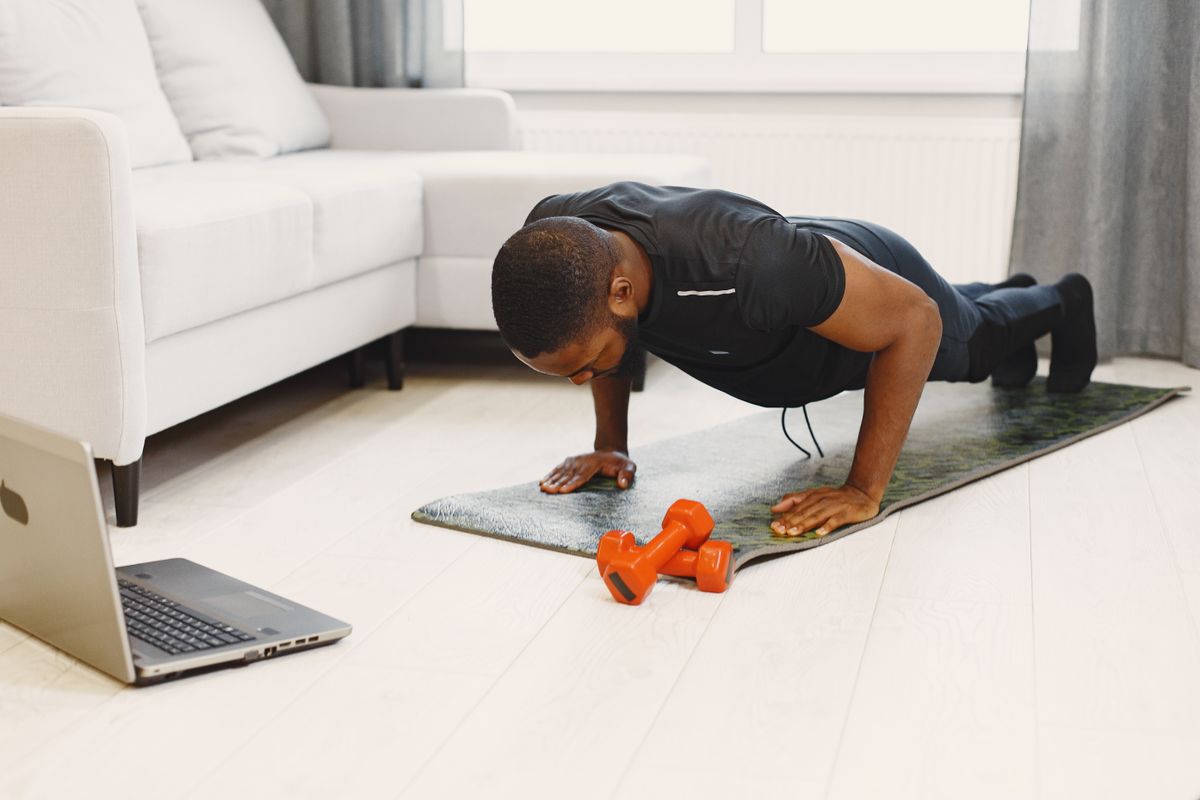
Pushing movements develop your chest, shoulders, and triceps — the muscles you use to push doors, lift objects overhead, and get up off the floor. The standard push-up trains several muscles at once while strengthening your core and improving shoulder stability. Keep your body in one straight line, lower until your chest is just above the floor, and press back up without letting your hips sag. New to push-ups? Start with incline push-ups against a sturdy countertop or sofa.
A simple progression looks like this: incline push-up, knee push-up, standard push-up, decline push-up, archer push-up, and finally the one-arm push-up. Decline push-ups (feet elevated) shift more load onto your upper chest and shoulders, diamond push-ups light up the triceps, and pike push-ups build the shoulders by mimicking an overhead press. For a full routine, see our upper body workouts.
Pull Exercises (Back & Biceps)
However, most home-workout guides focus almost entirely on pushing, and that’s a mistake. A strong back improves posture, eases shoulder discomfort, and creates the V-shape many people want. Neglect it and you’ll eventually develop muscular imbalances.
You can train pulling at home without a pull-up bar. A sturdy dining table lets you perform inverted table rows for your lats, rhomboids, rear delts, and biceps — always test its stability first. A solid doorframe row works for beginners: lean back under control and pull yourself forward by driving your elbows behind you, squeezing your shoulder blades together. A strong towel anchored safely mimics a seated cable row, and the prone cobra strengthens the often-ignored mid-traps and rear shoulders, which is gold if you sit at a desk all day.
Lower Body Exercises
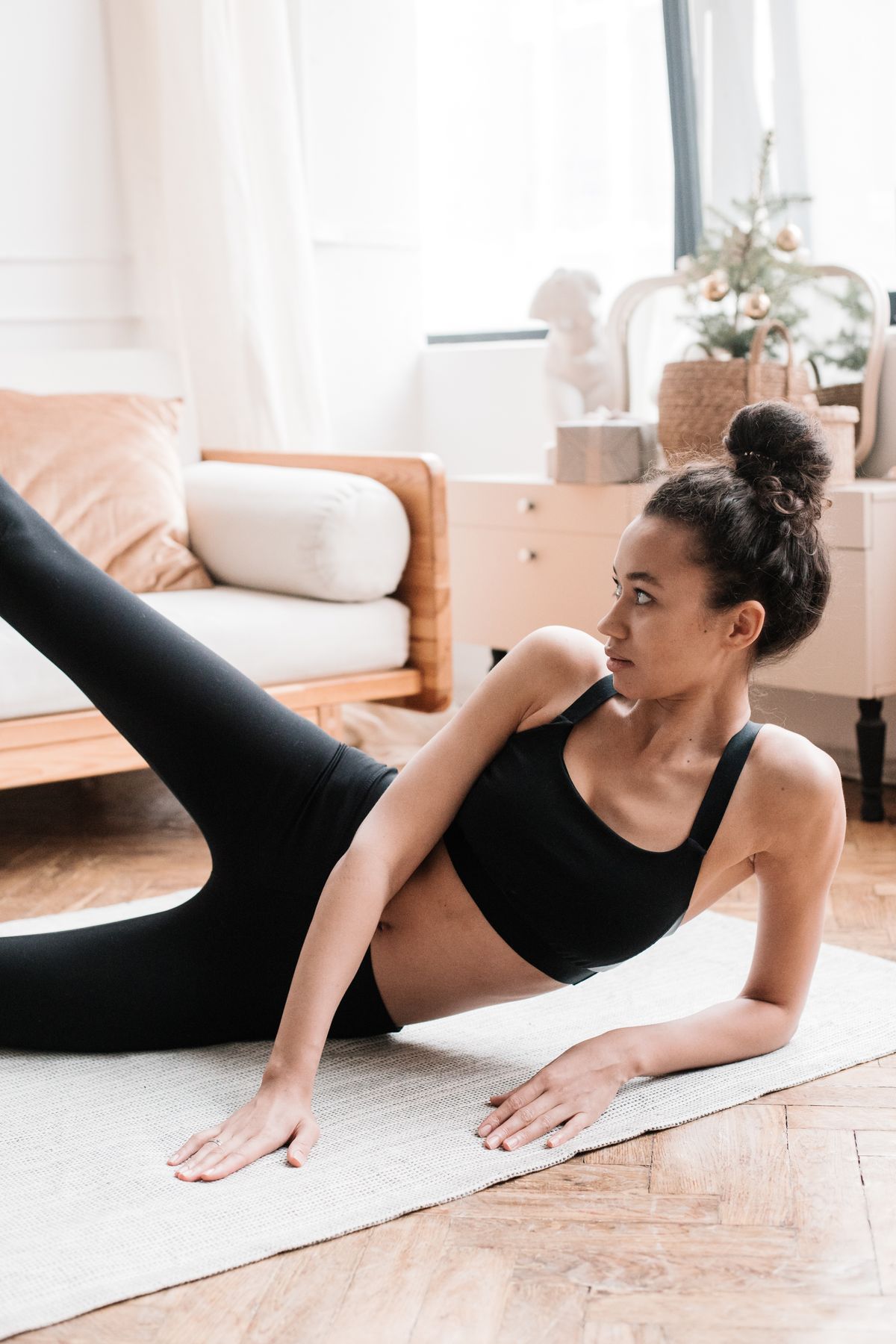
Notably, your legs hold the largest muscles in your body, so training them builds strength, burns more calories, and supports the hormonal environment for growth. If you could only pick one home leg exercise, the Bulgarian split squat would be a strong choice — placing most of your weight on one leg dramatically increases tension through the quads, glutes, and hamstrings. Keep your chest proud and your front knee tracking over your foot. Add reverse lunges (easier on the knees), single-leg glute bridges for the posterior chain, and a pistol squat progression (box squats, then assisted single-leg squats) to keep advancing. Follow along with our lower body workouts.
Core Training
In truth, visible abs come from a strong core plus a healthy body-fat percentage, not endless crunches. The best core exercises resist movement rather than constantly bending the spine. The hollow body hold, borrowed from gymnastics, teaches your whole core to work together — keep your lower back pressed firmly into the floor. A plank is simple but not easy: instead of chasing long holds, squeeze your glutes, abs, and quads to create maximum tension. The dead bug builds stability while protecting your lower back, and mountain climbers add core work, cardio, and shoulder stability all at once. Want a focused session? Try our core & abs workouts.
The Golden Rule: Train Close to Failure
Meanwhile, the biggest reason people don’t gain muscle from bodyweight workouts is stopping too early. If your muscles could comfortably do another 15 reps, they probably weren’t challenged enough. That doesn’t mean collapsing on the floor every set — aim to finish most working sets with one to three good reps left in the tank. That gives you enough stimulus to grow while still recovering for your next session.
Common Mistakes That Limit Muscle Growth Without Weights
- Doing the same workout every week. Your body adapts fast, so keep progressing exercises or adding volume.
- Ignoring your back. Push-ups alone won’t build a balanced physique — include pulling every week.
- Poor technique. Ten excellent push-ups beat thirty rushed ones.
- Skipping leg day. Your lower body holds some of your largest muscles; don’t neglect them.
- Training without recovery. Muscles grow while you rest. Prioritise sleep, nutrition, and at least one rest day between hard sessions for the same muscle group.
How to Keep Progressing and Build Muscle Without Weights
Furthermore, many people think bodyweight workouts stop working once they can do 20 or 30 push-ups. That’s only true if you keep doing the exact same workout. Muscle growth comes from steadily asking your body to do a little more than before — the principle of progressive overload. The good news is you don’t need a heavier barbell to make a movement harder. Here are seven proven ways to progress.
- Increase exercise difficulty. The most effective method: move to a harder variation (wall push-up to standard to decline) rather than just adding reps.
- Slow down every rep. Try lowering for four seconds, pausing for one, and pressing up in two. Eight slow push-ups can be tougher than twenty rushed ones.
- Increase range of motion. Deficit push-ups with hands elevated, deeper squats, and a fuller glute bridge all make muscles work harder — always favour control over depth.
- Reduce rest time. Shorten recovery between sets as you improve, for example from 90 down to 45 seconds over four weeks.
- Add more sets. If three sets feel comfortable, add a fourth. Training volume drives growth.
- Train one side at a time. Single-limb moves like Bulgarian split squats and archer push-ups roughly double the load on one side while improving balance.
- Improve your technique. Better posture, deeper squats, and a stronger plank are real progress, even without extra reps.
How Often Should You Train?
Generally, for most people three to four full-body workouts a week strikes an excellent balance between training and recovery. A simple week might be: strength on Monday, Wednesday, and Friday; a recovery walk or mobility on Tuesday; stretching or light cardio on Thursday; optional HIIT or core on Saturday; and full rest on Sunday. Recovery isn’t laziness — it’s when your muscles actually grow. For guided sessions every day, the 30-Day Sanook Fit Challenge builds the rest days in for you.
The 4-Week Sanook Fit Muscle Builder
Week 1 — learn the technique. Complete two to three rounds of: push-ups (8–12), Bulgarian split squats (10 each leg), doorframe rows (10), glute bridges (15), and a hollow hold (20 seconds). Rest 60–90 seconds between rounds.
Week 2 — add volume. Complete three rounds, adding two reps to every exercise and holding the hollow body for 30 seconds.
Week 3 — raise intensity. Swap standard push-ups for decline push-ups and glute bridges for single-leg glute bridges, and cut rest to 60 seconds.
Week 4 — challenge yourself. Complete four rounds, finishing each set with only one or two good reps left. If every exercise feels easy, you’re ready for harder progressions.
Keeping a simple workout journal — date, exercise, sets, reps, and notes — is one of the easiest ways to stay motivated. Small weekly improvements add up to big changes over a few months.
Nutrition: You Can’t Out-Train a Poor Diet

Ultimately, exercise provides the stimulus while nutrition provides the building materials. To build muscle, your body needs enough energy and protein to repair the fibres you challenge in training. Aim for roughly 1.6 to 2.2 grams of protein per kilogram of body weight per day, spread across your meals rather than saved for dinner. Good sources include chicken, eggs, fish, Greek yoghurt, cottage cheese, lean beef, tofu, tempeh, lentils, beans, and edamame. For more on protein and recovery, the Harvard T.H. Chan School of Public Health Nutrition Source is a reliable reference.
In addition, build most meals around vegetables, fruit, whole grains, healthy fats, and lean protein, and drink water regularly throughout the day. Don’t overlook sleep: while you rest, your body repairs muscle tissue, releases growth hormone, and restores energy. Aim for seven to nine hours a night — consistent sleep often matters more than any supplement.
Frequently Asked Questions
Can you really build muscle without weights?
Yes, you can build muscle without weights. Your muscles grow in response to resistance and effort, not the type of equipment you use. If bodyweight exercises are challenging enough and you progressively increase the difficulty over time, you can build muscle at home without traditional weights.
How long does it take to build muscle with bodyweight workouts?
In general, most beginners notice strength improvements within two to four weeks. Visible muscle growth typically appears after eight to twelve weeks of consistent training, adequate protein, and proper recovery.
Are push-ups enough to build muscle?
Push-ups are one of the best upper-body exercises, but they shouldn’t be your only one. To build muscle without weights effectively, add pulling movements, leg exercises, core training, and mobility work for balanced development. A complete program always beats focusing on a single movement.
Do I need equipment to build muscle at home?
No. Push-ups, Bulgarian split squats, glute bridges, lunges, pike push-ups, hollow holds, planks, and mountain climbers all need zero equipment. If you later want to invest, a pull-up bar and resistance bands are great additions, but they’re not essential for beginners.
Can bodyweight training replace the gym?
For most people, yes. If your goals are building lean muscle, getting stronger, losing body fat, and staying healthy, bodyweight training can absolutely replace a traditional gym routine. Competitive powerlifting or bodybuilding will eventually need external resistance, but for the vast majority of people, bodyweight training offers plenty of challenge.
Is bodyweight training good for fat loss too?
Absolutely. Bodyweight workouts help preserve muscle while increasing calorie burn. Combined with a nutritious diet and a moderate calorie deficit, they’re highly effective for reducing body fat — and you can boost the burn further with short HIIT sessions. See our weight-loss workouts to get started.
Myths About Building Muscle Without Weights
- “You need heavy weights.” Muscles respond to resistance and effort, and many advanced bodyweight moves are every bit as demanding as lifting.
- “Push-ups are only for beginners.” Elite calisthenics athletes use archer, ring, one-arm, and handstand push-ups that require exceptional strength.
- “Bodyweight workouts only build endurance.” High-rep training builds endurance, but progressively harder variations build strength and muscle. It’s all in how you train.
- “You can’t train your back without equipment.” Doorframe rows, inverted rows, towel rows, and prone holds all develop your pulling muscles.
Expert Tips From Sanook Fit
Over the years, after coaching thousands of home workouts, we’ve noticed the people who get the best results share a few habits. They train consistently — three good workouts a week beat one perfect session followed by six days off. They focus on technique, because quality movement protects your joints and builds stronger muscle. They genuinely enjoy the process and choose workouts they look forward to. And they measure progress beyond the scale, celebrating better posture, more push-ups, stronger legs, greater flexibility, and higher energy.
Train Along With the Sanook Fit Community
Following along on video makes home training far easier to stick with. Subscribe and connect with us for fresh no-equipment workouts every week: YouTube, TikTok, Facebook, and Instagram. You can also browse our full follow-along workout videos.
Your Next Step
If you’ve been waiting until you could afford a gym membership or buy equipment, consider this your sign to start today. Clear a little space, roll out a mat, and commit to your first workout. Your body doesn’t care whether you’re in a luxury fitness centre or your spare bedroom — it responds to consistent effort. Every push-up, squat, plank, and lunge brings you one step closer to being stronger than you were yesterday. The hardest workout is always the first one; after that, momentum works in your favour.
Ready to begin? Start with the 30-Day Sanook Fit Challenge, then keep learning with our beginner workouts, upper body, lower body, core, and full-body guides. New here? Grab our free 7-day beginner workout guide to follow a plan today.
Final Thoughts
Building muscle doesn’t begin with buying equipment — it begins with deciding to train consistently. Bodyweight training has helped athletes, gymnasts, military personnel, and everyday people build impressive strength for decades. Combine progressive overload, good nutrition, quality sleep, and patience, and your own body becomes one of the most effective training tools available. Forget the myth that you need a room full of machines. Begin with what you have, right where you are today — your strongest body might be built without ever stepping inside a gym.
References & Further Reading
- American College of Sports Medicine (ACSM) — resistance-training guidelines
- Harvard T.H. Chan School of Public Health Nutrition Source — protein and recovery
- National Institutes of Health (PubMed) — research on muscle hypertrophy
- National Strength and Conditioning Association (NSCA) — training principles