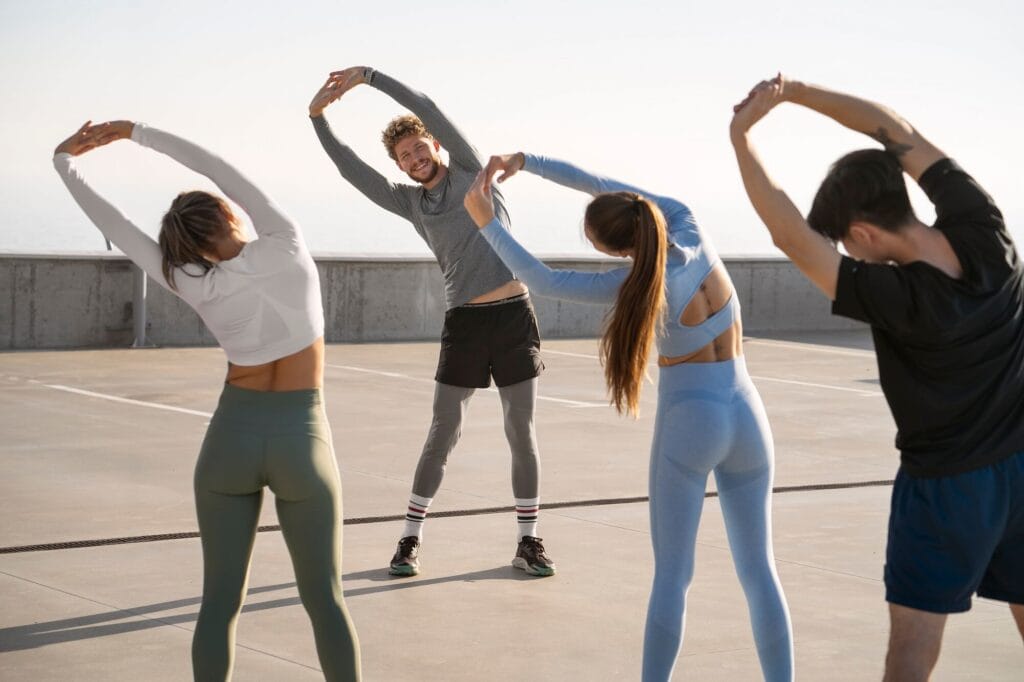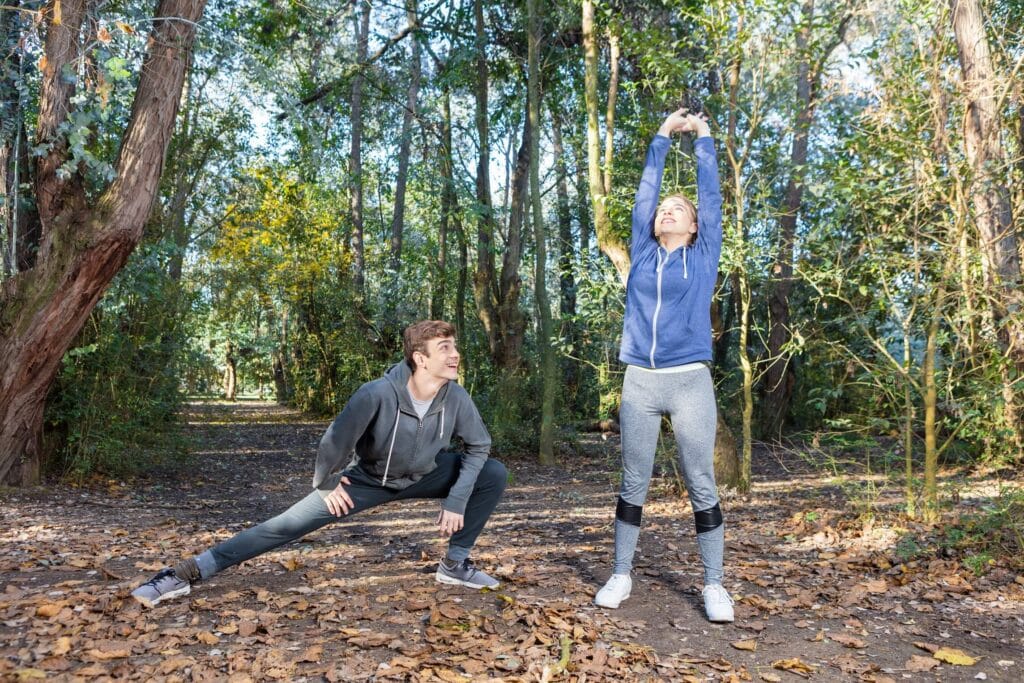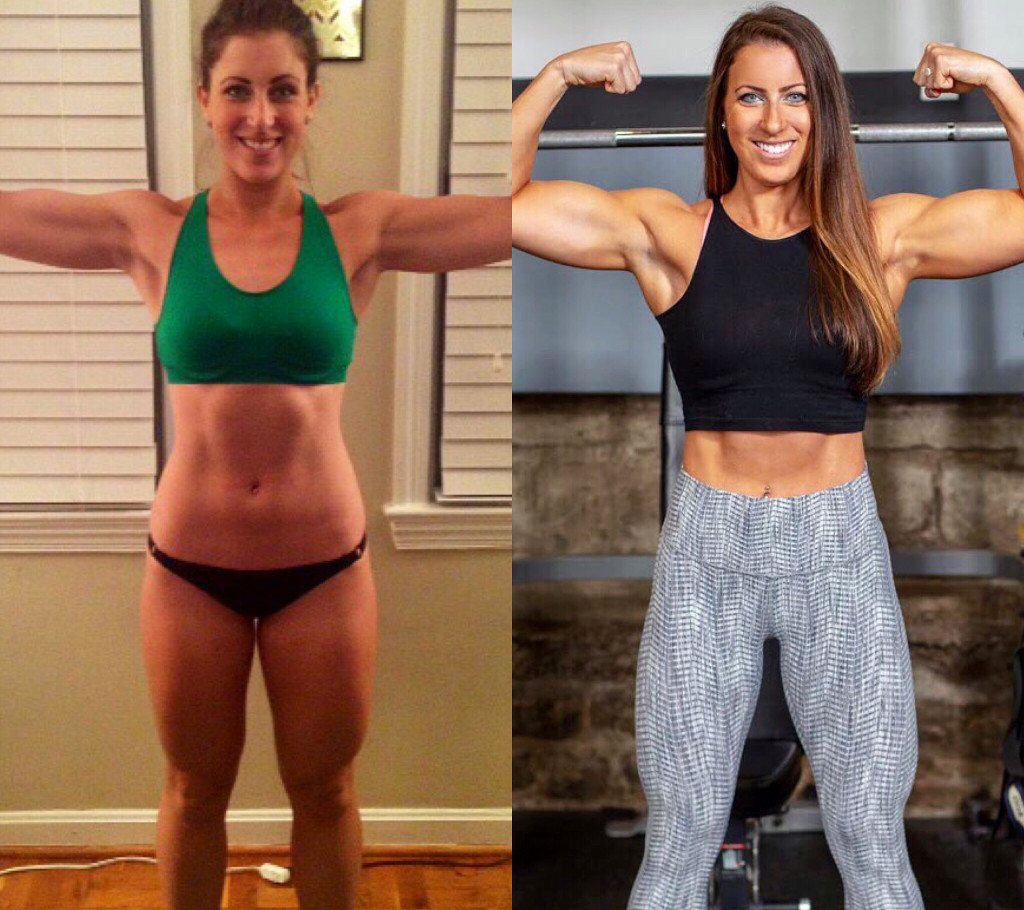
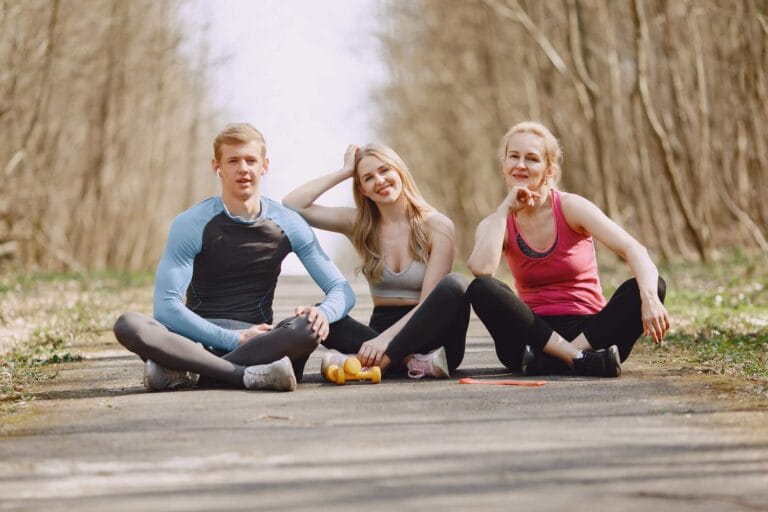
There’s something quietly powerful about rolling out of bed, clearing a bit of space in your living room, and getting a genuinely solid workout done before you’ve even had your morning coffee. First of all, there’s no commute. Secondly, there’s no waiting for machines. Best of all, there’s no membership fee quietly draining your bank account. Instead, it’s just you, some floor space, and a lot of sweat.
That’s the reality of bodyweight workouts at home, and honestly? Once you experience it, going back becomes hard. Whether you’re a busy parent, someone who hates the gym atmosphere, or simply a person who wants to get fit without spending a fortune, bodyweight training is one of the most effective and underrated tools available to you.
Here at Sanook Fit, we’ve built an entire fitness philosophy around this exact idea: movement should be accessible, enjoyable, and free. Below, therefore, we’re breaking down everything you need to know about getting fit at home for free. In addition, we’ve included a full 7-day no-equipment bodyweight challenge you can start today.
Why Bodyweight Workouts at Home Actually Work
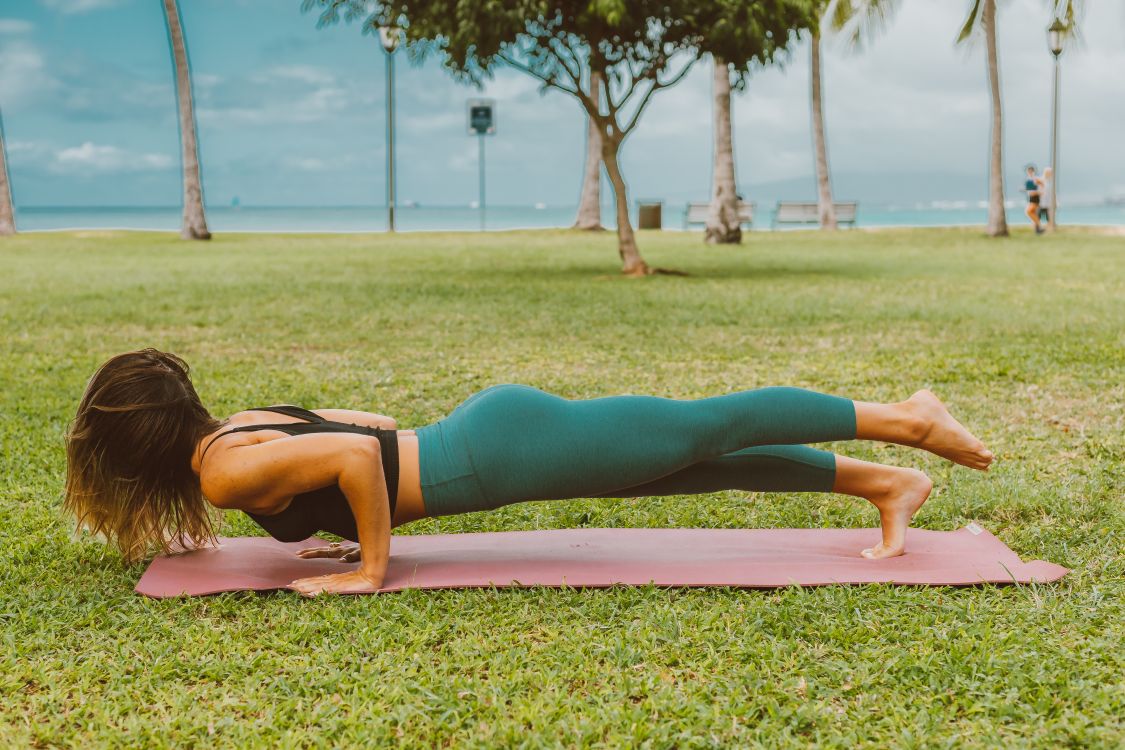
Let’s get one thing straight: the idea that you need expensive equipment to build real fitness is, frankly, a myth. In fact, research consistently shows that bodyweight exercises can develop meaningful strength, endurance, and mobility. Moreover, they often work more effectively than machine-based training because they demand whole-body coordination and stability.
When you do a push-up, for example, you’re not just working your chest. Rather, you’re engaging your core, activating your shoulders, and teaching your body to stabilise as a unit. As a result, that kind of functional strength carries over into everyday life in ways a chest press machine simply can’t replicate.
The Real Benefits You’ll Actually Notice
- Full-body muscle engagement — Most bodyweight moves recruit multiple muscle groups at once, which makes your sessions far more time-efficient.
- Progressive challenge, always — Furthermore, you can keep making bodyweight training harder by elevating your feet, slowing down the tempo, or adding a pause. The progressions, therefore, are endless.
- Fat-burning that lasts — In addition, high-intensity bodyweight circuits create an afterburn effect (known as EPOC) where your body continues burning calories for hours afterward.
- Joint-friendly movement — Because there are no heavy loads, bodyweight training is much gentler on your knees, hips, and lower back. This matters especially for beginners or anyone returning from injury.
- Zero barriers to entry — Above all, there’s no drive to the gym, no waiting for equipment, and no membership fee. In short, you can start right now.
Notably, the NHS recommends at least 150 minutes of moderate aerobic activity per week. Fortunately, a well-structured home workout routine can absolutely hit those targets without a gym membership.
The 7-Day Sanook Fit Bodyweight Challenge
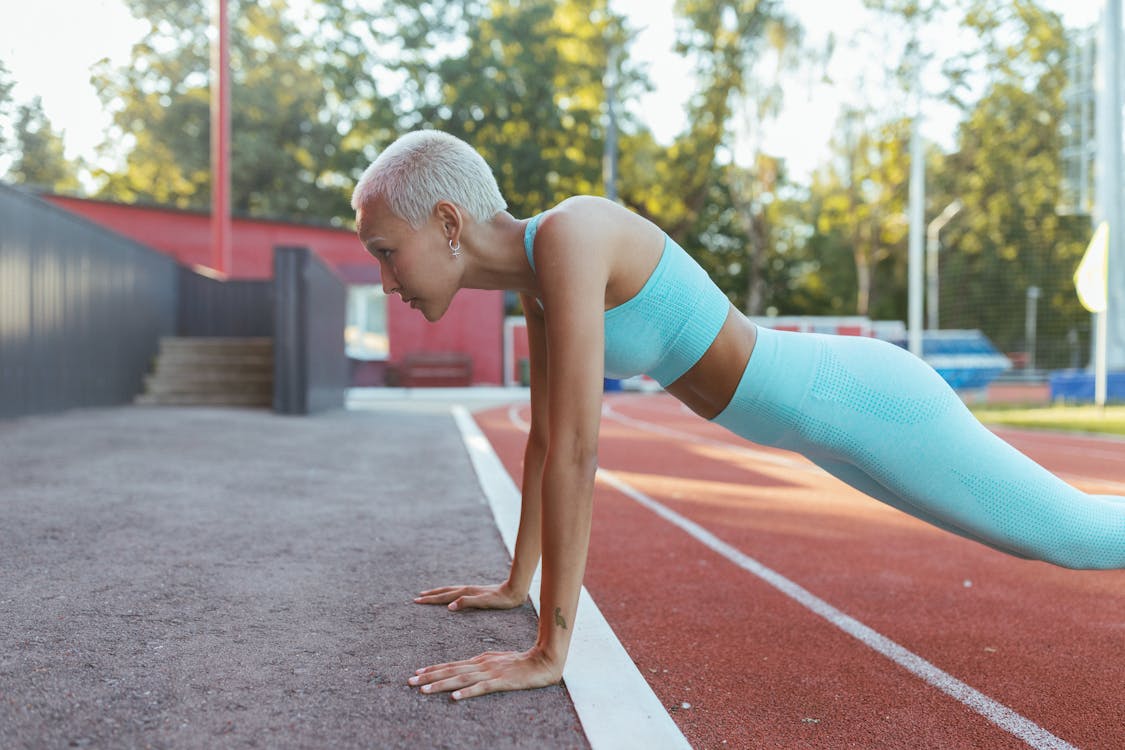
Ready to actually feel the difference? This 7-day plan is designed to give you a taste of what consistent bodyweight training can do. Specifically, each session runs 20 to 30 minutes, targets different muscle groups, and requires zero equipment. For more structured programmes, meanwhile, check out our complete guide to fun bodyweight workouts.
Day 1: Foundation Full Body
Day one is all about learning the movement patterns you’ll build on throughout the week. So take your time, focus on form, and don’t worry about going fast.
- Bodyweight Squats — 3 sets x 12 to 15 reps. Keep feet shoulder-width, then lower until your thighs hit parallel.
- Modified Push-ups — 3 sets x 8 to 12 reps. Drop to your knees if needed, since perfect form beats sloppy reps every time.
- Forearm Plank — 3 x 30-second holds. Meanwhile, squeeze your glutes, brace your core, and keep a straight line from head to heels.
- Glute Bridges — 3 sets x 15 reps. Press through your heels, squeeze hard at the top, then lower slowly.
- Jumping Jacks — 3 x 30 seconds. Use a full range of motion, and keep your core engaged throughout.
Day 2: Upper Body Focus
Today you’re targeting your chest, shoulders, back, and arms. However, don’t skip the Superman holds, because most people underestimate how much they’ll feel them in the upper back.
- Push-ups — 3 sets x 10 to 12 reps
- Tricep Dips — 3 x 12 reps, using the edge of a chair or sofa
- Superman Holds — 3 x 20-second holds, lifting both arms and legs simultaneously
- Plank Shoulder Taps — 3 x 20 total taps. Meanwhile, resist the urge to rotate your hips.
- Arm Circles — 3 x 30 seconds forward, then 30 seconds backward
Day 3: Lower Body Power
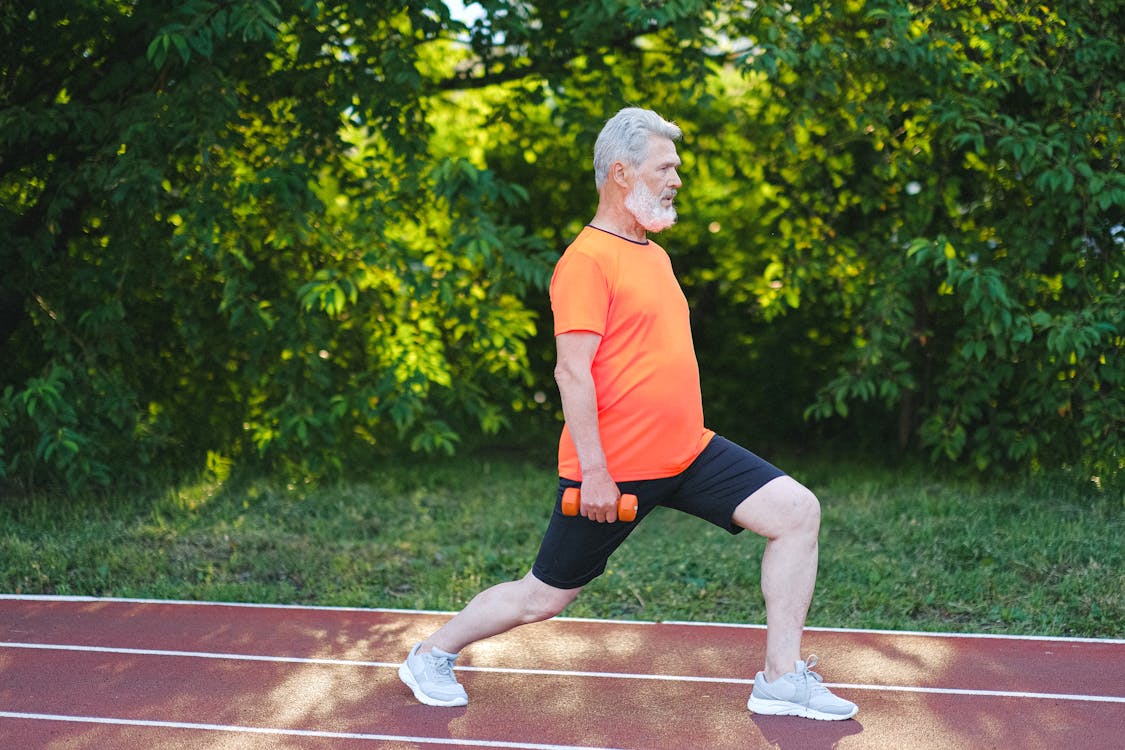
Your legs are the biggest muscle group in your body, so working them hard pays dividends in strength and calorie burn. As a result, this session should leave your quads and glutes genuinely working by the end.
- Reverse Lunges — 3 sets x 12 reps per leg
- Bodyweight Calf Raises — 3 x 20 reps. Meanwhile, slow down the lowering phase for maximum effect.
- Squat Pulses — 3 x 30 seconds, staying low with small movements
- Single-Leg Glute Bridges — 3 x 10 reps per leg
- High Knees — 3 x 30 seconds. Drive your knees up, and stay light on your feet.
Day 4: Core Strength
A strong core isn’t about six-pack abs. Instead, it’s about the foundation that supports everything else you do. Today’s session hits your abs, obliques, and lower back from every angle. Of course, if you find the hollow body hold brutal, you’re doing it right.
- Mountain Climbers — 3 x 30 seconds
- Russian Twists — 3 x 20 total touches, with feet elevated if you can
- Bicycle Crunches — 3 x 20 total reps
- Bird Dogs — 3 x 10 reps per side, slow and controlled
- Hollow Body Hold — 3 x 20-second holds
Day 5: Cardio Blast
This is the session that tests your mental toughness as much as your physical fitness. Therefore, push through the moments where you want to stop, because that’s exactly where the progress happens. To see how this fits into a broader routine, check out our fun bodyweight workouts guide.
- Burpees — 3 x 10 reps. Alternatively, step back instead of jumping to modify.
- Mountain Climbers — 3 x 40 seconds, keeping your hips low
- Jumping Jacks — 3 x 40 seconds
- High Knees — 3 x 40 seconds
- Squat Jumps — 3 x 12 reps. Meanwhile, land softly to protect your knees.
Day 6: Full-Body Integration
Day six brings everything together with compound movements that challenge multiple muscle groups simultaneously. Indeed, these are some of the most functional moves in the programme. In other words, they make you better at real life, not just at exercise.
- Inchworms — 3 x 10 reps. Walk your hands out to a plank, then walk back.
- Plank to Push-up — 3 x 10 reps
- Lunge with Rotation — 3 x 10 per side
- Bear Crawl — 3 x 40 seconds
- Burpee to Squat Jump — 3 x 8 reps
Day 7: Mobility and Active Recovery

Recovery is not just resting. Rather, it’s active repair. Today’s session improves flexibility, reduces muscle soreness, and prepares your body for the next week. So don’t skip it, because this is where a lot of the adaptation actually happens.
- World’s Greatest Stretch — 10 reps per side
- Cat-Cow — 15 slow repetitions
- Hip Openers — 30 seconds per side, using pigeon pose or a figure-4 stretch
- Downward Dog to Upward Dog — 10 slow transitions
- Child’s Pose — 60-second hold. Meanwhile, breathe deeply and actually relax.
Throughout the week, rest 30 to 60 seconds between sets, drink plenty of water, and focus on quality over quantity. After all, sloppy reps do not build much of anything.
Beyond the Workout: Benefits You Did Not Expect

People start home workouts to change how they look. Eventually, though, they keep going because of how they feel. And that is not just marketing, because there is genuine science behind it.
For instance, Harvard Medical School research shows that regular exercise can be as effective as medication for mild to moderate depression, with benefits that compound over time. Specifically, when you work out consistently, your brain releases endorphins, dopamine, and serotonin. Together, this trio is responsible for better mood, sharper focus, and deeper sleep.
Likewise, our Sanook Fit community members regularly report the same things: fewer stress headaches, better quality sleep, more energy during the day, and a quieter inner critic. Ultimately, when you are regularly doing hard things by choice, your baseline confidence quietly shifts.
In particular, here is what consistent home workout training delivers beyond the physical changes:
- Reduced cortisol (stress hormone) levels with as little as 20 minutes of moderate activity
- Improved sleep quality and reduced time to fall asleep
- Enhanced working memory and cognitive function
- Better posture and a significant reduction in lower back discomfort
- Stronger immune function over the long term
“I started Sanook Fit’s bodyweight workouts just to lose a bit of weight before a holiday. Three months later, I genuinely look forward to working out every morning, which is something I never thought I would say.”
– Maya K., Sanook Fit member since 2022
How to Stay Consistent When the Initial Excitement Wears Off
Here is the honest truth about fitness motivation: it is unreliable. Consequently, waiting to feel motivated before you work out is a losing strategy. What actually works instead is building systems, namely the small habits and structures that make working out the path of least resistance.
Meanwhile, a few things genuinely help:
- Set a specific time and protect it. For example, “I will work out sometime in the morning” is a promise to nobody, whereas “I work out at 7am before I check my phone” is a real system.
- Track non-scale victories. Notice when you can do more push-ups than last week, or when you get through a burpee set without stopping. Indeed, progress is everywhere if you are looking for it.
- Keep sessions short enough to actually do. Honestly, a 20-minute workout you complete beats a 60-minute programme you skip every time. For shorter session ideas, therefore, check out our guide to fun home workout routines.
- Tie workouts to identity, not outcomes. Instead of “I want to lose 5kg,” try “I am someone who moves their body every day.” After all, identity-based habits are far more durable than outcome-based ones.
- Find community. Additionally, there’s something powerful about knowing other people are doing the same thing you are. That’s exactly why the Sanook Fit community across six continents keeps showing up.
There Has Never Been a Better Time to Start
The hardest part of getting fit at home is not any particular workout. Rather, it is starting, and then starting again after the inevitable days when life gets in the way. Fortunately, the beauty of a home bodyweight routine is that the barrier to re-entry is almost zero. Your gym is always open, and there are no membership fees to guilt you back in. Instead, it’s just you, some clear floor space, and the decision to move.
If you are looking for a more structured approach beyond this challenge, meanwhile, explore how no-gym, no-equipment training is reshaping the way people think about fitness. Increasingly, millions of people are quietly ditching traditional gyms for good.
Ultimately, start where you are, use what you have, and do what you can. And remember: if today was Day 1, then tomorrow is Day 2, which is already more than most people will ever do.
Inspired by this challenge? Then share your progress in the comments below, and join the Sanook Fit community. No equipment, no excuses, just movement that makes you feel good.