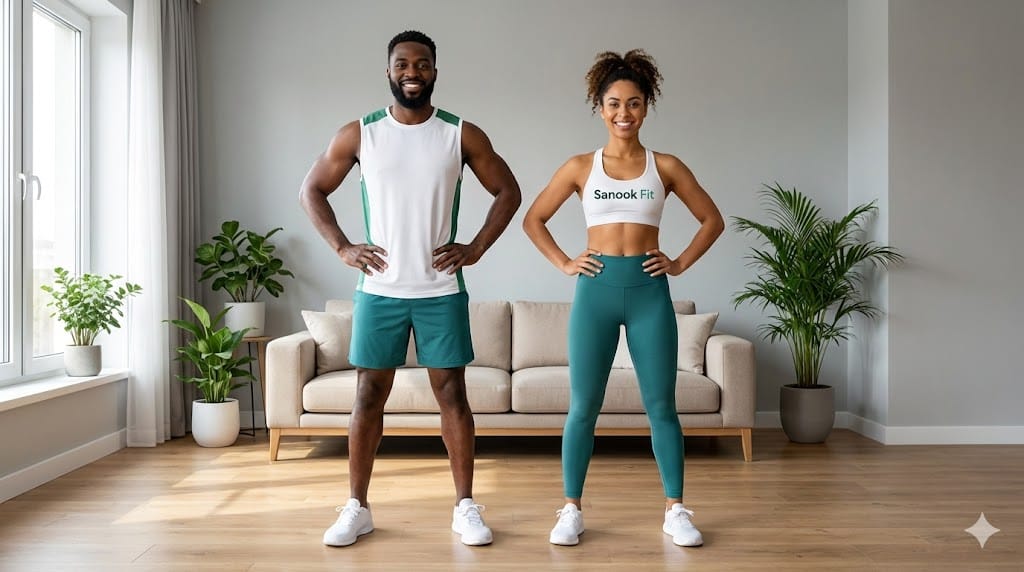
You have decided it is time to get healthier. Maybe you have eyed up a gym membership, watched a few fitness videos, or bought equipment that now sits untouched in the corner. If that sounds familiar, you are in very good company — and the good news is that getting started is far simpler than it looks.
Bodyweight training for beginners is one of the safest, most approachable ways to build fitness. It uses your own body as resistance, needs no gym and no kit, and scales to suit absolutely anyone. This complete Sanook Fit guide covers what it is, the best beginner moves, how often to train, a simple starter plan, and how to keep going once you begin.
Quick Answer
Bodyweight training is one of the safest and most effective ways to start exercising. It uses your own body as resistance to build strength, improve fitness and mobility, and grow your confidence — no gym or equipment required. Beginners get excellent results by mastering simple movements, training consistently, and progressing gradually.
What Is Bodyweight Training?
Bodyweight training simply means using your own body as resistance. Every time you squat, push up, lunge, or hold a plank, your muscles work against gravity — the load comes from you rather than from any equipment. That makes it accessible, affordable, practical, and genuinely effective. It is also wonderfully versatile: whether you are 18 or 68, every move can be adjusted to match your current ability.
Why Bodyweight Training Is Perfect for Beginners
There is no need to wait for Monday, the New Year, payday, or a new set of workout clothes. If you have enough room to lie down comfortably, you have enough space to begin today. Beyond that convenience, bodyweight training offers some real beginner-friendly benefits:
- It builds a strong foundation of movement and control
- It improves balance, mobility, and joint health
- It grows your confidence as you master each move
- It is gentle to start yet endlessly scalable
- It fits around a busy life with no commute to the gym
The Best Beginner Exercises
Rather than mastering dozens of moves at once, focus on doing a few simple ones really well. These five form a complete, balanced starting point.
Bodyweight Squat
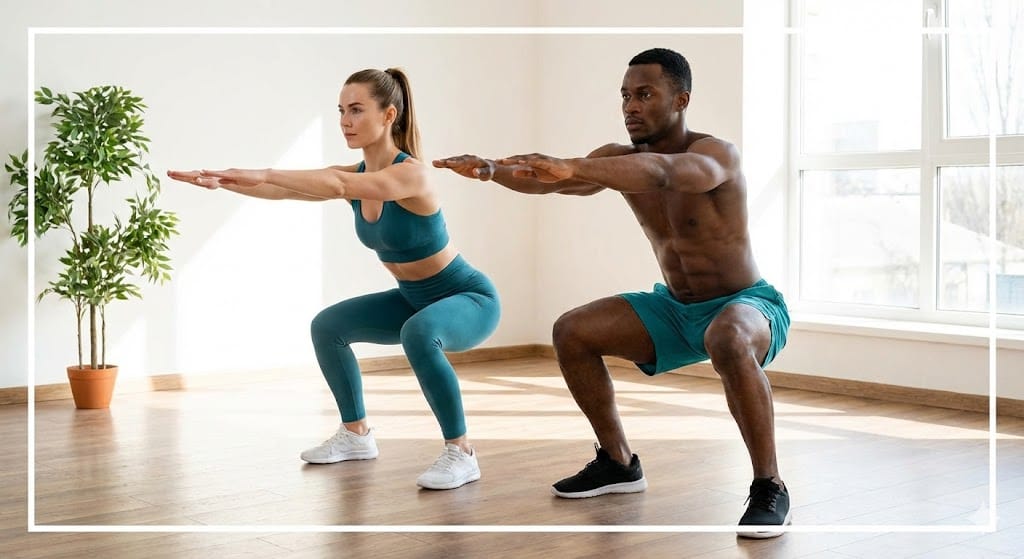
Squats build your legs and glutes — the muscles behind nearly every daily movement. If a full squat feels tricky at first, lower toward a chair and stand back up. That simple version builds confidence fast.
Incline Push-Up
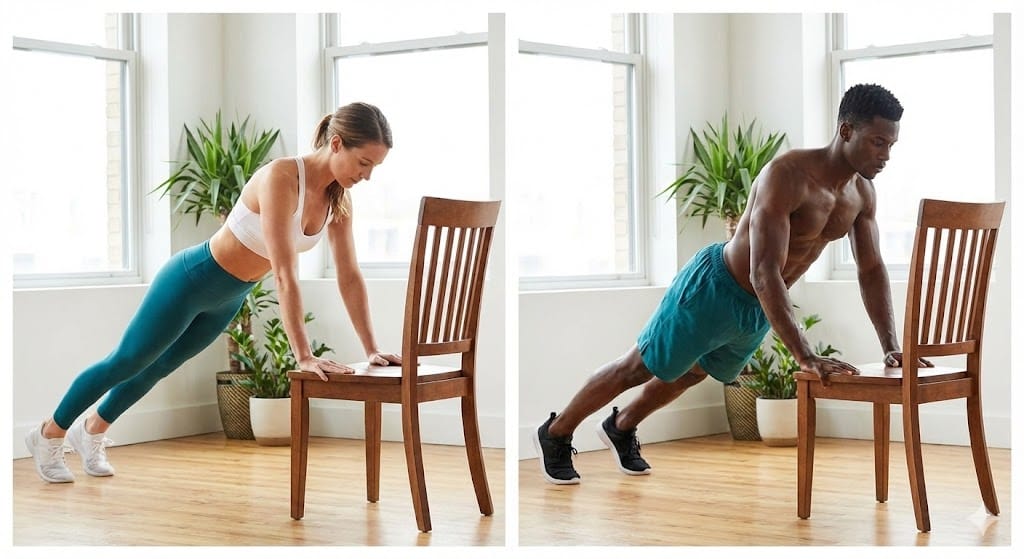
A full push-up is tough on day one, so start with your hands on a sturdy raised surface like a counter or the wall. The higher your hands, the easier it is — lower them gradually as you get stronger.
Glute Bridge
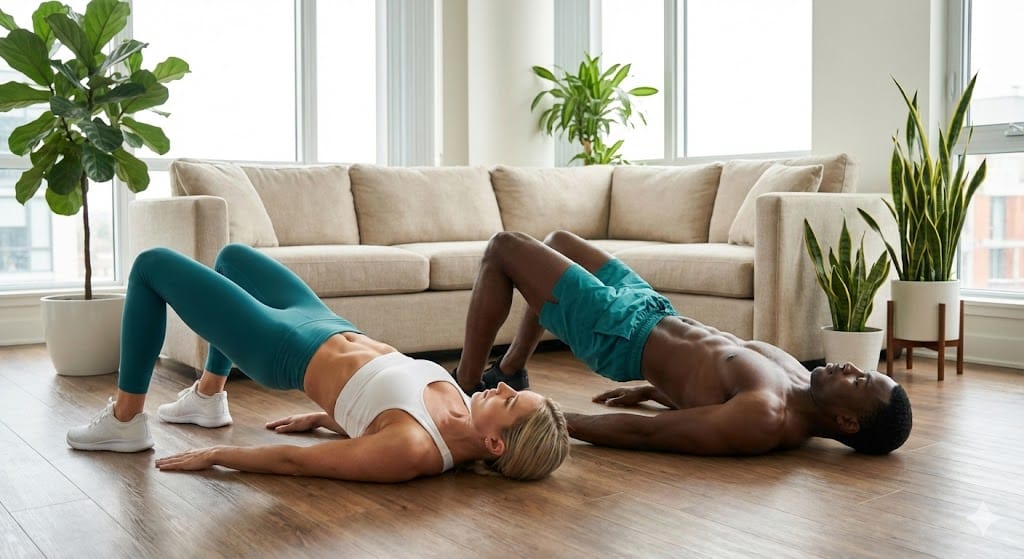
Lie on your back, feet flat, and lift your hips by squeezing your glutes. It is easy on the joints and a great way to switch on muscles that long hours of sitting tend to leave sleepy.
Wall or Forearm Plank
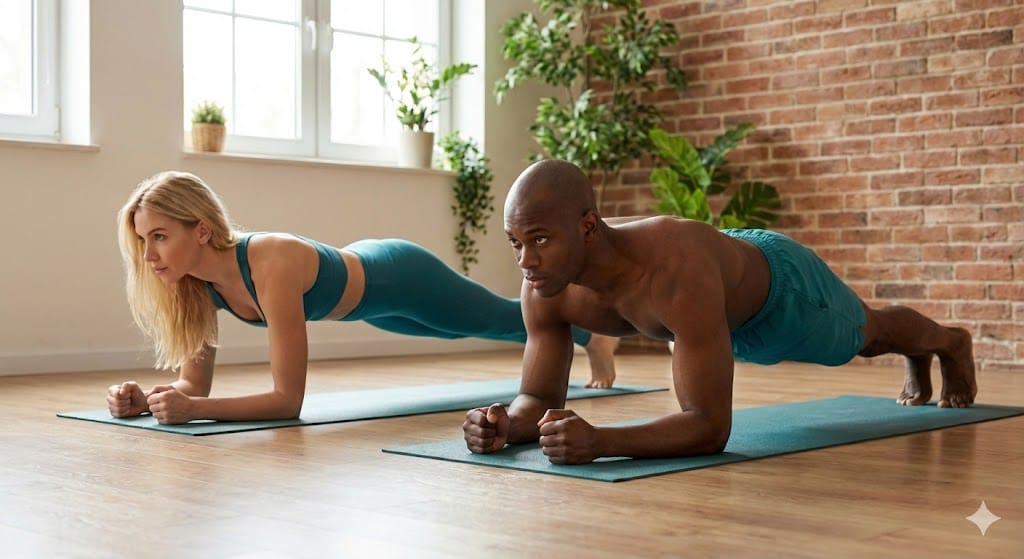
The plank strengthens your whole midsection. Start standing and leaning into a wall, then progress to a plank on your knees, and eventually a full forearm plank. Build your hold time a few seconds at a time.
Marching in Place
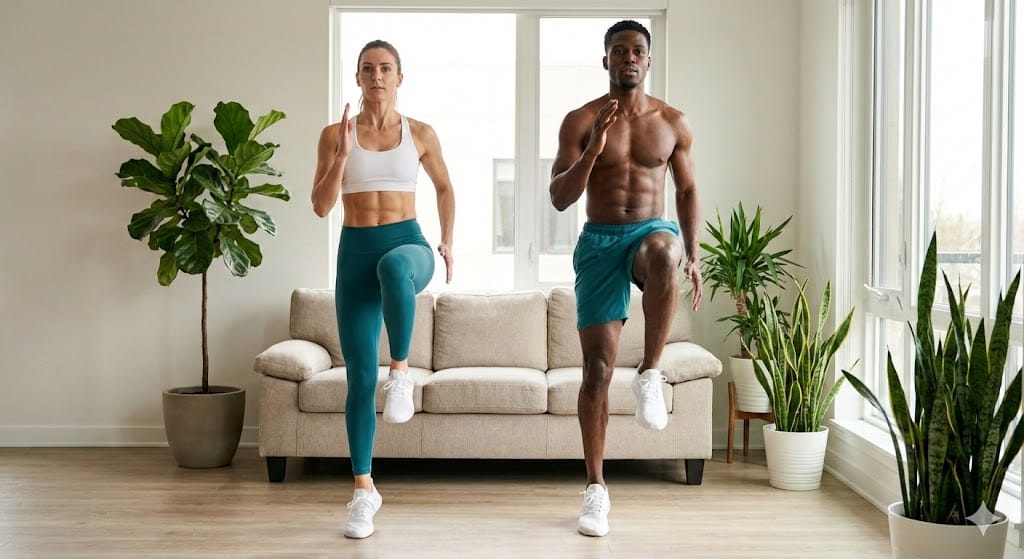
For gentle cardio, simply march on the spot, lifting your knees and swinging your arms. As your fitness grows, you can pick up the pace toward high knees.
How to Know You Are Ready to Progress
A common beginner question is, “When should I make an exercise harder?” A simple guide: if you can perform 15 to 20 controlled reps with excellent technique and still feel you could keep going, you are probably ready for the next step. Here is how the progressions tend to flow:
- Chair squat → full bodyweight squat
- Wall push-up → counter push-up → floor push-up
- Glute bridge → single-leg glute bridge
- Wall plank → knee plank → forearm plank
- Marching → high knees
There is no need to rush. Progress should feel challenging, not overwhelming. When you are ready for more, our 15-minute full body workout is a great next step.
Why Rest Matters
Many beginners assume more exercise automatically means faster results. It does not. Your muscles actually adapt and get stronger while you recover, so aim to leave at least one day between full-body beginner sessions. Use rest days for gentle walks or some easy mobility work rather than total inactivity.
A Simple Beginner Plan
You do not need anything fancy to make real progress — just consistency. A balanced beginner week might look like this:
- 3 short strength sessions using the moves above (15 to 30 minutes each)
- 2 to 3 days of walking or light activity
- 1 to 2 recovery days with gentle movement
This gives your body enough stimulus to improve while leaving room to recover. Once you find your feet, explore our focused no-equipment leg workout and upper body workout to round things out.
Frequently Asked Questions
How long should a beginner workout last?
For most beginners, 15 to 30 minutes is plenty. Longer is not automatically better — focus on quality movement performed consistently rather than marathon sessions. Curious whether bodyweight work really builds muscle? Read can you build muscle without lifting weights.
How many days a week should beginners exercise?
A great starting point is three strength workouts, two to three days of walking or light activity, and one to two recovery days each week. This matches the CDC’s activity guidelines for adults while giving your body time to adapt.
When will I start seeing results?
Everyone progresses differently, but many beginners feel better energy within the first week, more strength after two to four weeks, and improved movement after a month. Visible changes follow with consistent training and balanced eating. Remember, feeling stronger is real progress too — it just shows up before the mirror does.
Train With Us
We share beginner-friendly routines, technique tips, and plenty of fun fitness motivation across our channels. Come and start your journey with the community:
- YouTube: @SanookFit
- TikTok: @sanookfit
- Facebook: Sanook Fit
- Instagram: @sanookfit
Clear a little space, try a few squats, and take that first step today. Starting is the hardest part — and you are already halfway there just by reading this far.